A HEPA filter replacement is the single most effective step you can take to restore your air purifier’s performance and protect your family’s health. True HEPA filters, certified to the H13 standard, capture 99.97% of particles as small as 0.3 microns, including dust, pollen, pet dander, and PM2.5. That figure drops sharply once the filter becomes clogged. For homeowners in Riyadh, Jeddah, and Dammam, where desert dust and seasonal sandstorms push filters to their limits far faster than in milder climates, following a reliable replace hepa filter dirty guide is not optional. It is the foundation of clean indoor air and effective allergy management.
How do you know when your HEPA filter is dirty?
The most reliable sign of a dirty HEPA filter is reduced airflow from your air purifier. When the filter is clogged, the motor works harder, the unit becomes noisier, and the air coming out feels weaker than usual. You may also notice allergy symptoms returning even though the purifier is running.
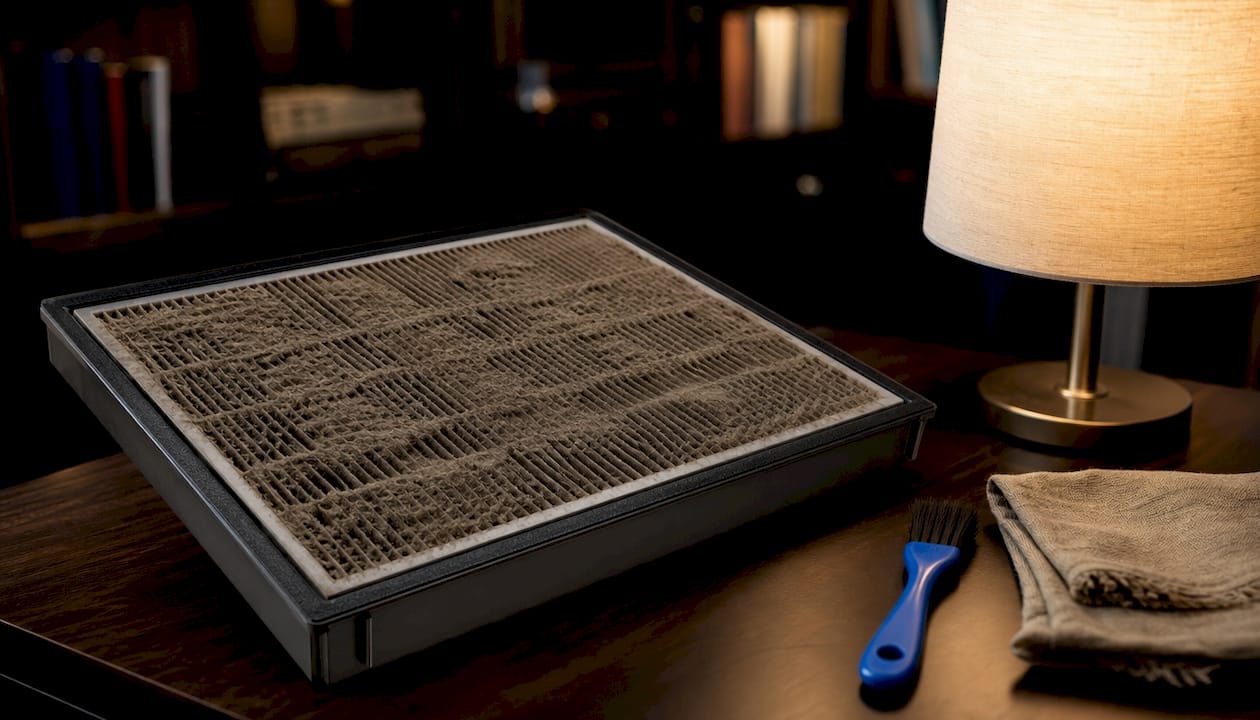
Standard non-washable HEPA filters should be replaced every 6–12 months under normal conditions. That interval shortens considerably in Saudi Arabia. In Saudi Arabia’s dusty climate, maintenance intervals should be shortened by 25–30% compared to global standards to avoid premature clogging. That means a filter rated for 12 months may need replacing in as few as eight months in a Riyadh apartment near a busy road or during the spring dust season.
Check your HEPA filter replacement checklist for Saudi homes to assess your specific situation. Visual inspection also helps. Look for:
- Grey or brown discolouration across the filter surface, indicating heavy particulate loading
- Visible damage such as tears, bent pleats, or deformed edges that break the seal
- Persistent odours in the room despite the purifier running, which signals the filter is saturated
- Increased noise from the motor straining against restricted airflow
- Filter indicator light illuminated on units that include one, such as many HEPA H13 models
Pre-filters should be checked every 2–4 weeks. Catching pre-filter build-up early reduces the load on the main HEPA layer and extends its working life.
What tools and preparation do you need before replacing a HEPA filter?
Preparation makes the difference between a clean swap and a dusty mess. Gather everything before you open the unit, so you are not searching for items mid-process with a contaminated filter in your hand.
| Item | Purpose |
|---|---|
| Replacement HEPA filter (correct model) | The core component. Match the model number exactly. |
| Disposable gloves | Prevents skin contact with trapped allergens and dust |
| Dust mask or N95 respirator | Protects your airways during removal |
| Small vacuum with brush attachment | Clears loose debris from the housing |
| Clean dry cloth | Wipes down the interior before the new filter goes in |
| Bin bag (double-bagged for heavily soiled filters) | Safe disposal of the old filter |
Set up in a well-ventilated area, ideally near an open window or on a balcony. Lay down a sheet of newspaper or an old towel to catch any debris that falls during removal. Check that your replacement filter matches the model number printed on the old one or in your purifier’s manual. Ordering a genuine filter matters. Off-brand alternatives often fail to meet the H13 standard, which undermines the benefits of HEPA filters you paid for.
Pro Tip: Take a photo of the old filter before removing it, including its orientation and the airflow arrow direction. This gives you a reference point when fitting the new one.
Step-by-step guide: how to change a HEPA filter correctly
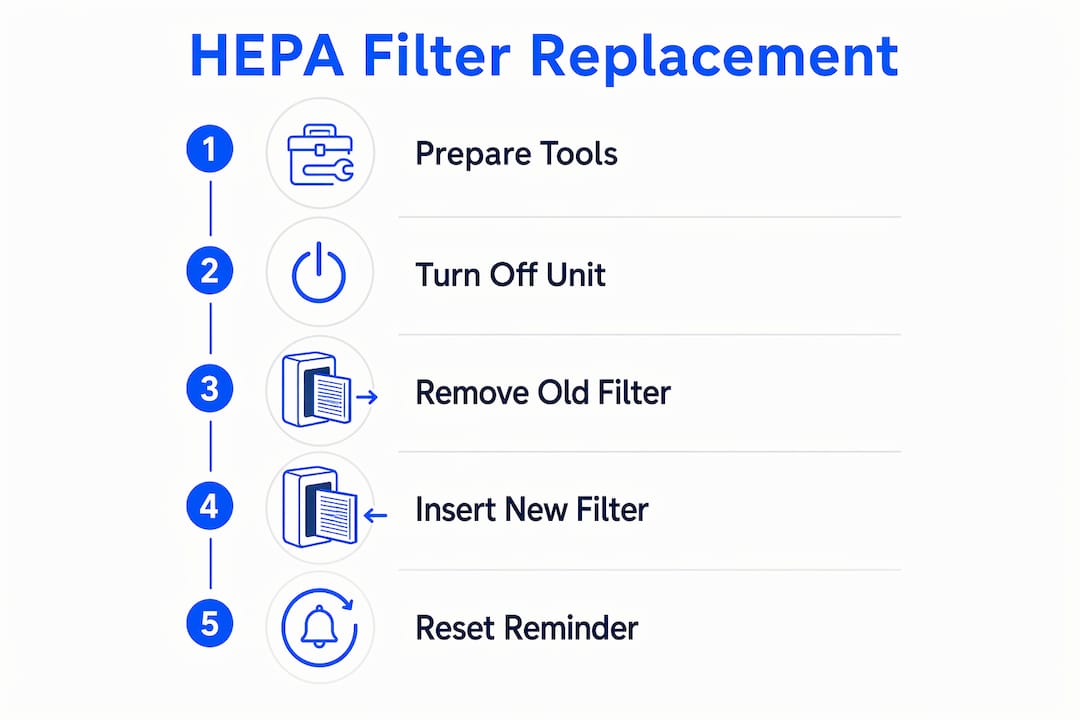
Follow these steps in order. Skipping steps, particularly the power-off and housing-clean stages, is where most mistakes happen.
-
Turn off and unplug the air purifier. Never open the filter compartment while the unit is running. Even on standby, the motor can draw air and scatter dust.
-
Move the unit to your prepared workspace. Place it on the newspaper or towel you laid out. Put on your gloves and mask before touching any panels.
-
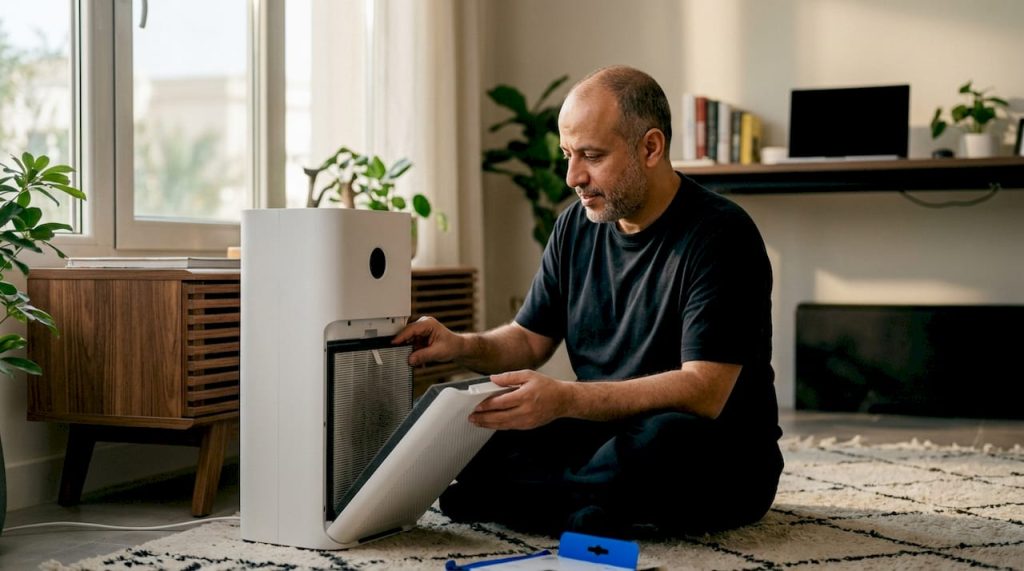
Open the filter compartment. Most units have a rear or side panel that unclips or unscrews. Refer to your manual if the mechanism is not obvious. Do not force it.
-
Remove the dirty filter slowly. Slide it out with a steady, level motion to avoid shaking loose dust into the housing. Place it directly into your bin bag.
-
Double-bag the filter if it is heavily soiled. Seal both bags before setting them aside. This is particularly relevant after a sandstorm season in Saudi Arabia, when filters can accumulate months of dust in weeks.
-
Vacuum the interior housing. Use the brush attachment on the lowest suction setting to remove any loose particles from the chamber walls and fan guard. Wipe down with a dry cloth.
-
Insert the new filter with the correct orientation. Look for the airflow arrow printed on the filter frame. It must point towards the fan, not away from it. An incorrectly oriented filter reduces efficiency immediately.
-
Reattach the panel securely. Press or screw it back until it clicks or sits flush. A poor seal allows unfiltered air to bypass the filter entirely.
-
Plug in and power on the unit. Listen for any unusual noise. A correctly fitted filter should produce the same sound as a new unit.
-
Reset the filter indicator if your model has one. Check your manual for the reset sequence. Failing to reset it means the indicator will trigger prematurely on your next cycle.
A filter fitted with the airflow arrow pointing the wrong way can reduce filtration efficiency significantly, even though the unit appears to run normally. Always check the arrow before closing the panel.
Pro Tip: Write the replacement date on a small sticker and attach it to the inside of the filter panel. You will know at a glance when the next change is due, without relying on memory or a digital reminder.
Common mistakes to avoid and HEPA filter maintenance tips for Saudi homes
The most damaging mistake homeowners make is washing a non-washable HEPA filter. Washing non-washable HEPA filters damages the fibre structure and destroys the 99.97% efficiency rating, even if the filter looks clean afterwards. The fibres that trap sub-micron particles rely on a precise structure. Water collapses that structure permanently.
A related error is using heat to dry any filter component. Heat warps filter fibres and invalidates the HEPA certification. If you are drying a washable pre-filter or a carbon layer, air dry it in a shaded, ventilated spot for 24–48 hours. Never use a hair dryer or place it in direct sunlight.
For non-washable HEPA filters, gentle vacuuming every 1–2 months on the lowest setting can extend filter lifespan by removing surface debris. This does not restore the filter to new condition, but it does reduce the rate of clogging between replacements. It is a useful practice in Saudi homes where dust accumulates quickly.
Additional maintenance habits that protect your filter and your air quality:
- Clean pre-filters outdoors. Cleaning pre-filters outdoors prevents redistributing dust indoors, which would worsen the air quality you are trying to improve.
- Shorten your replacement interval during dust season. Apply the 25–30% reduction rule from march through may, when shamal winds carry the heaviest dust loads across the Kingdom.
- Place your purifier strategically. HEPA filtration is most effective in bedrooms, where randomised controlled trials show the most documented reductions in allergy symptoms and asthma incidents. Prioritise bedroom placement if you have one unit.
- Keep doors and windows closed during sandstorms. Running a purifier with windows open during a dust event overloads the filter in hours rather than weeks.
- Check the pre-filter every two weeks during high-dust months. A clean pre-filter is the first line of defence for the HEPA layer behind it.
Pro Tip: Set a recurring reminder on your phone for every two weeks to check the pre-filter. A two-minute visual check saves you from replacing the main HEPA filter ahead of schedule.
Key takeaways
Replacing a dirty HEPA filter on the correct schedule, using the right technique, and following Saudi-specific maintenance intervals is the most reliable way to maintain clean indoor air and reduce allergy symptoms at home.
| Point | Details |
|---|---|
| Replace every 6–12 months, shorter in Saudi Arabia | Shorten the interval by 25–30% in dusty environments to prevent premature clogging. |
| Never wash a non-washable HEPA filter | Washing destroys the fibre structure and eliminates the 99.97% filtration rating permanently. |
| Check airflow and noise as early warning signs | Reduced airflow and increased motor noise are the clearest indicators of a clogged filter. |
| Always match the model number before ordering | An incorrect replacement filter may not seal properly, allowing unfiltered air to bypass the unit. |
| Clean pre-filters outdoors every 2–4 weeks | Outdoor cleaning prevents dust reintroduction and extends the main HEPA filter’s working life. |
Why I think most homeowners replace their HEPA filter too late
After years of paying close attention to how Saudi homes handle indoor air quality, one pattern stands out clearly. Most homeowners wait for a visible sign before replacing their filter. They wait for the indicator light, or for allergy symptoms to return, or for the unit to sound strained. By that point, the filter has been underperforming for weeks.
The problem is that a clogged HEPA filter does not fail dramatically. It degrades gradually. You breathe slightly worse air each day, and because the change is slow, you do not notice it until your symptoms are already worse. I have seen this pattern repeatedly in homes across Riyadh and Jeddah, particularly in families managing rhinitis or asthma.
What I recommend instead is treating filter replacement like a regular home maintenance task, not a reactive fix. Mark the date on the filter panel when you install it. Set a calendar reminder for eight months later if you live in a dusty area. Do not wait for the unit to tell you something is wrong.
The other thing worth saying plainly: a genuine H13-certified replacement filter is not interchangeable with a cheap off-brand alternative. The certification exists for a reason. If the filter does not meet the H13 standard, your purifier is not doing what you bought it to do. Trust the specification, buy genuine parts, and replace on schedule. Your air quality, and your sleep, will reflect it.
— Pauline
Genuine HEPA filters and air purifiers for Saudi homes, from Climasaudi
Climasaudi stocks certified HEPA H13 replacement filters and air purifiers built for the conditions found in Saudi homes, from the dry desert air of Riyadh to the coastal humidity of Jeddah. Every product listed on the site is genuine, locally stocked, and priced in SAR with next-day delivery available.
If you are ready to replace your current filter or upgrade to a unit better suited to your home’s size and air quality needs, browse the full range of air purifiers and HEPA filters on the Climasaudi website. The customer support team can help you match the right replacement filter to your existing unit, or recommend a new purifier based on your room size and allergy concerns. Genuine parts, local stock, and clear SAR pricing make the process straightforward.
FAQ
How often should I replace my HEPA filter in Saudi Arabia?
Replace every 6–12 months under normal conditions, but shorten that interval by 25–30% in Saudi Arabia’s dusty climate. During sandstorm season, check the filter monthly.
Can I wash my HEPA filter to make it last longer?
No. Washing a non-washable HEPA filter collapses the fibre structure and permanently destroys the 99.97% efficiency rating. Gentle vacuuming on the lowest setting is the only safe way to extend its life between replacements.
What are the signs of a dirty HEPA filter I should look for?
Reduced airflow, increased motor noise, visible grey or brown discolouration on the filter surface, and the return of allergy symptoms are the clearest signs. A HEPA filter maintenance guide can help you track these indicators systematically.
Does a HEPA filter remove odours and cooking smells?
No. HEPA technology targets particulate matter, not gas-phase pollutants. You need an activated carbon layer in addition to the HEPA filter to address odours and VOCs effectively.
Where is the best place to use an air purifier with a HEPA filter at home?
Place it in your bedroom. HEPA filtration in bedrooms shows the most documented reductions in allergy symptoms and asthma incidents, based on randomised controlled trials. That is where you spend the most hours breathing the same air.