Most people assume air purifiers are significant energy drains. They are not. The real question is not how much power a unit draws, but how much clean air it produces per watt consumed. That is precisely what an air purifier energy rating tells you. Understanding this metric helps you avoid overpaying on electricity bills, choose a unit sized correctly for your space, and get genuine value from your investment. This guide explains the key ratings, how real-world usage affects your costs, and how to apply this knowledge when shopping.
Table of Contents
- Key takeaways
- What is air purifier energy rating?
- How fan speed shapes your energy bill
- Matching CADR to room size
- How to choose an energy-efficient air purifier
- My honest take on energy ratings
- Find energy-efficient air purifiers at Climasaudi
- FAQ
Key takeaways
| Point | Details |
|---|---|
| CADR/W ratio is the core metric | A ratio above 1.0 is good; top-rated models exceed 2.0, meaning more clean air per watt used. |
| Fan speed drives actual energy use | Running on auto or medium draws roughly 40–60% of max wattage, cutting monthly running costs noticeably. |
| Unit sizing affects efficiency | An undersized purifier runs longer at higher speeds, wasting energy and reducing air quality outcomes. |
| Energy Star certification is verifiable | Independent lab testing backs the Energy Star badge, making it a reliable shortcut to genuine efficiency. |
| Filter costs often exceed electricity | Annual filter replacements can cost £35–£120, so total ownership cost matters beyond the energy rating alone. |
What is air purifier energy rating?
The air purifier energy rating is a measure of how efficiently a unit cleans the air relative to the electricity it uses. It is not simply a wattage figure on a box. The primary indicator is the CADR/W ratio, which stands for Clean Air Delivery Rate divided by watts consumed.
CADR measures the volume of filtered air a purifier delivers per minute, expressed in cubic feet per minute (CFM) or cubic metres per hour. A unit with a high CADR cleans a room faster. But high CADR alone tells you nothing about efficiency. A unit drawing 150 watts to achieve a CADR of 150 is far less efficient than one drawing 50 watts for the same output.
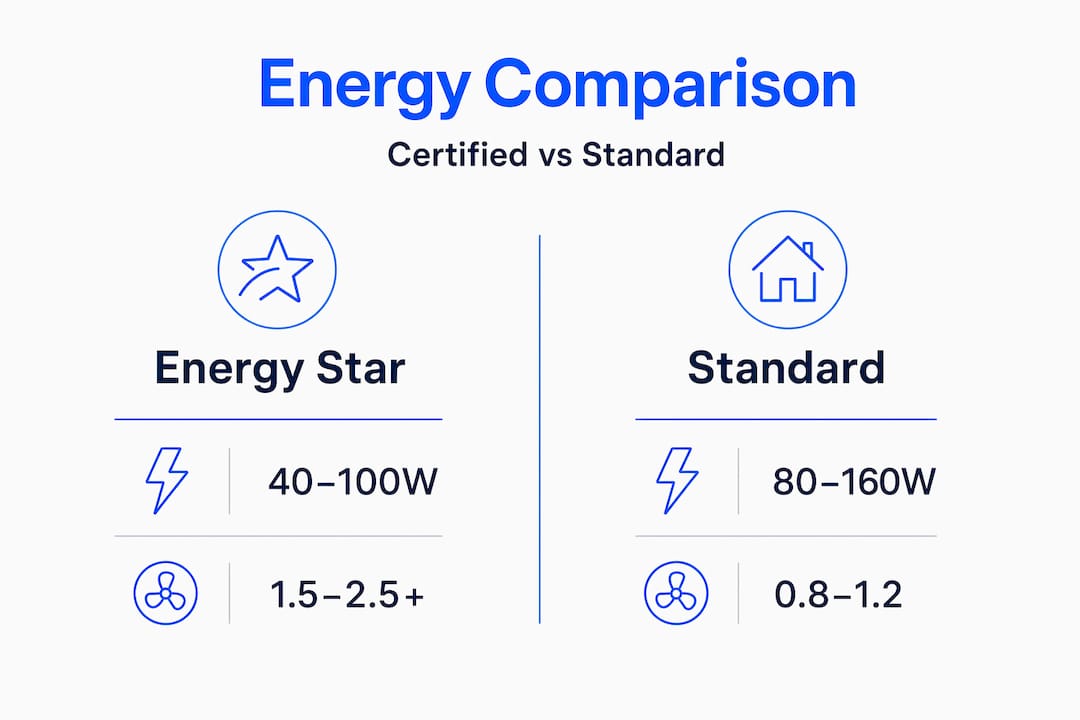
The threshold numbers are straightforward. A CADR/W ratio above 1.0 is considered good efficiency; top-tier models exceed 2.0. Energy Star certified models typically operate between 40 and 100 watts, while non-certified units can draw anywhere from 60 to 150 watts for comparable performance.
Energy Star certification goes beyond a marketing badge. Certified models use at least 30% less energy than non-certified equivalents. The US Department of Energy has also established minimum energy conservation standards for electrically powered, self-contained air cleaners sold since late 2023, applying to units that remove both particulates and VOCs. This regulatory baseline means even budget models now meet a minimum threshold.
| Model type | Typical wattage | Typical CADR/W ratio |
|---|---|---|
| Energy Star certified | 40–100W | 1.5–2.5+ |
| Non-certified standard | 60–150W | 0.5–1.2 |
| Budget uncertified | 80–200W | 0.3–0.8 |
Pro Tip: When comparing models, divide the CADR figure on the product spec sheet by its rated wattage. Any result below 1.0 means you are paying a premium in electricity for relatively modest air cleaning output.
How fan speed shapes your energy bill
Rated wattage on a product label shows maximum power draw. In practice, you will rarely run an air purifier at full speed for extended periods. This distinction matters considerably when calculating real running costs.
Fan speed is the primary driver of energy consumption in air purifiers, not the filtration technology itself. A unit rated at 77 watts on maximum speed may draw only 35 to 45 watts when operating on medium. Running on auto or medium uses approximately 40 to 60% of maximum rated wattage, which significantly reduces your electricity consumption.
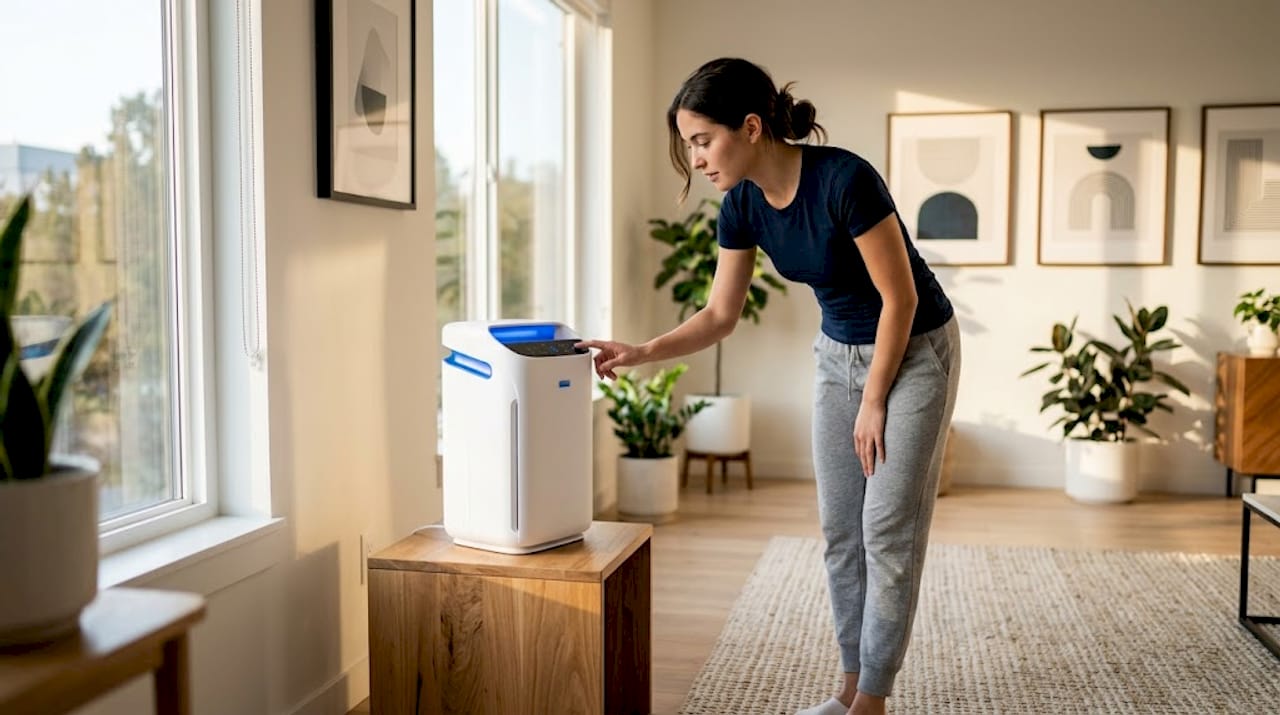
Consider a practical example. Most air purifiers consume between 20 and 80 watts, and running a 26W unit continuously for a month costs roughly $3 at standard electricity rates. Scaling that up to a 60W unit running 24/7 moves the monthly cost closer to $7. The difference is modest, but over a year it accumulates, particularly if you are running multiple units across an apartment or villa.
Here are practical ways to manage daily energy consumption:
- Use auto mode whenever possible. Most modern purifiers adjust fan speed based on real-time air quality sensors, balancing performance with lower power draw.
- Run the purifier on medium speed overnight rather than maximum. Air quality in a closed bedroom stabilises quickly.
- Set a timer or schedule through the purifier’s app if available, so it runs at peak during dusty periods (such as sandstorm days in Riyadh or Dammam) and reduces at quieter times.
- Avoid running unnecessarily at maximum speed in a room that is already clean. Check air quality indicators before adjusting settings.
- Read the Climasaudi guide on adjusting fan speeds to optimise usage patterns for your home layout.
Pro Tip: If your purifier lacks an auto mode, set it to medium as your default and switch to high only when cooking, cleaning, or during dusty weather. This alone can reduce monthly running costs by 30 to 40%.
Matching CADR to room size
Getting the energy rating right on paper means nothing if the unit is the wrong size for your room. An undersized purifier working hard to clean a large space will run at maximum speed far longer than necessary, consuming more energy and delivering poorer air quality than a correctly sized unit running quietly at medium.
The general principle is clear. An undersized purifier running at max speed uses more energy and still fails to maintain good air quality. The ideal CADR should be at least two-thirds of your room’s square footage. For a 30 square metre bedroom, look for a CADR of at least 200 CFM. For a larger open-plan living area of 50 square metres, aim for 300 CFM or above.
Placement also matters more than most buyers realise. Positioning a purifier within 30 centimetres of a wall or behind furniture reduces effective CADR by 22 to 27%. That means a unit rated at 250 CFM could effectively deliver only 180 to 195 CFM if placed poorly. You lose both performance and energy value simultaneously.
Here is a step-by-step approach to selecting the right unit:
- Measure your room. Note the length and width in metres and multiply to get the floor area.
- Calculate the minimum CADR. Multiply your room area (in square feet) by 0.67. This is your minimum CADR target.
- Check the air changes per hour (ACH). For allergy or asthma sufferers, aim for at least 4 ACH. For general use, 2 ACH is adequate.
- Compare CADR/W ratios between shortlisted models to identify which delivers the best efficiency at the required CADR.
- Account for filter costs. Annual filter replacements cost £35 to £120, often exceeding electricity costs. Factor this into your total cost comparison.
- Confirm placement options in your room. Choose a unit that can sit at least 30 centimetres from walls on all sides for full performance.
| Room size | Minimum CADR (CFM) | Recommended unit wattage |
|---|---|---|
| Up to 20 sqm | 130–160 CFM | 20–40W |
| 20–35 sqm | 160–230 CFM | 35–60W |
| 35–55 sqm | 230–330 CFM | 50–80W |
| 55 sqm+ | 330+ CFM | 70–100W |
How to choose an energy-efficient air purifier
Knowing what figures to look for is only useful if you can verify them confidently before purchasing. Here is how to evaluate a model properly rather than relying on marketing claims.
Energy Star certification involves independent lab verification, confirming the unit meets minimum CADR/W ratio thresholds. You can check the Energy Star product database directly to verify any model’s certification status. Do not rely solely on the logo printed on packaging.
Beyond certification, look at the air purifier efficiency features in the product spec sheet. Key things to check include:
- Listed CADR values for smoke, dust, and pollen separately. The lowest of the three is typically the one used in efficiency calculations.
- Wattage at each fan speed, not just maximum rated watts. Some manufacturers only publish peak figures.
- Noise level in decibels (dB) at medium speed. A quieter unit at medium is typically more efficient and far more liveable, especially in bedrooms. If you want guidance on this, the Climasaudi article on comparing noise levels is a useful reference.
- Filter type and replacement frequency. HEPA H13 filters last six to twelve months in most Saudi homes, but heavy dust exposure in cities like Riyadh can reduce this. Shorter replacement cycles increase your total annual cost.
Pro Tip: Place your purifier near the centre of the room or close to the primary source of pollution (such as near a window in a dusty area) rather than tucked into a corner. Central placement, combined with keeping 30cm clearance around intake vents, can recover the 22 to 27% CADR loss that poor placement causes. That means you may not need to upgrade to a larger unit at all.
Regular filter maintenance also directly impacts energy consumption. A clogged filter forces the fan to work harder, drawing more watts to push the same volume of air. Check and clean pre-filters monthly, and replace HEPA filters on the manufacturer’s schedule.
My honest take on energy ratings
I have reviewed air quality products for a long time, and the most consistent mistake I see buyers make is focusing entirely on wattage. They find the lowest-watt model in their budget and assume they have made the efficient choice. In my experience, this often produces the opposite result.
A 30W purifier that is clearly undersized for a 40 square metre room will run at maximum speed continuously, consuming more energy over a week than a 60W model that cycles on auto mode in the same space. The efficiency gain you expect from the smaller unit evaporates entirely.
What I find genuinely underappreciated is how much placement affects performance. Most people push their purifier into a corner to keep it out of the way. That one decision silently reduces effective CADR by up to 27%, meaning the unit has to work harder to compensate. You pay more on your bill and get less clean air.
The value of Energy Star certification is real, but only when paired with correct sizing and sensible placement. A certified model in the wrong room, tucked behind a sofa, is no better than an uncertified unit placed properly. The rating is a starting point, not the whole picture.
My advice is simple. Buy the right size for your room, position it well, use auto mode as the default, and check that the filter cost over two years does not offset any electricity savings you expect. That balanced view will save you more money and deliver better air quality than chasing the lowest watt number.
— Pauline
Find energy-efficient air purifiers at Climasaudi
If you are ready to apply what you have learned, Climasaudi offers a curated range of air purifiers chosen specifically for the conditions in Saudi homes. Desert dust, seasonal humidity, and high indoor temperatures all affect how hard your purifier works and how much energy it uses.
The range on Climasaudi includes Energy Star certified models with smart auto modes, real-time air quality sensors, and HEPA H13 filtration. Each product listing includes full CADR specifications and wattage details so you can calculate the CADR/W ratio yourself before purchasing. Models such as the Blueair Blue 3610 and the Blueair Blue Max 3450i are well suited to medium and large rooms respectively, with low power draw at standard operating speeds. Browse the full selection at Climasaudi and filter by room size to find the most efficient match for your space.
FAQ
What is the CADR/W ratio in air purifiers?
The CADR/W ratio measures how much clean air a purifier produces for every watt of electricity it consumes. A ratio above 1.0 is considered good, and top-performing models exceed 2.0.
What does Energy Star certification mean for air purifiers?
Energy Star certified air purifiers use at least 30% less energy than non-certified models and are independently lab-tested to verify their efficiency claims, not just self-reported by the manufacturer.
How much electricity does an air purifier use per month?
Most air purifiers consume between 20 and 80 watts. Running a mid-range 26W unit continuously for a month costs approximately $3 at standard electricity rates, making air purifiers among the lower-cost appliances to run.
Does fan speed really affect energy consumption that much?
Yes. Running a purifier on auto or medium speed uses approximately 40 to 60% of its maximum rated wattage, which can cut monthly electricity costs by 30 to 40% compared to running it at full speed continuously.
Why does room size matter for energy efficiency?
An undersized purifier runs at maximum speed for longer periods to try to clean a room that exceeds its capacity. This wastes energy and still delivers poorer air quality than a correctly sized unit running at a moderate speed.
Recommended
- How to compare air purifier noise levels for quieter living — Blog | ClimaSaudi
- Air purifier vs air filter: what works for Saudi homes? — Blog | ClimaSaudi
- HEPA filter ratings: choosing clean air for your Saudi home — Blog | ClimaSaudi
- Air purifier auto mode for healthier Saudi homes — Blog | ClimaSaudi