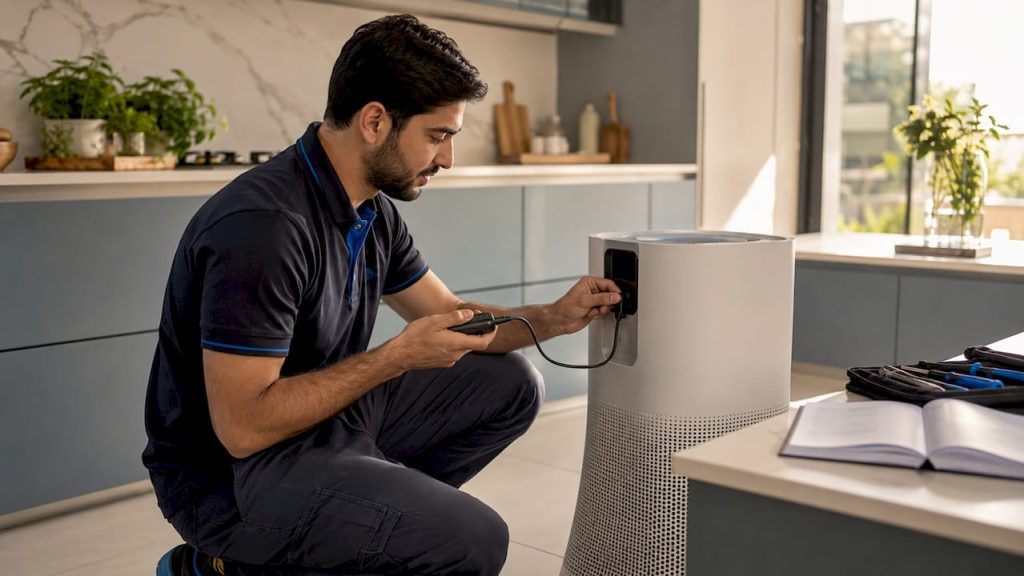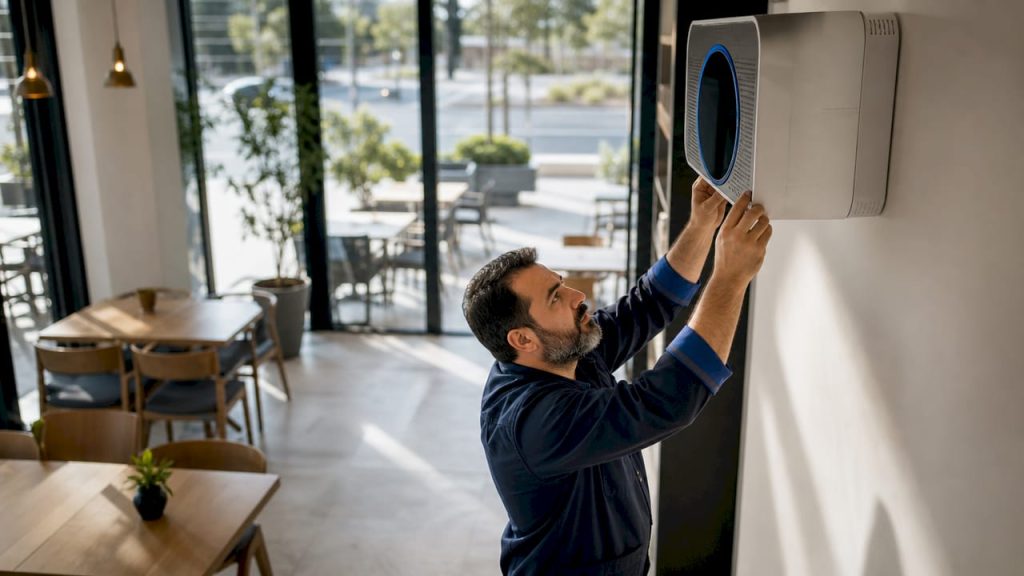
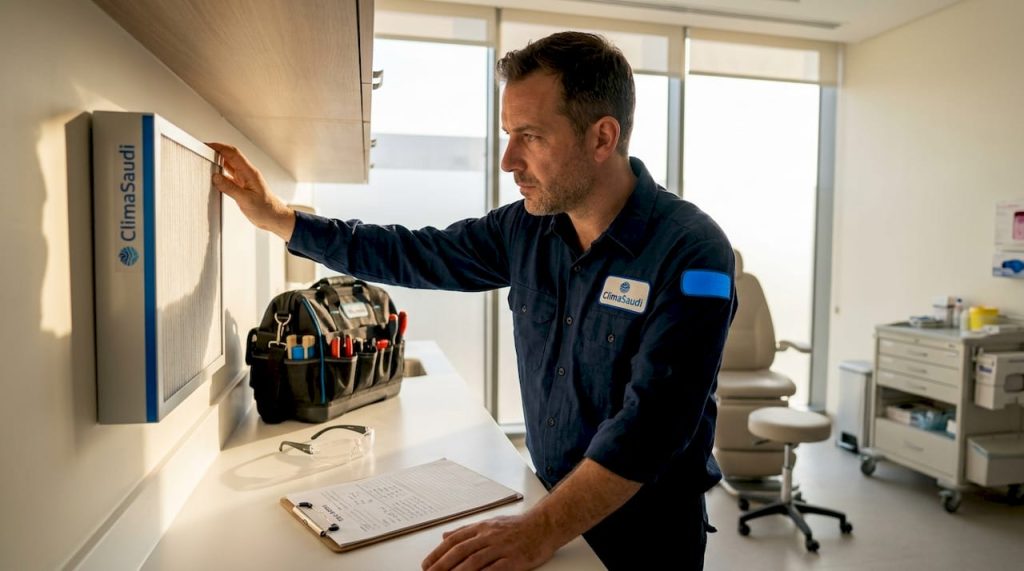
Standard HVAC systems move air efficiently. But “efficient” is not the same as “safe.” Many clinic operators across Saudi Arabia assume that a well-maintained air conditioning system handles infection risk adequately. It does not. Understanding why clinics require HEPA filtration means recognising that standard filters, even high-rated ones, cannot reliably capture bacteria, viruses, and fine particulate matter at the sizes that matter most. This guide covers the science, the regulatory requirements under Saudi and international standards, and the practical steps your facility needs to take to protect patients and stay compliant.
Table of Contents
- Understanding HEPA filtration and its clinical importance
- Regulatory requirements and compliance for HEPA filtration in Saudi healthcare
- Choosing the right HEPA filtration grade and maintenance for clinic environments
- HEPA filtration’s role within a comprehensive infection control strategy
- Implementing and maintaining effective HEPA filtration in Saudi clinics
- Rethinking HEPA filtration: expert lessons and overlooked realities
- Enhance your clinic’s air quality with ClimaSaudi’s HEPA filtration solutions
- Frequently asked questions
Key Takeaways
| Point | Details |
|---|---|
| HEPA filtration efficiency | HEPA filters capture at least 99.97% of 0.3-micron particles, removing pathogens effectively. |
| Regulatory compliance | Saudi healthcare mandates HEPA use in critical areas, with strict air change and pressure standards. |
| Filter selection and maintenance | Choosing the right HEPA grade and scheduling regular duct cleaning ensures sustained air quality. |
| Integrated infection control | HEPA filters must work with ventilation design and pressure controls to prevent airborne pathogen spread. |
| Energy and operational efficiency | Modern HEPA filters minimize energy costs and maintenance burdens when properly engineered. |
Understanding HEPA filtration and its clinical importance
HEPA stands for High Efficiency Particulate Air. A filter earns the HEPA designation by capturing at least 99.97% of particles at 0.3 microns, which is considered the most penetrating particle size. That specification is not arbitrary. It is the point at which airborne pathogens, fungal spores, and fine dust particles are most difficult to trap. Standard HVAC filters rated MERV 13 to 16 remove larger particles well, but they cannot reliably intercept particles below 1 micron. That gap is where the clinical danger lives.
For context, the Mycobacterium tuberculosis bacterium is roughly 1 to 4 microns. Many viral aerosol droplet nuclei fall below 5 microns and remain airborne for extended periods. A MERV 14 filter might catch 75% to 85% of particles in that range. A HEPA filter catches 99.97% or more. In a ward treating immunocompromised patients, that difference is clinically significant.
Key reasons why HEPA filtration is indispensable in clinical environments:
- Pathogen removal: Captures bacteria, viral particles, and fungal spores that standard filters miss
- Fine particulate control: Removes PM2.5 and sub-micron dust, critical in Saudi Arabia where desert air carries high particle loads
- Allergen reduction: Eliminates airborne allergens that can compromise vulnerable patients
- Post-construction safety: Filters construction dust and debris during renovation work in occupied hospitals
- Cross-contamination prevention: Supports room-to-room pressure management by ensuring supply air is clean before distribution
“HEPA filters are required in clinical environments to capture at least 99.97% of particles at 0.3 microns, critical for removing airborne pathogens standard filters cannot trap.”
Operating rooms in Saudi facilities typically require 20 to 25 air changes per hour (ACH). Without HEPA-grade filtration at terminal points, those high ACH rates simply circulate potentially contaminated air faster. Speed without cleanliness is not protection. Understanding HEPA filter ratings in detail helps you match filter specification to clinical risk level precisely.
Regulatory requirements and compliance for HEPA filtration in Saudi healthcare
Compliance is not optional, and the requirements are specific. ANSI/ASHRAE/ASHE Standard 170 sets the baseline for ventilation in healthcare facilities globally, and Saudi Arabia’s Ministry of Health (MOH) and the Central Board for Accreditation of Healthcare Institutions (CBAHI) build upon those foundations with their own mandates. Healthcare facilities must comply with ANSI/ASHRAE/ASHE Standard 170 and Saudi MOH regulations mandating HEPA filtration in high-risk areas such as operating and isolation rooms.
The key areas where HEPA filtration is mandatory or strongly indicated include:
- Operating rooms requiring HEPA terminal filters, minimum 20 ACH, and positive pressure relative to adjacent corridors
- Negative pressure isolation rooms for infectious disease patients, requiring HEPA filtration on exhaust air to protect adjacent spaces
- Protective environments for immunocompromised patients such as bone marrow transplant units, where HEPA supply air and positive pressure are both required
- Procedure rooms undertaking aerosol-generating procedures, including bronchoscopy suites and dental procedure areas
- Sterile compounding pharmacies and IVF laboratories, where ISO cleanliness classifications demand HEPA or ULPA filtration
The consequences of non-compliance extend beyond a regulatory citation. CBAHI accreditation surveys assess ventilation systems directly. A failed inspection can result in suspended accreditation, which affects insurance reimbursement and the facility’s legal right to operate in certain capacities. More critically, non-compliant air handling in isolation rooms has been directly linked to healthcare-associated infection (HAI) outbreaks in documented cases across the region.
Pressure differential maintenance is not a one-time commissioning task. It requires continuous monitoring with automated visual and audible alarms to confirm that protective environments remain pressurised correctly at all times.
Understanding H13 filter advantages over lower-rated alternatives is essential when specifying systems for these regulated areas.
Choosing the right HEPA filtration grade and maintenance for clinic environments
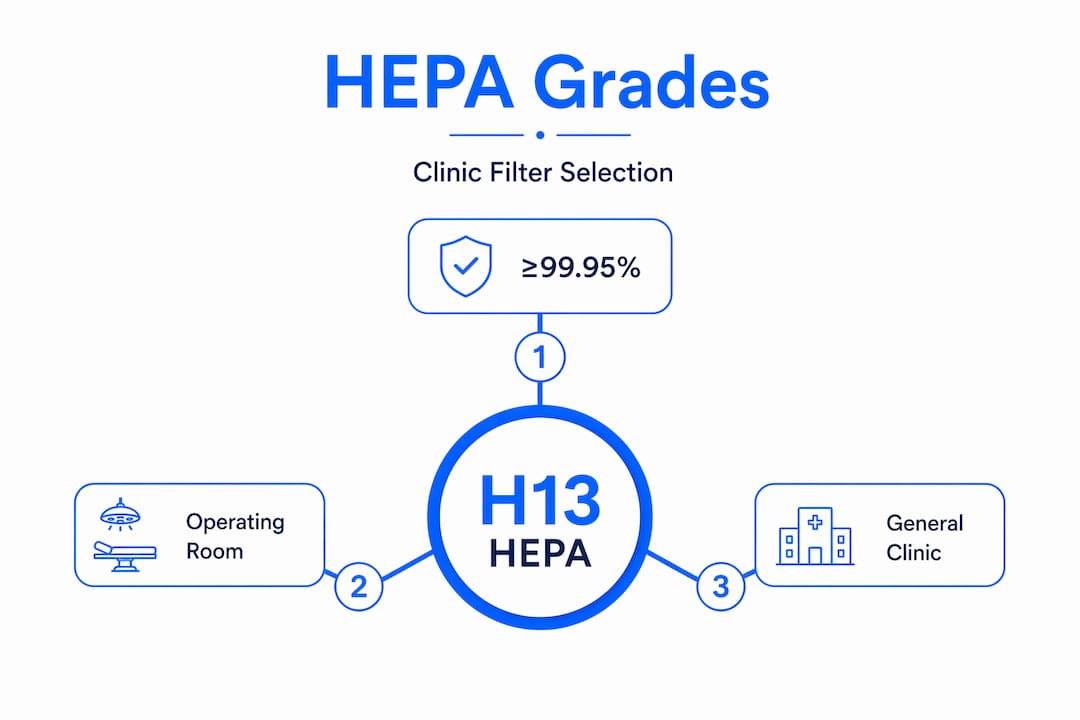
Not every clinical space needs the same filter grade. The decision is a risk-management exercise, and getting it wrong in either direction costs you. Under-specifying creates infection risk; over-specifying where it is not warranted increases cost without clinical benefit. Selecting the filter grade is fundamentally a risk-management decision: H13 is suited for general clinical areas, while H14 or ULPA filters meet ultra-critical environments like IVF labs to comply with ISO cleanliness requirements.
| Filter grade | Capture efficiency | Typical clinical application |
|---|---|---|
| H13 HEPA | ≥99.95% at 0.3 microns | Operating rooms, isolation rooms, general wards |
| H14 HEPA | ≥99.995% at 0.3 microns | Bone marrow transplant units, cleanrooms |
| ULPA | ≥99.9995% at 0.12 microns | IVF laboratories, pharmaceutical manufacturing |
For most clinics in Riyadh, Jeddah, and Dammam, H13 HEPA filtration covers the majority of regulated clinical areas. H14 is reserved for the highest-acuity environments. Using H14 throughout a standard clinic is unnecessary and adds significant pressure drop to your HVAC system, increasing fan energy and operational cost.
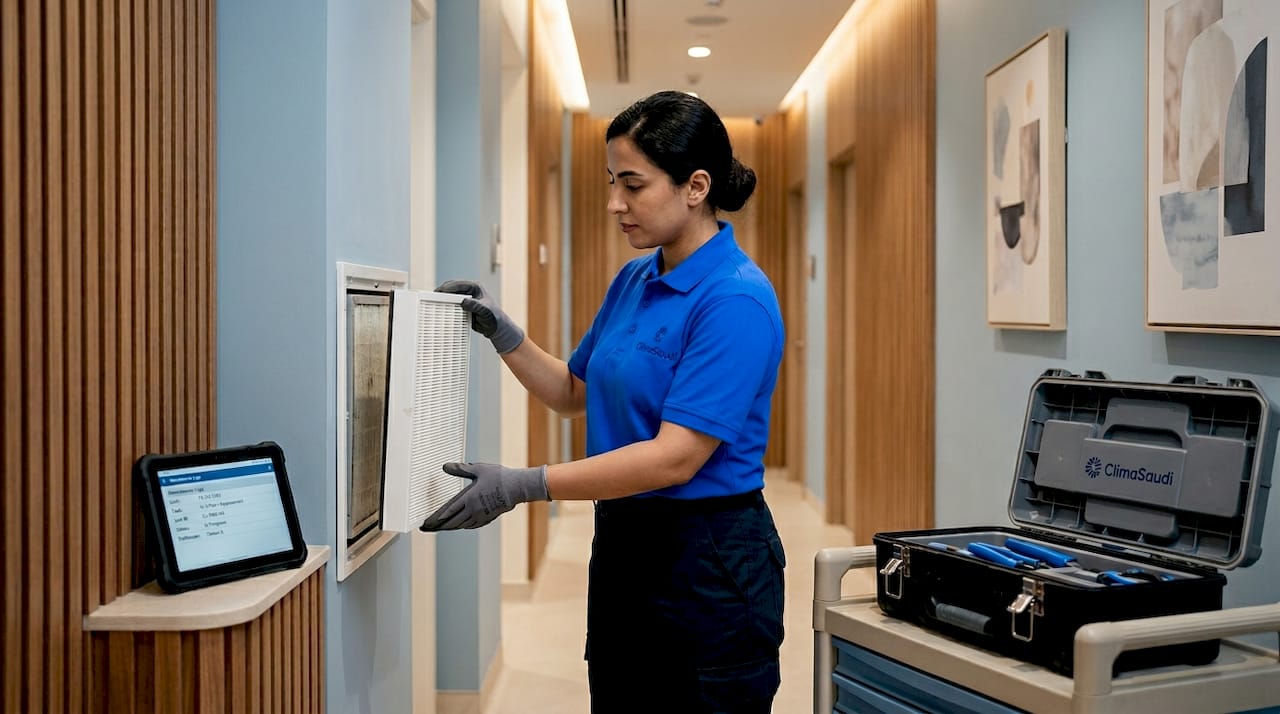
Saudi Arabia’s climate creates a maintenance burden that facilities in Europe or North America simply do not face. Duct cleaning every 3 to 6 months in high-risk areas, and every 6 to 12 months in general wards, is recommended due to the country’s high dust and sand loads. Sandstorms in particular deposit fine particulate inside ductwork rapidly. Neglecting this shortens filter life, increases pressure drop, and ultimately compromises air quality in ways your pressure gauges may not immediately detect.
Key maintenance requirements for Saudi clinical HEPA systems:
- Filter inspection: Visual checks after major dust events, formal inspections quarterly minimum
- Pressure drop monitoring: Log static pressure across filters; schedule replacement when drop exceeds manufacturer threshold
- EN 1822 certification: Confirm all filters are individually tested and certified under EN 1822 or equivalent, not batch-sampled
- Proper sealing: Frame seals and gaskets must be inspected at every filter change; a poorly seated H14 filter performs worse than a correctly installed H13
- Commissioning duct cleaning: All new ductwork must be cleaned before occupation, particularly after construction work
Pro Tip: Build your filter replacement schedule around your local weather patterns, not just a fixed calendar. After a major sandstorm, inspect filters immediately regardless of when they were last changed. Saudi dust events can load a filter to its replacement threshold in days rather than months.
More detail on HEPA filter ratings helps you align specification with the specific room classifications in your facility.
HEPA filtration’s role within a comprehensive infection control strategy
Here is a mistake many facility managers make: they install certified HEPA filtration, tick the compliance box, and assume the air quality problem is solved. It is not. HEPA filtration effectiveness depends on proper ventilation design, pressure differentials, and air change rates. Filters alone do not prevent pathogen migration.
Think of HEPA filtration as one layer within a three-tier infection control system:
- Patient-side filtration: HEPA terminal filters at supply air points, positioned correctly relative to the patient zone
- Circuit controls: Ensuring recirculated air passes through HEPA filtration before re-entry, and exhaust air from negative pressure rooms is HEPA-filtered before discharge
- Ventilation system design: Correct airflow patterns, directional flow from clean to less-clean zones, and maintained pressure relationships
Pressure relationships are particularly critical. Positive pressure rooms push air outward, preventing external pathogens from entering and protecting immunocompromised patients. Negative pressure rooms draw air inward, preventing infectious air from escaping and protecting staff and adjacent patients. Continuous automated pressure monitoring with visual alarms is mandatory to maintain pressure integrity for infection control compliance.
Common pitfalls to avoid:
- Installing HEPA filters in a duct system with leaks, which bypasses filtration entirely
- Achieving correct ACH on paper but using poor diffuser placement that creates dead zones where pathogens accumulate
- Failing to account for door opening frequency, which transiently disrupts pressure relationships in isolation rooms
- Treating HEPA filtration as a standalone measure rather than coordinating with your infection control team
Understanding the broader difference between air purifiers and filters also clarifies where supplemental portable units can add value in areas your main HVAC system does not fully cover.
Implementing and maintaining effective HEPA filtration in Saudi clinics
Practical implementation requires a structured approach. Ad hoc decisions during construction or renovation create gaps that become expensive to correct after commissioning.
- Engage an MEP consultant with healthcare experience during the design phase, specifying HEPA terminal filter locations based on room classification, not generic building practice
- Include commissioning duct cleaning in every project specification before any clinical space is occupied. Extreme Saudi dust and sand conditions require data-driven filter maintenance and incorporating duct cleaning into commissioning to prevent contamination from construction dust
- Validate filter installation by testing pressure drop and checking for bypass leakage around frames before sign-off
- Establish a maintenance log that records pressure drop readings, filter replacement dates, and any post-sandstorm inspections
- Review your maintenance schedule after every significant dust event, treating it as a live document rather than a fixed annual plan
- Collaborate across disciplines: your infection control officer, facilities engineer, and HVAC contractor should review the system together at least annually
Modern HEPA systems with V-bank designs maintain high filtration efficiency with minimal energy impact when engineered correctly. The concern that HEPA filtration significantly increases energy bills is largely outdated when modern filter designs are selected and systems are correctly sized.
Key operational benefits of this approach:
- Reduced HAI rates, which lowers costs associated with extended patient stays and legal liability
- Sustained CBAHI accreditation without last-minute remediation before surveys
- Extended filter service life through proactive maintenance, reducing replacement costs
- Documented compliance records that protect your facility in the event of a patient safety investigation
Pro Tip: Use how HEPA filters work as a training reference for your facilities team. When maintenance staff understand the mechanics behind filtration, they make better decisions in the field, particularly when assessing whether a filter needs early replacement after a dust event.
Rethinking HEPA filtration: expert lessons and overlooked realities
There is a version of this topic that gets repeated in facilities management seminars across Saudi Arabia, and it goes roughly like this: install certified HEPA filters, follow the maintenance schedule, and you are protected. That framing is incomplete, and in some cases dangerously so.
The most common gap we see is facilities where HEPA filters are correctly specified and regularly replaced, but pressure differentials are never monitored continuously. A nurse propping open an isolation room door for convenience, a door seal that wore out six months ago, a damper that is not closing fully. None of these show up on a filter replacement log. All of them defeat the protection that a correctly rated HEPA filter is supposed to provide.
The second misconception is about efficiency and cost. Many facility managers still assume that specifying H14 or ULPA throughout a hospital is the most protective choice. It is not. Filter grade insights show clearly that higher filter grades increase static pressure, which means larger, more energy-intensive fans to maintain ACH targets. In areas that do not require H14, this creates unnecessary operational cost without any measurable clinical benefit. Matching grade to room function is a discipline, not a default.
The third reality specific to Saudi Arabia: commissioning duct cleaning is still routinely value-engineered out of hospital construction projects. The assumption is that new ductwork is clean. It is not. Construction dust in the Kingdom’s climate is pervasive, and a system that circulates debris-laden air through brand-new HEPA terminal filters will load those filters to capacity within weeks. That is not a HEPA failure. That is a planning failure that HEPA filtration cannot compensate for.
Our advice is straightforward. Treat your HVAC system as a clinical instrument, not a building service. It requires the same rigorous commissioning, the same documented maintenance, and the same multi-disciplinary oversight as any other system affecting patient outcomes.
Enhance your clinic’s air quality with ClimaSaudi’s HEPA filtration solutions
Meeting HEPA filtration requirements in Saudi clinical environments requires the right products, properly specified and reliably maintained. ClimaSaudi offers a range of certified HEPA filtration solutions designed for the demands of healthcare settings across the Kingdom, from Riyadh to Jeddah to Dammam.
Our HEPA filtration solutions include certified H13 units suited for clinical and administrative areas where supplemental air purification supports your primary HVAC system. The Blueair ComfortPure 3-in-1 T20i and the Blueair Blue Max 3450i are both built with certified HEPA filtration, designed to handle fine particulate including PM2.5, and are well suited to supplementing clinical air quality in waiting areas, staff rooms, and consultation spaces. With local inventory, SAR pricing, and next-day delivery across Saudi Arabia, we make it straightforward to act on what you have learned here.
Frequently asked questions
Why is HEPA filtration mandatory in operating rooms?
HEPA filters must capture 99.97% of particles at 0.3 microns, removing airborne pathogens that standard filters cannot trap. In operating rooms, even low concentrations of airborne bacteria significantly increase surgical site infection risk.
How often should I schedule duct cleaning in Saudi clinics?
Duct cleaning every 3 to 6 months for high-risk areas and every 6 to 12 months for general areas is recommended in Saudi Arabia. High dust and sand loads accelerate contamination far beyond what facilities in other climates experience.
Does higher HEPA filter efficiency mean higher energy costs?
Not necessarily. Modern HEPA filters’ V-bank designs minimise pressure drop, reducing energy impact despite high filtration efficiency. The key is correct system engineering, not simply specifying the highest grade available.
Are HEPA filters alone sufficient to prevent airborne infections?
No. HEPA filtration effectiveness depends on ventilation design, pressure control, and ACH; filters alone do not prevent pathogen migration between spaces. Pressure monitoring and correct airflow design are equally essential.
Which HEPA filter grade is best for my clinic’s specific areas?
H13 filters suffice for general clinical areas, while H14 or ULPA filters suit ultra-critical environments like IVF labs requiring stricter ISO cleanliness. Matching grade to room function, rather than applying one specification facility-wide, is the correct approach.