An HVAC system is defined as a centralised heating, ventilation, and air conditioning network that circulates and filters air throughout an entire home. A standalone air purifier is a portable unit that cleans air in a single room using certified HEPA filtration. The HVAC vs standalone purifier comparison matters most in Saudi Arabia, where desert dust, sand storms, and coastal humidity in cities like Riyadh, Jeddah, and Dammam create some of the most demanding indoor air quality conditions in the world. Understanding which system does what, and when to use both, is the fastest way to breathe cleaner air at home.
How do HVAC filters and standalone purifiers actually work?
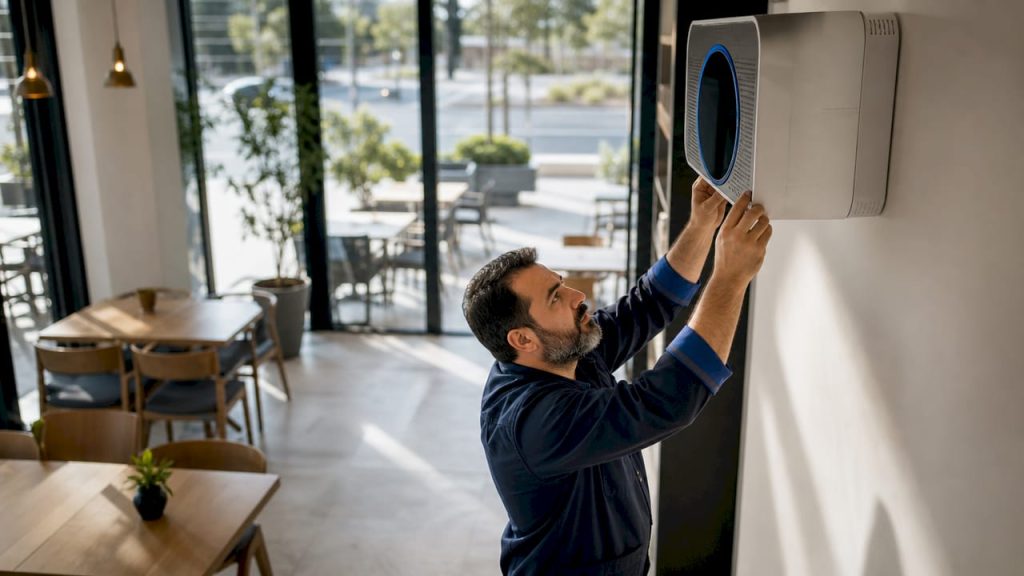
HVAC systems filter air using MERV-rated filters fitted inside the central air handling unit. MERV stands for Minimum Efficiency Reporting Value. A MERV 8 filter captures dust, pollen, and mould spores. A MERV 13 filter captures finer particles including bacteria and some virus carriers. The filter works passively: every time your air conditioning runs, air passes through it.
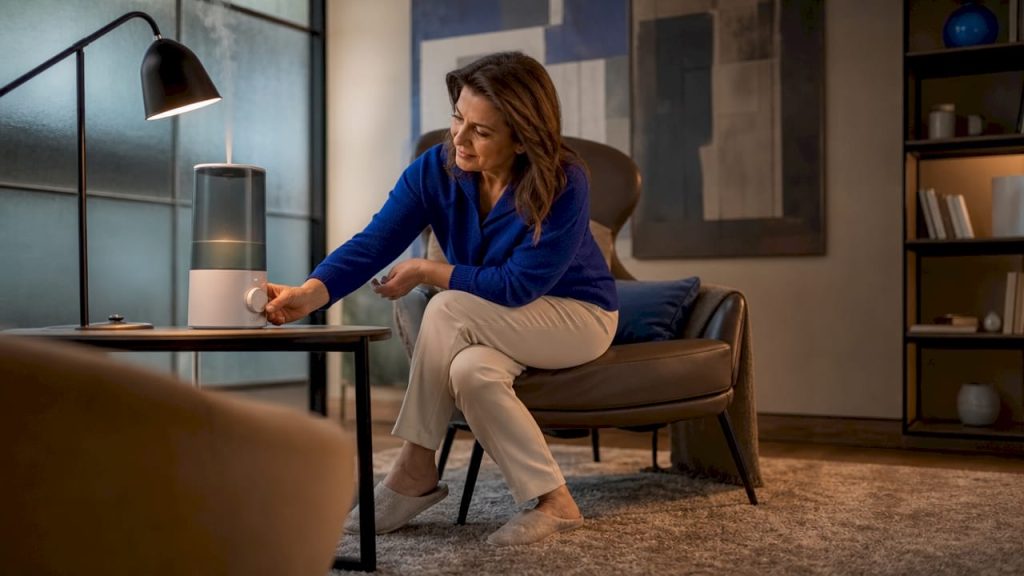
Standalone air purifiers use True HEPA filters, which capture 99.97% of particles as small as 0.3 microns. That includes PM2.5 fine particulate matter, pet dander, and tobacco smoke. HEPA purifiers reduce PM2.5 by 25–60% in real-world residential settings. That is a meaningful improvement for allergy sufferers or anyone living near a busy road or construction site in Riyadh.
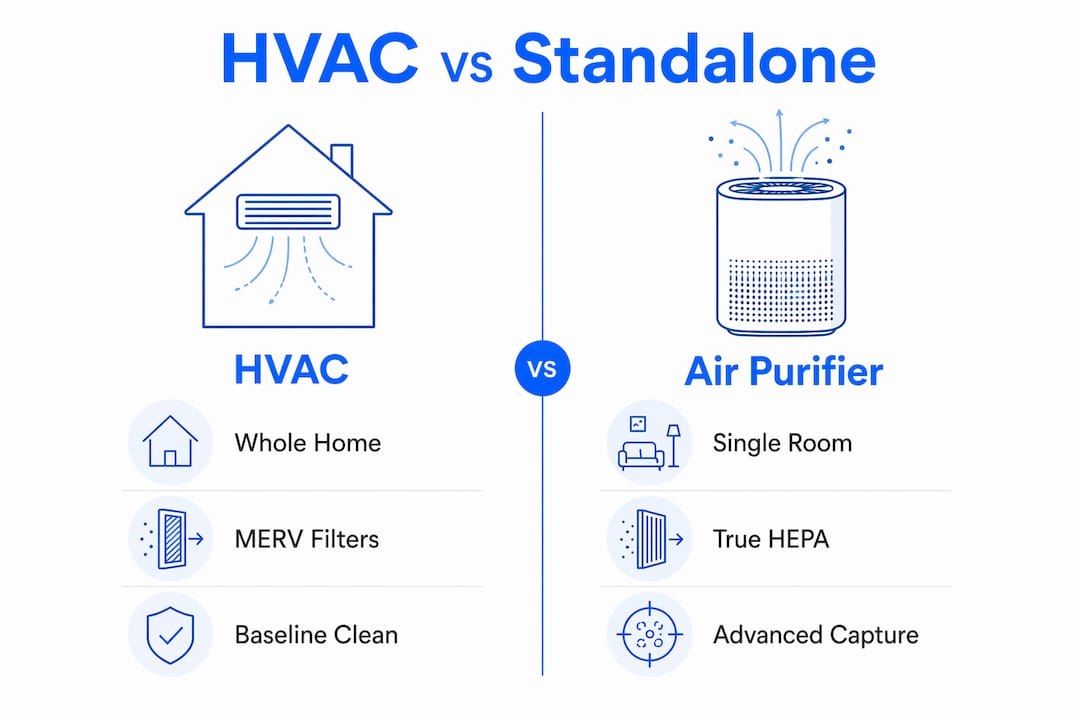
The critical difference is scope. Your HVAC filter protects the entire system and provides a baseline of cleanliness across every room. A standalone purifier delivers intensive cleaning in one specific room. Neither system alone covers both jobs equally well.
| Feature | HVAC Filter (MERV 13) | Standalone HEPA Purifier |
|---|---|---|
| Coverage area | Whole home | Single room |
| Particle capture size | Down to ~0.3–1 micron | Down to 0.3 microns (99.97%) |
| VOC and gas removal | Limited without carbon layer | Yes, with HEPA+carbon models |
| PM2.5 reduction | Moderate | Up to 56% reduction |
| Filter replacement | Every 3–6 months | Every 6–12 months |
Pro Tip: HVAC filters and standalone purifiers use different rating systems. MERV applies to central systems; CADR (Clean Air Delivery Rate) applies to portable units. Always check CADR against your room size before buying a purifier.
High-efficiency HVAC filters have limited ability to capture gases and VOCs without an activated carbon layer. Standalone purifiers with combination HEPA and carbon filters handle both particle and chemical pollutants. For Saudi homes where cooking odours, cleaning products, and outdoor pollution all contribute to indoor air quality problems, that distinction matters.
What are the benefits and limitations of each system?
Whole-home coverage versus room-specific cleaning
Your HVAC system covers every room in the house simultaneously. Every time the fan runs, air passes through the filter. This makes it the most practical choice for baseline air quality across a large villa or apartment. A standalone purifier covers one room at a time, typically 20–60 square metres depending on the model and its CADR rating.
Cost comparison
The upfront cost for a whole-home HVAC filtration upgrade ranges from $500 to $3,000 or more with professional installation. Standalone HEPA purifiers cost around $150–$600 per unit on average. For renters in Jeddah or Dammam who cannot modify the building’s HVAC system, a standalone purifier is the only realistic option.
Key limitations to know before you decide
- MERV 13 filters significantly improve whole-home filtration but may strain older HVAC systems, risking blower motor overheating. Always have a technician check compatibility before upgrading.
- Standalone purifiers running 24/7 incur higher energy costs than many owners expect. Their effectiveness also depends entirely on correct CADR sizing for the room.
- HVAC filters do not actively draw air through a cleaning cycle. If the air conditioning is off, no filtration happens. In mild Saudi evenings when residents open windows, HVAC filtration stops entirely.
- Standalone purifiers cannot clean air that does not reach them. Closed doors and poor room layout reduce their effectiveness significantly.
Pro Tip: In Saudi Arabia, HVAC systems run almost year-round due to the heat. That constant operation actually makes HVAC filtration more effective here than in cooler climates where systems sit idle for months.
How do both systems work together for better air quality?
HVAC filtration and standalone purifiers are complementary, not competing. The HVAC system provides widespread baseline cleanliness while purifiers deliver intensive air cleaning where you need it most. Think of it this way: your HVAC handles the whole house at a moderate level, and your purifier handles the bedroom or living room at a high level.
The EPA recommends upgrading to at least MERV 13 as a baseline whole-home filtration strategy, combined with portable HEPA purifiers in high-use rooms. For Saudi families dealing with seasonal dust storms or residents with asthma, this dual approach is the most reliable method available.
Here is how to implement a combined strategy in your home:
- Check your HVAC system’s compatibility. Ask a technician whether your unit can handle a MERV 13 filter without increased static pressure causing damage.
- Upgrade the HVAC filter first. A MERV 13 filter handles the whole-home baseline and reduces the workload on your standalone units.
- Place a HEPA purifier in your bedroom. You spend 6–8 hours there each night. Placing purifiers in high-use rooms like bedrooms or offices delivers the greatest health benefit.
- Add a second unit in the main living area if you have children, pets, or anyone with respiratory conditions.
- Keep doors closed when the purifier is running. This concentrates the cleaning effect within the target room and improves CADR performance.
- Run both systems consistently. Intermittent use produces inconsistent results. Continuous operation is the standard for measurable air quality improvement.
Effective air purification requires proper room ventilation and strategic placement. Even the best purifier cannot clean air that does not circulate through it. In Saudi homes with open-plan layouts, consider a higher-CADR model or two units positioned at opposite ends of the room.
Cost and maintenance tips for saudi homes
Managing your investment well is as important as choosing the right system. Both HVAC filters and standalone purifiers require regular maintenance to perform at the level you paid for.
HVAC filter maintenance
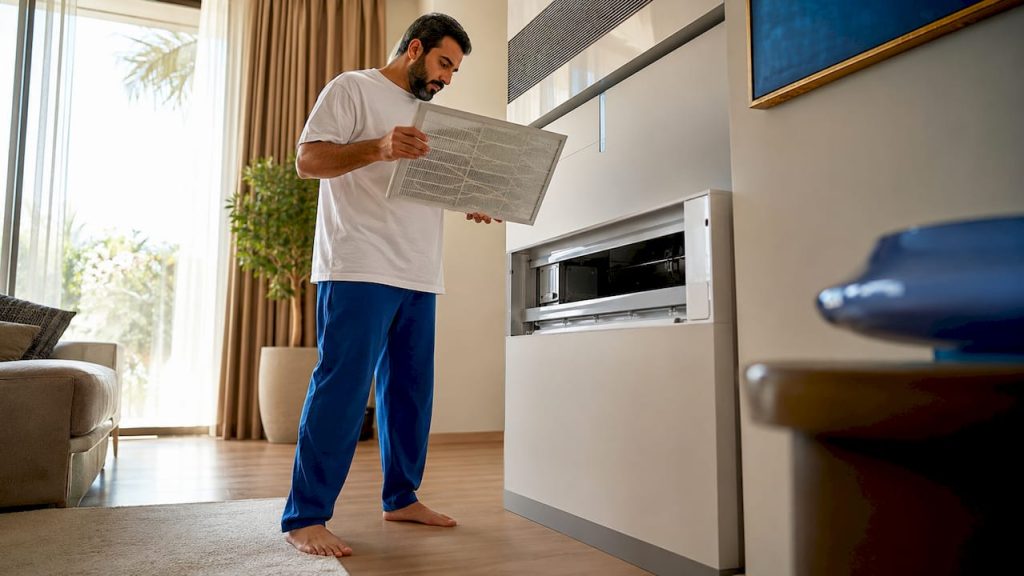
- Replace MERV 13 filters every 60–90 days in Saudi Arabia. Desert dust loads filters faster than in temperate climates.
- Check filters monthly during dust storm season, particularly in Riyadh and the central region.
- Never run your HVAC without a filter fitted. Even one day of unfiltered operation deposits dust directly onto the blower motor and coils.
- Use only filters rated for your specific unit. A filter that is too thick increases static pressure and reduces airflow.
Standalone purifier maintenance
- True HEPA filter performance depends on certified filtration, correct CADR sizing, and replacing filters every 6–12 months. In Saudi Arabia, replace closer to every 6 months due to higher dust loads.
- A grey or visibly clogged filter is already past its effective life. Do not wait for a warning light alone.
- Pre-filters on most units capture large dust particles and extend the life of the HEPA layer. Clean pre-filters every 2–4 weeks.
- Buy only certified replacement filters from trusted sources. Non-certified filters may not meet HEPA H13 standards and will reduce performance. Climasaudi’s guide on maintaining HEPA filters covers the full process in detail.
Running a standalone purifier 24/7 adds to your electricity bill. A mid-range unit typically draws 30–50 watts on medium speed. That is manageable, but running multiple units continuously across a large villa adds up. Use sleep or auto modes overnight to balance performance with energy use. For more on when to act, Climasaudi’s article on replacing HEPA filters regularly explains the signs clearly.
Key takeaways
The most effective approach to indoor air quality in Saudi homes is combining a MERV 13 HVAC filter for whole-home baseline filtration with certified HEPA purifiers placed in the rooms where you spend the most time.
| Point | Details |
|---|---|
| HVAC covers the whole home | MERV 13 filters provide baseline filtration across every room when the system runs. |
| HEPA purifiers target specific rooms | Standalone units reduce PM2.5 by up to 56% in the rooms where you place them. |
| Both systems have real limitations | HVAC cannot capture VOCs without carbon; purifiers cannot clean beyond one room. |
| Saudi conditions demand more maintenance | Desert dust clogs filters faster; replace HVAC filters every 60–90 days and HEPA filters every 6 months. |
| Combined use is the strongest strategy | The EPA recommends MERV 13 plus portable HEPA purifiers in high-use rooms for best results. |
The practical reality most homeowners miss
I have seen the same pattern repeat itself across Saudi homes. A family invests in a good HVAC system and assumes the air is clean. Or they buy a standalone purifier and expect it to handle the whole flat. Both assumptions lead to disappointment.
The uncomfortable truth is that neither system is complete on its own in a Saudi climate. Your HVAC runs constantly, which is an advantage, but standard HVAC filters were designed to protect the equipment, not to deliver clinical-grade air cleaning. Upgrading to MERV 13 helps, but it still will not capture the fine PM2.5 particles that aggravate asthma or allergies.
Standalone purifiers are genuinely powerful in the right room. The problem is that homeowners often buy a unit sized for a small bedroom and place it in a large open-plan living area. The CADR is simply too low to make a measurable difference. Sizing matters more than brand.
My honest recommendation: start with a MERV 13 upgrade if your HVAC system can handle it, then add a correctly sized HEPA purifier in your bedroom. That combination covers both the whole-home baseline and the room where your health is most directly affected. It is not the most expensive approach, but it is the most efficient one I have seen work consistently.
— Pauline
Find the right air purifier for your saudi home
If you are ready to act on what you have read, Climasaudi stocks a full range of certified HEPA air purifiers sized for Saudi homes, from compact bedroom units to high-CADR models for large living areas. Every product is available with transparent SAR pricing, local inventory, and next-day delivery to Riyadh, Jeddah, and Dammam.
The Blueair Blue 3610 is a strong choice for bedrooms, while the Blueair ComfortPure T20i handles larger rooms with its 3-in-1 filtration design. Browse the full air purifier catalogue on Climasaudi to filter by room size, air quality concern, and budget. Local customer support is available to help you match the right unit to your specific home.
FAQ
What is the main difference between HVAC and a standalone purifier?
An HVAC system filters air across the whole home using MERV-rated filters integrated into the central unit. A standalone purifier cleans air in one room using True HEPA filtration at a much higher particle capture rate.
Can a standalone air purifier replace my HVAC filter?
No. A standalone purifier cannot replace HVAC filtration because it only cleans the room it is placed in. The EPA recommends using both systems together for whole-home and room-level air quality improvement.
How often should i replace filters in saudi arabia?
Replace HVAC filters every 60–90 days and HEPA purifier filters every 6 months in Saudi Arabia. Desert dust and high temperatures accelerate filter loading compared to cooler, less dusty climates.
What CADR rating do i need for my room?
A general rule is to match CADR to at least two thirds of your room’s square footage in cubic metres per hour. A 25-square-metre bedroom typically needs a CADR of at least 150–200 m³/h for effective cleaning.
Do HVAC filters remove vocs and cooking odours?
Standard MERV filters do not remove VOCs or gases. Only filters with an activated carbon layer capture chemical pollutants. Standalone purifiers with combination HEPA and carbon filters handle both particles and odours more effectively.