A humidifier is a device that regulates indoor moisture levels to create a healthier, more comfortable living environment. The optimal indoor humidity range sits between 30% and 50%, and staying within that band affects everything from how well you breathe at night to whether your wooden floors stay intact. Humidity control is as important as temperature for home comfort and energy efficiency. Whether you live in a dry apartment in Riyadh or a villa in Jeddah where air conditioning strips moisture from every room, understanding how a humidifier works gives you a practical tool for a noticeably better home.
How does humidity affect comfort and health at home?
Humidity is the invisible variable that most homeowners overlook until something goes wrong. When indoor air drops below 30% relative humidity, your nasal passages and throat dry out, making you more susceptible to airborne viruses. The mucous membranes lining your airways act as a first line of defence against pathogens, and they need moisture to function properly.
The physiological effects of dry air are specific and well-documented:
- Dry nasal passages reduce the body’s ability to filter airborne particles and viruses
- Cracked lips and itchy skin are direct signs that ambient moisture is too low
- Irritated eyes are common in air-conditioned rooms with humidity below 30%
- Static electricity buildup increases noticeably in very dry indoor air
- Worsened allergy symptoms occur when dry air carries more airborne dust and dander
On the other end, humidity above 50% encourages dust mite and mould growth, which worsens asthma and allergies. Dust mites absorb moisture directly from the air, so keeping humidity below 50% collapses their population. This is the “goldilocks zone” that the EPA and organisations like Carrier reference in their guidance: not too dry, not too damp.
“Humidity control is not a luxury feature. It is a foundational element of a healthy indoor environment, as significant as ventilation and filtration.” — Bain Heating & AC, 2026
The comfort paradox is worth noting here. Humid air feels warmer than dry air at the same temperature because it slows sweat evaporation from your skin. In winter, this means a properly humidified room at 19°C can feel as warm as a dry room at 21°C. That difference has real implications for your energy bill.
What types of humidifiers are available and how do they compare?
Choosing the right humidifier depends on your room size, maintenance tolerance, and whether you want a portable unit or a whole-home solution. The three main technologies are evaporative, ultrasonic, and warm-mist, each with distinct trade-offs.
| Type | Coverage | Maintenance | Best for | Approx. cost |
|---|---|---|---|---|
| Evaporative | Medium to large rooms | Wick filter replacement | Whole-home use, allergy sufferers | Moderate |
| Ultrasonic | Small to medium rooms | Frequent cleaning, distilled water | Bedrooms, quiet spaces | Low to moderate |
| Warm-mist | Small rooms | Regular descaling | Cold climates, congestion relief | Low |
| Whole-home (HVAC) | Up to 3,000 sq ft | Annual service | Villas, large apartments | High upfront |
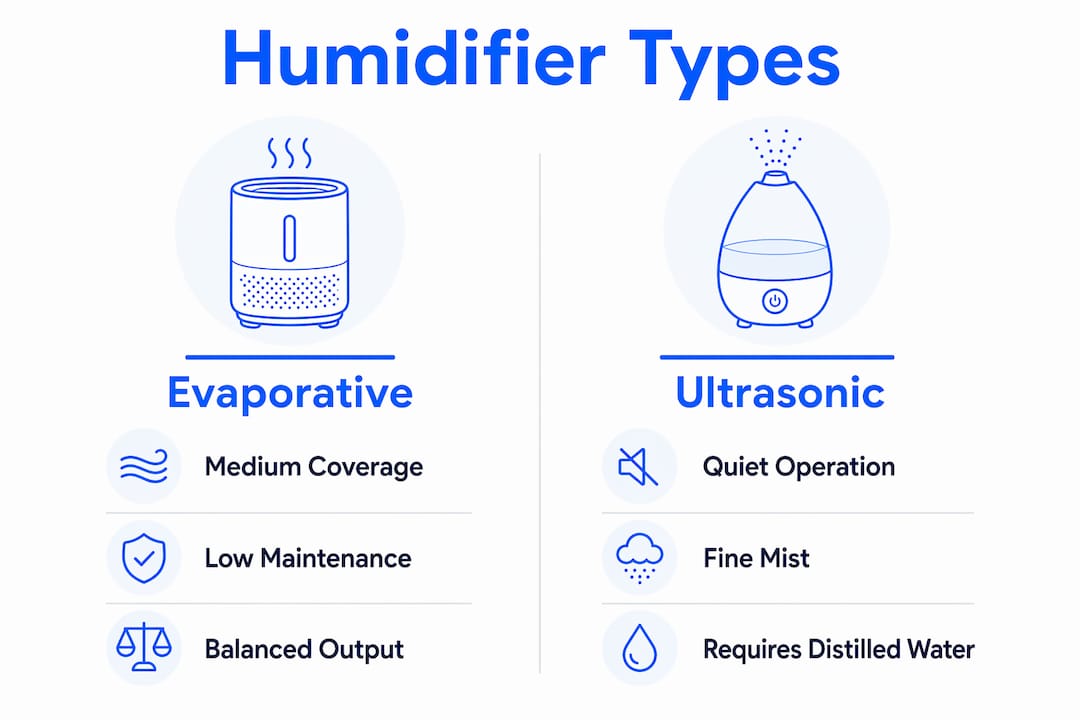
Evaporative humidifiers regulate output naturally, which means they are less likely to over-humidify a space. This makes them the preferred choice for whole-home use. Ultrasonic models use high-frequency vibrations to produce a fine cool mist and are very quiet, making them popular for bedrooms. However, they require distilled water for ultrasonic models to prevent mineral dust from being dispersed into the air.
Whole-home humidifiers integrated with HVAC can cover up to 3,000 square feet, run for up to 72 hours without refilling, and reduce energy use by allowing lower thermostat settings. They also provide automatic humidity control, which removes the guesswork entirely. For homeowners in Riyadh or Dammam running central air conditioning year-round, this integration is particularly effective.
Pro Tip: If you are using an ultrasonic humidifier, always fill it with distilled or demineralised water. Tap water contains minerals that the unit disperses as fine white dust, which settles on furniture and can irritate airways.
How does a humidifier protect your home and save energy?
The benefits of humidifiers extend well beyond personal comfort. Dry air is physically damaging to a home’s interior. Proper humidity prevents wood floors, furniture, and painted surfaces from shrinking, cracking, and warping. Wood is hygroscopic, meaning it absorbs and releases moisture in response to the surrounding air. When humidity drops consistently below 30%, wooden floorboards gap, cabinet joints loosen, and paint begins to peel at edges.
The energy savings are equally concrete. Humid air feels warmer, which allows you to set your thermostat lower while maintaining the same perceived comfort level. This reduces the load on your HVAC system and lowers electricity consumption. In Saudi Arabia, where air conditioning accounts for a significant portion of household energy use, even a modest thermostat reduction translates to meaningful savings over a full year.
| Humidity level | Effect on home materials | Energy implication |
|---|---|---|
| Below 30% | Wood cracks, paint peels, static increases | Higher heating demand |
| 30% to 50% | Materials stable, comfort maintained | Optimal thermostat efficiency |
| Above 50% | Mould risk, dust mite growth | Increased cooling demand |
| Above 60% | Condensation and structural damage inside walls | Risk of long-term damage |
Pro Tip: Pair your humidifier with a smart thermostat. When the two systems communicate, your HVAC adjusts automatically based on both temperature and humidity readings, cutting energy waste without any manual input.
For a fuller picture of how humidity interacts with your home’s air quality, the Climasaudi guide on indoor air quality covers the relationship between moisture, dust, and filtration in practical terms.
What maintenance practices keep your humidifier safe and effective?
A neglected humidifier becomes a health hazard rather than a health tool. Proper humidifier hygiene prevents bacterial aerosols and mineral dust from being released into your home’s air. The maintenance steps below apply to most portable and tabletop models:
- Empty and rinse the tank daily when the unit is in regular use. Stagnant water breeds bacteria within 24 to 48 hours.
- Deep clean every three to five days using a diluted white vinegar solution to dissolve mineral deposits and inhibit mould growth.
- Replace wicks and filters according to the manufacturer’s schedule. A clogged wick reduces output and harbours bacteria.
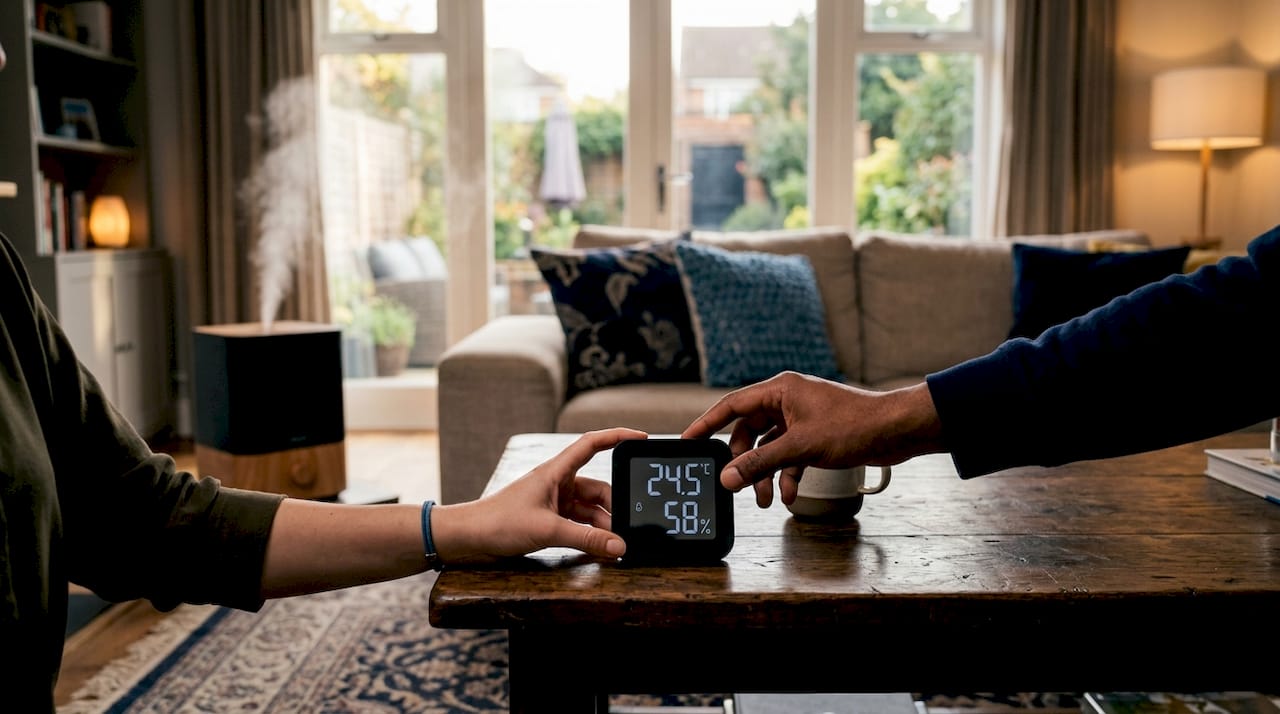
- Use a dedicated hygrometer to measure actual room humidity. Built-in humidifier sensors can read inaccurately, so an independent device gives you a reliable reading.
- Store the unit dry at the end of the season. Any residual moisture left inside during storage leads to mould that is then dispersed when you restart the unit.
Avoiding over-humidification above 50% is as important as avoiding air that is too dry. A hygrometer costing under SAR 50 gives you the data you need to stay within the safe range. For guidance on maintaining complementary air quality equipment, the Climasaudi article on maintaining HEPA filters applies the same discipline to air purifier upkeep.
Pro Tip: Set a recurring weekly reminder on your phone for humidifier cleaning. It takes less than ten minutes, and it is the single most effective step for keeping the device safe and performing well.
Can a humidifier improve your sleep quality?
Sleep quality and respiratory comfort are directly linked to the moisture level in your bedroom. Humidifiers improve sleep by reducing nasal dryness and congestion, which decreases snoring and keeps airways lubricated throughout the night. For people who wake up with a dry throat or blocked nose, a bedroom humidifier often resolves the problem within the first few nights of use.
The specific benefits for sleep and respiratory health include:
- Reduced snoring because adequately moistened throat tissues vibrate less aggressively during breathing
- Fewer night-time awakenings caused by dry throat irritation or nasal blockage
- Gentler conditions for children’s airways, which are more sensitive to dry air than adults’
- Relief from congestion associated with colds, allergies, and sinusitis, without medication
- Softer skin overnight, as the skin rehydrates during sleep when ambient humidity is adequate
For asthma sufferers, the caution is important: a humidifier that is not cleaned regularly or that pushes humidity above 50% can worsen symptoms by promoting dust mite and mould growth. The benefit is real, but it depends entirely on correct use. Pairing a bedroom humidifier with a quality air purifier that traps allergens addresses both moisture and particle concerns simultaneously. The Climasaudi Blueair DH3i combines both functions in a single unit, which is a practical solution for bedrooms where space and simplicity matter.
Key takeaways
A humidifier improves home comfort by maintaining indoor humidity between 30% and 50%, which protects health, preserves home materials, and reduces energy costs.
| Point | Details |
|---|---|
| Optimal humidity range | Keep indoor humidity between 30% and 50% to support health and prevent home damage. |
| Humidifier type matters | Choose evaporative for whole-home use and ultrasonic for quiet bedroom performance. |
| Energy savings are real | Humid air feels warmer, allowing lower thermostat settings and reduced HVAC load. |
| Maintenance is non-negotiable | Clean the tank every three to five days and use a hygrometer to monitor actual levels. |
| Sleep benefits are specific | A bedroom humidifier reduces nasal dryness, snoring, and night-time congestion reliably. |
Why I think most people underestimate their humidifier
Most homeowners buy a humidifier, plug it in, and forget about it. That is where the benefit stops and the risk begins. In my experience, the single biggest factor in whether a humidifier actually improves your home is whether you clean it consistently. A unit running with stagnant water or a clogged wick is dispersing bacteria into the air you breathe, which is worse than doing nothing.
The second thing people get wrong is buying a unit that is too small for the space. A tabletop model designed for a 20-square-metre bedroom will not meaningfully affect a 60-square-metre open-plan living area. Match the unit’s rated coverage to your actual room size, and do not assume that running it on maximum output compensates for undersizing.
What I find genuinely underappreciated is the pairing of a humidifier with an air purifier. Humidity control and particle filtration address different problems, but they work together. A humidifier keeps airways comfortable; a HEPA-grade purifier removes the dust, pollen, and PM2.5 particles that dry desert air carries indoors. In cities like Riyadh and Dammam, where sandstorms are a seasonal reality, running both devices is not excessive. It is simply appropriate for the environment.
— Pauline
Find the right humidifier for your home with Climasaudi
Climasaudi stocks a curated range of humidifiers suited to Saudi homes, from compact bedroom units to combination purifier-humidifier models built for larger spaces.
The Blueair InvisibleMist H35i is a quiet, low-maintenance option for bedrooms, priced at SAR 446 with next-day delivery across Riyadh, Jeddah, and Dammam. For rooms where air quality and humidity both need attention, the Blueair DH3i purifies and humidifies simultaneously. Browse the full selection, compare coverage areas and features, and find your match at the Climasaudi humidifiers catalogue. All products are locally stocked, SAR-priced, and backed by Climasaudi’s local customer support team.
FAQ
What is the ideal indoor humidity level for comfort?
The ideal indoor relative humidity range is 30% to 50%. Levels below 30% cause respiratory dryness and static, while levels above 50% promote dust mite and mould growth.
How does a humidifier help with dry air in an air-conditioned home?
Air conditioning removes moisture from indoor air as part of the cooling process. A humidifier restores that moisture, keeping airways comfortable and preventing dry skin, cracked wood, and static electricity.
Which humidifier type is best for a bedroom?
Ultrasonic humidifiers are the most popular choice for bedrooms because they operate quietly and produce a fine cool mist. Use distilled water to prevent mineral dust from being released into the air.
How often should I clean my humidifier?
Rinse the tank daily and deep clean with diluted white vinegar every three to five days. Neglected units can harbour bacteria and mould that are then dispersed into your home’s air.
Can a humidifier reduce snoring?
Yes. A humidifier reduces nasal dryness and keeps throat tissues adequately moistened, which decreases the vibration that causes snoring. Results are typically noticeable within the first few nights of use.