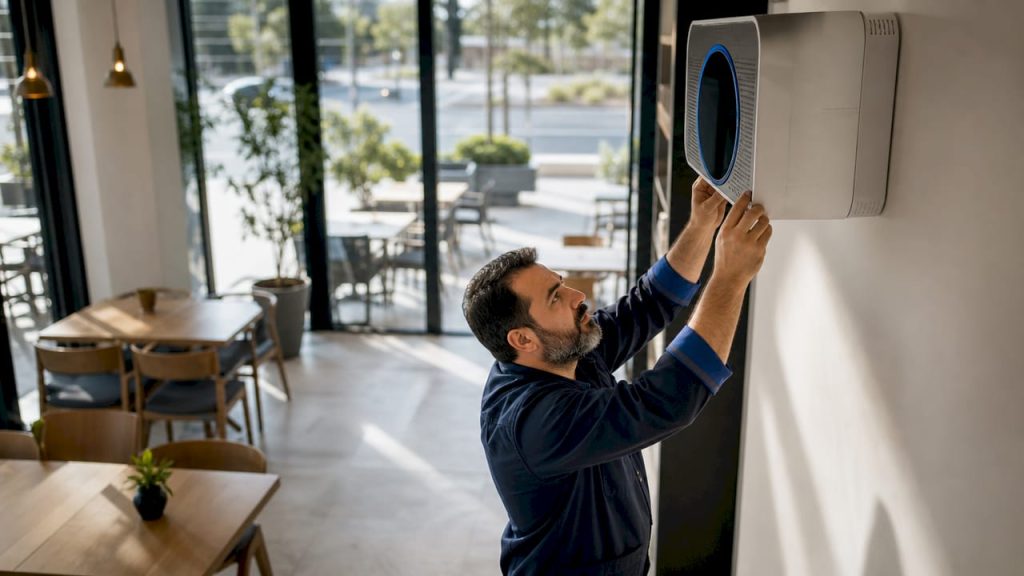

Bulk HEPA filter replacement scheduling is the practice of coordinating planned, large-scale filter changeovers across multiple zones or units to maintain certified indoor air quality and meet health compliance standards. For facility managers in Saudi Arabia, this is not an optional process. Desert dust, urban pollution, and seasonal sandstorms in cities like Riyadh, Jeddah, and Dammam accelerate filter loading far faster than in temperate climates. A disciplined approach to scheduling bulk HEPA filter replacement, supported by tools like differential pressure (ΔP) transducers, digital logbooks, and building management systems (BMS), is the difference between proactive cost control and expensive emergency shutdowns.
What factors determine the optimal timing for bulk HEPA filter replacement?
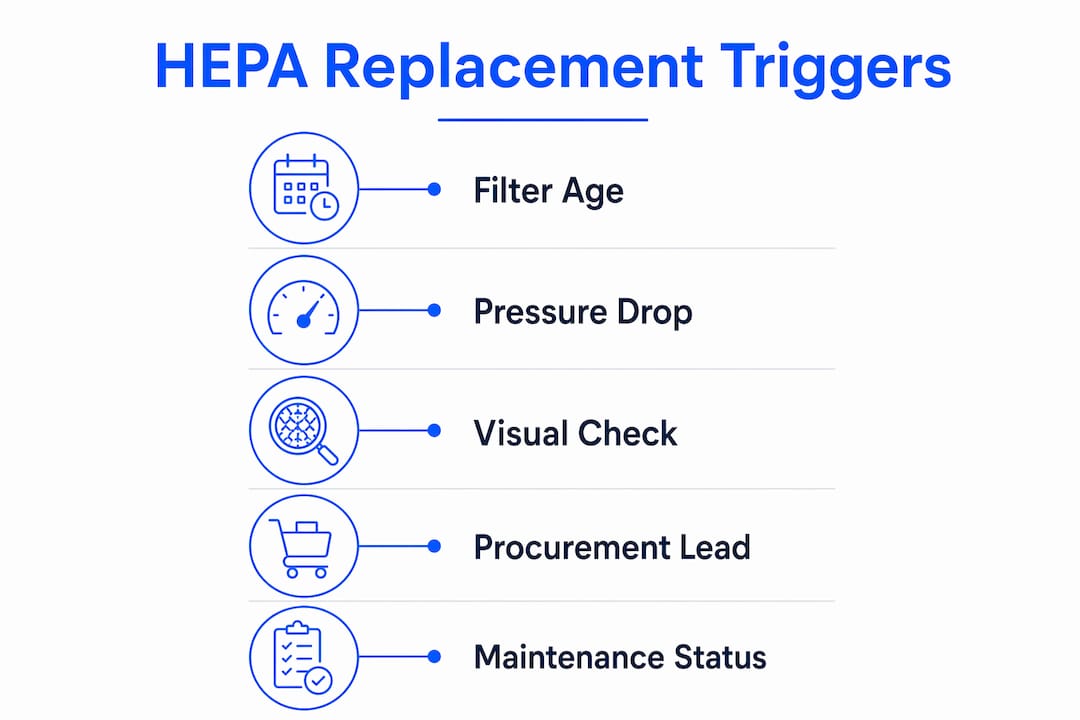
Filter replacement timing is driven by three measurable triggers, not by guesswork or a fixed calendar date. A three-trigger strategy combining filter age, pressure drop readings, and visual cleanliness assessments gives the most reliable basis for scheduling decisions. Relying on any single metric creates risk. A calendar-only approach wastes filters replaced too early or allows failures in heavily loaded zones.
Saudi Arabia’s environment adds specific pressure to this calculation. Dust storms, high PM2.5 concentrations, and coastal humidity in Jeddah and Dammam all shorten filter service life compared to standard manufacturer estimates. Facilities near construction zones or industrial areas in Riyadh face even higher particulate loads. Your baseline replacement interval must account for local conditions, not just the filter datasheet.
Key environmental and operational factors to assess before setting your bulk schedule:
- Contaminant load: Desert dust, pollen, and urban pollution in KSA increase filter loading rates significantly above European or North American norms.
- Pre-filter condition: G4 primary and F7 medium pre-filters act as the first line of defence. Neglecting pre-filters reduces HEPA filter lifespan and causes increased energy use and premature failures.
- Pressure drop (ΔP): A rising ΔP reading is the most reliable single indicator that a filter is nearing capacity. Most HEPA filters reach end-of-life at a ΔP of 1.5 to 2.5 times their initial resistance.
- Runtime hours: High-occupancy facilities running HVAC systems continuously will exhaust filters faster than part-time operations.
- Zone criticality: Operating theatres, pharmaceutical storage, and server rooms require tighter replacement thresholds than general office areas.
Calendar-based replacement schedules risk premature waste or catastrophic failure. Combining monitoring metrics is best practice, and the cost difference is significant. Facilities using pressure-drop-based filter management reduce energy costs by 20% and extend HVAC equipment life by 3–5 years. That is a measurable return on investing in proper monitoring infrastructure.
Pro Tip: Set your bulk replacement trigger at 80% of the maximum ΔP threshold, not 100%. This gives your procurement team lead time to order and stage filters before any zone reaches critical failure.
What tools and prerequisites do you need for bulk scheduling?
Effective bulk scheduling requires hardware, documentation systems, and supplier agreements working together. Without all three, your schedule will drift, costs will rise, and compliance records will have gaps.
Monitoring hardware
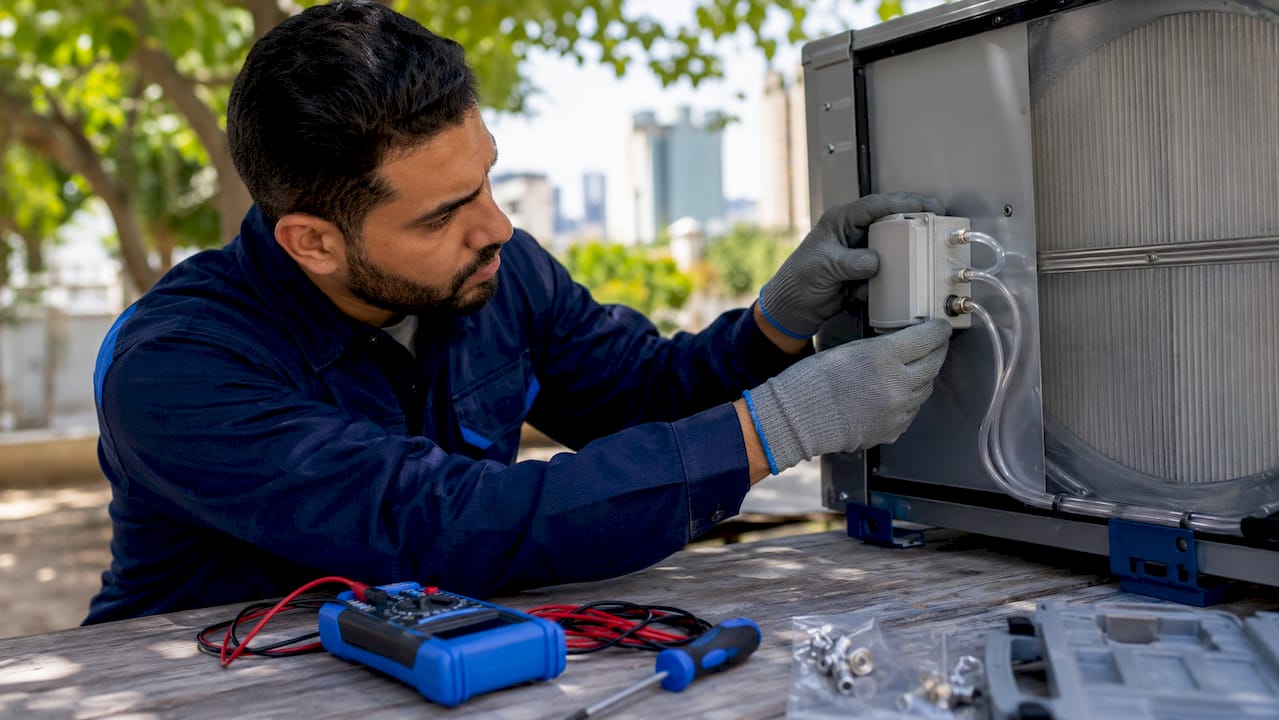
Installing ΔP transducers integrated into your BMS enables proactive filter replacement alerts at 80% of the replacement threshold. This avoids emergency downtime and gives procurement teams a predictable ordering window. Every critical zone in your facility should have a transducer fitted and connected to a central dashboard.
Documentation and logbooks
A filter logbook is not optional for compliance. Each entry should record the installation date, filter model and grade, initial ΔP reading, runtime hours, and the ΔP trend over time. Digital logbooks integrated with your BMS remove manual entry errors and make audit preparation straightforward.
Procurement and supplier agreements
| Procurement approach | Cost impact | Lead time | Risk level |
|---|---|---|---|
| Ad hoc single purchase | Highest unit cost | Variable | High (stockouts) |
| Planned bulk purchase, peak season | Moderate savings | Predictable | Medium |
| Bulk contract, off-peak negotiation | 20–30% unit cost saving | Longest lead | Lowest |
| Emergency procurement | Premium pricing | Shortest | Very high |
Negotiating bulk contracts during off-peak periods yields the best unit pricing. Locking in supply agreements before the peak dust season in Saudi Arabia, typically between march and june, protects both price and availability.
Pro Tip: Ask suppliers for a staged delivery schedule rather than a single bulk shipment. This reduces on-site storage requirements and keeps filters in better condition until installation.
How to develop a step-by-step bulk HEPA filter replacement schedule
A structured process prevents the two most common failures: unplanned downtime and disorganised procurement. Follow these steps in sequence.
-
Audit all filter locations. Map every HEPA filter unit across your facility by zone, filter grade (H13, H14), unit type, and current ΔP reading. This audit forms the foundation of your bulk order quantity and phasing plan.
-
Segment zones by criticality. Group zones into tiers. Tier 1 covers critical environments (cleanrooms, medical areas). Tier 2 covers high-occupancy offices and reception areas. Tier 3 covers storage and low-traffic zones. Each tier gets a different replacement threshold and frequency.
-
Align changeovers with planned shutdowns. Scheduling replacements in phases during planned shutdowns avoids costly production downtime. Downtime costs in critical environments can exceed SAR 187,000 per shutdown event, far outweighing the cost of the filters themselves.
-
Place your bulk order with lead time. Use your audit data to calculate total filter quantities by grade and size. HEPA filter unit prices vary by size and type, from small terminal modules to large AHU filters, so accurate quantities prevent over-ordering. Place orders at least 6–8 weeks before your scheduled changeover dates.
-
Stage filters on-site before the changeover window. Store filters in their original packaging in a clean, dry area. Avoid storing near chemical storage or areas with high humidity. Label each batch by zone to speed up installation day logistics.
-
Execute the replacement safely. Follow these steps for each unit:
- Power down the relevant HVAC section before opening any filter housing.
- Wear appropriate PPE: gloves, eye protection, and an FFP3 or equivalent respirator.
- Bag used filters immediately in sealed disposal bags to contain captured particulates.
- Record the removal date, final ΔP reading, and filter condition in your logbook.
- Install the new filter, confirm the correct orientation, and seal the housing fully.
- Record the installation date and initial ΔP reading before restarting the system.
-
Verify performance post-installation. Run a particle count check in critical zones within 24 hours of replacement. Confirm ΔP readings have returned to baseline. Flag any anomalies for immediate investigation.
A phased replacement cycle, where you rotate through zones over several days rather than replacing all filters simultaneously, keeps at least part of your facility fully operational throughout the process. This is the single most effective way to protect both air quality and business continuity.
What are the common challenges in bulk HEPA filter management?
The most costly mistake in bulk filter management is treating replacement as a purely administrative task. The technical and financial consequences of poor scheduling are significant and avoidable.
Common challenges and how to address them:
- Over-reliance on calendar intervals. Fixed schedules ignore actual filter condition. A filter in a Riyadh facility near a construction site may need replacement in half the time of one in a quieter zone. Use ΔP data to validate or override calendar triggers.
- Ignoring pre-filter maintenance. Rotating G4 and F7 pre-filters on a strict schedule can extend HEPA filter life by 40% or more. This is one of the highest-return maintenance actions available to facility managers.
- Hidden procurement costs. Emergency filter purchases carry premium pricing and uncertain lead times. A bulk contract with a local supplier eliminates this risk entirely.
- Incomplete documentation. Auditors and health inspectors require evidence of replacement dates, filter grades, and performance readings. Gaps in your logbook create compliance exposure. Use a digital system that timestamps every entry automatically.
- No predictive alerts. Facilities without BMS-integrated ΔP monitoring are always reactive. Installing transducers and setting pre-alarms at 80% of the replacement threshold converts your programme from reactive to predictive.
Pro Tip: Review your HEPA filter replacement checklist before every bulk changeover. A standardised checklist reduces installation errors and ensures every zone is documented consistently.
The financial case for predictive scheduling is clear. Facilities that combine monitoring data with planned bulk procurement consistently achieve lower total cost of ownership than those running calendar-only programmes. The regular replacement of HEPA filters also directly supports occupant health outcomes, which carries its own compliance value in Saudi Arabia’s increasingly regulated indoor environment standards.
Key takeaways
A disciplined bulk HEPA filter replacement schedule, built on ΔP monitoring, pre-filter maintenance, and off-peak procurement contracts, delivers lower costs, better air quality, and full compliance for Saudi facilities.
| Point | Details |
|---|---|
| Use three replacement triggers | Combine filter age, pressure drop, and visual condition to avoid premature waste or failure. |
| Maintain pre-filters strictly | Rotating G4 and F7 pre-filters can extend HEPA lifespan by 40% or more. |
| Negotiate bulk contracts off-peak | Off-peak bulk purchasing yields 20–30% unit cost savings versus ad hoc procurement. |
| Phase replacements during shutdowns | Planned phased changeovers prevent downtime costs that can exceed SAR 187,000 per event. |
| Document every replacement digitally | Timestamped digital logbooks protect compliance records and simplify audit preparation. |
Why I always recommend combining data with procurement strategy
Facility managers often ask me whether monitoring hardware is worth the upfront investment. My answer is always yes, and the reason is simple. The cost of a ΔP transducer is recovered within one avoided emergency procurement event. I have seen facilities in the Gulf region run calendar-based programmes for years, convinced they were being disciplined, only to face a cluster of filter failures during a peak summer period when suppliers were stretched and lead times doubled.
The insight that changed my thinking was realising that procurement strategy and monitoring are not separate workstreams. They are the same decision made at different points in time. When your BMS tells you that six zones are approaching 80% of their ΔP threshold, that is your procurement trigger. You place the bulk order, negotiate the price, and schedule the changeover. No surprises, no emergency calls, no compliance gaps.
Pre-filter maintenance is the other area where I see consistent underinvestment. Facilities that replace G4 and F7 pre-filters on a strict rotation spend a fraction more on consumables but dramatically reduce their HEPA spend over a three-year period. The maths are straightforward once you run them. If you have not audited your pre-filter rotation schedule recently, that is the first thing I would do before placing your next bulk HEPA order.
— Pauline
How Climasaudi supports bulk HEPA filter procurement in Saudi Arabia
Facility managers across Riyadh, Jeddah, and Dammam rely on Climasaudi for certified HEPA H13 filters and air purifiers suited to bulk deployment. Whether you are equipping a single office block or managing a multi-site portfolio, Climasaudi offers transparent SAR pricing, local inventory, and next-day delivery to keep your replacement schedule on track.
The Climasaudi product catalogue covers air purifiers, replacement filters, and accessories matched to room size and air quality requirements across KSA facilities. For facilities requiring both purification and humidity control, the Blueair 2-in-1 Purify + Humidify DH3i offers a practical dual-function solution. Visit Climasaudi to explore bulk pricing options and speak with the local support team about scheduling your next filter changeover.
FAQ
How often should HEPA filters be replaced in Saudi facilities?
Replacement frequency depends on zone criticality, contaminant load, and ΔP readings rather than a fixed interval. Saudi facilities near urban or industrial areas typically require more frequent changes than manufacturer estimates suggest.
What is the best way to schedule bulk HEPA filter replacement?
The most effective approach combines a three-trigger strategy (age, pressure drop, and visual condition) with phased changeovers during planned shutdowns. This minimises downtime and allows bulk procurement at negotiated off-peak prices.
How much can bulk purchasing save on HEPA filter costs?
Negotiating bulk contracts during off-peak periods yields 20–30% unit cost savings compared to single ad hoc purchases. The savings increase further when emergency procurement costs are factored out of the total.
Why does pre-filter maintenance matter for bulk scheduling?
Maintaining G4 and F7 pre-filters on a strict rotation extends HEPA filter life by 40% or more. This directly reduces the frequency and volume of bulk HEPA orders, lowering total annual filter spend.
What documentation is required for HEPA filter compliance in Saudi Arabia?
Facilities must maintain records of installation dates, filter grades, ΔP readings at installation and removal, and disposal methods. Digital logbooks integrated with a BMS provide the most audit-ready format and reduce the risk of compliance gaps.