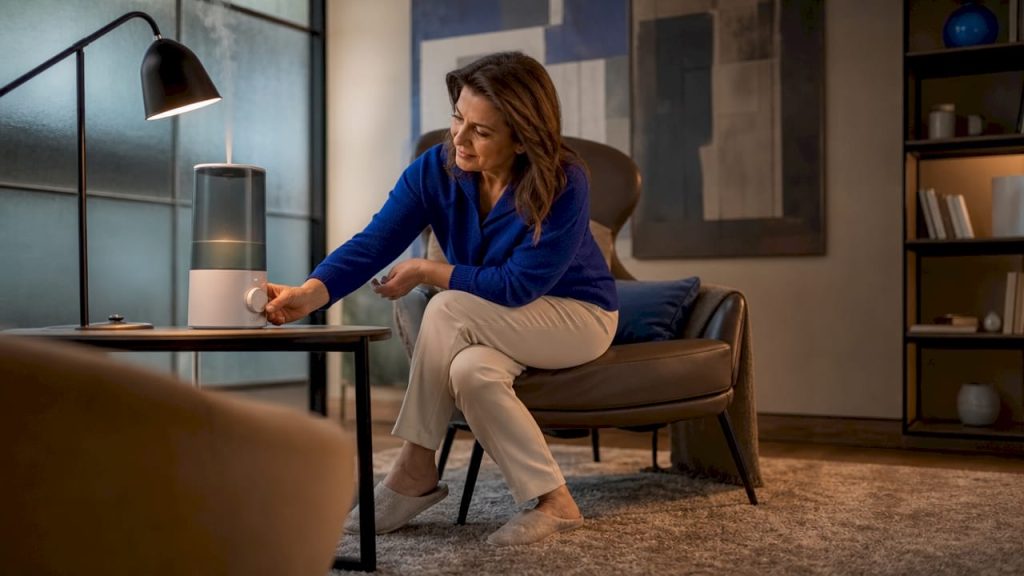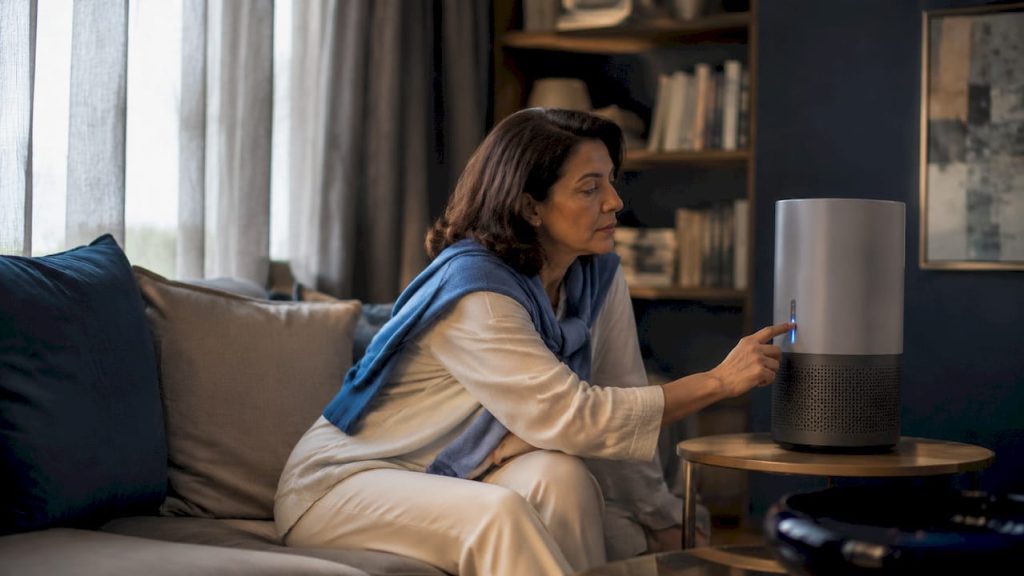
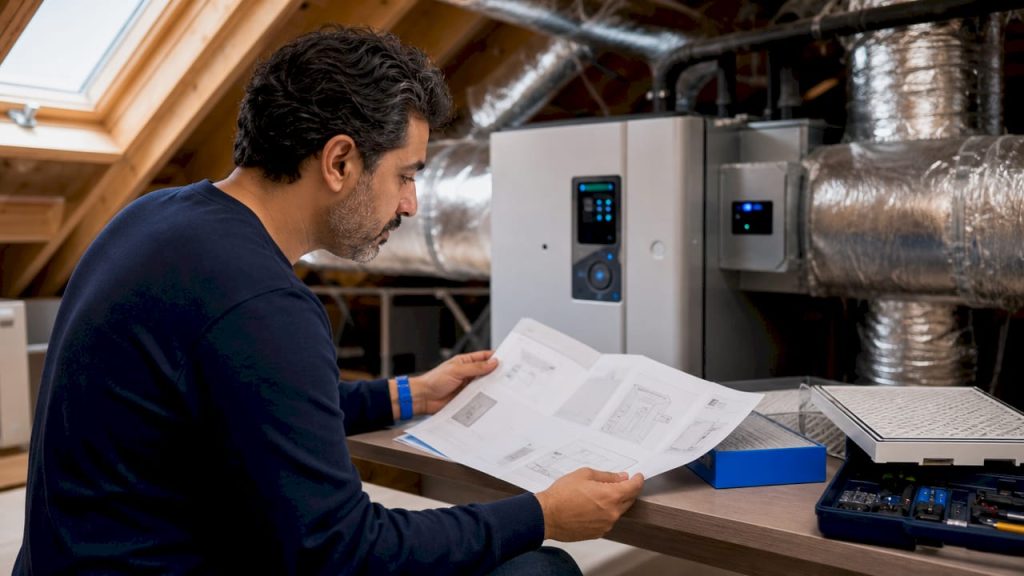
Layered air filtration is defined as a multi-stage system that uses sequential filter types to remove different classes of pollutants from your home’s air. A single filter cannot do this job. Layered home filtration combines pre-filters, MERV 13–15 HVAC filters, True HEPA purifiers, and activated carbon layers to capture everything from coarse desert dust to microscopic allergens and chemical gases. For homeowners in Riyadh, Jeddah, and Dammam, where sandstorms, high temperatures, and sealed buildings create persistent indoor air quality problems, this approach is not optional. It is the most effective whole-house air cleaning strategy available.
What are the essential layers in whole-house filtration and how do they work?
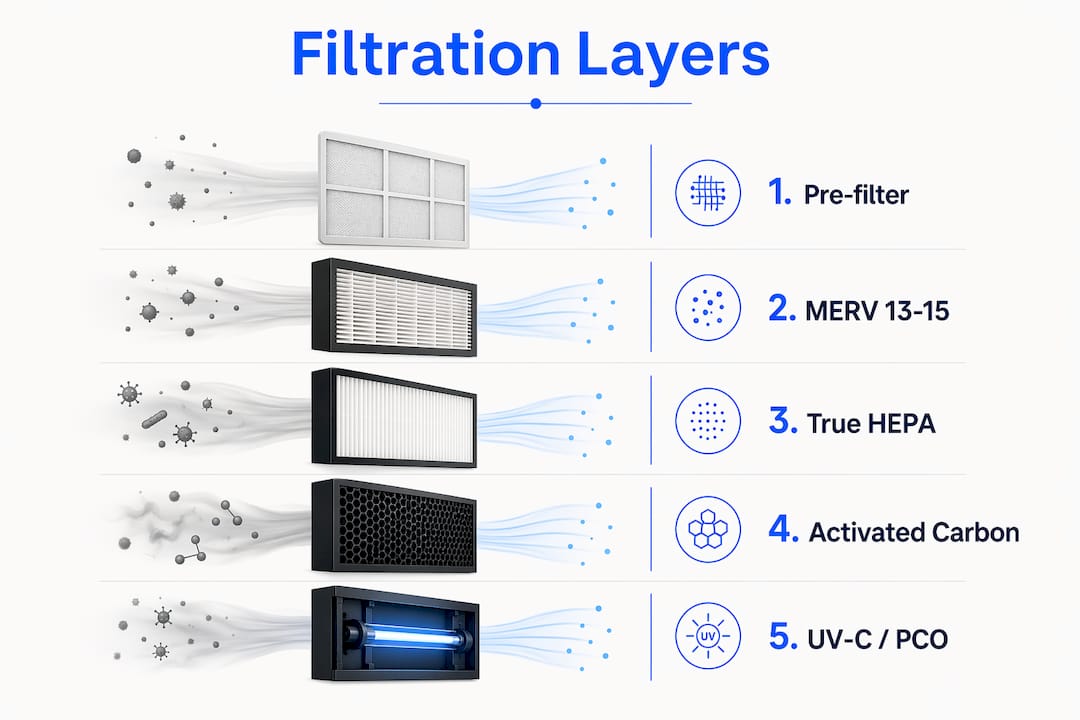
Multi-layer air filtration works because each stage targets a different particle size or pollutant type. No single filter covers the full spectrum. Understanding what each layer does helps you build a system that actually works.
Pre-filter: the first line of defence
A pre-filter captures large particles such as dust, pet hair, and fibres before they reach your main filters. This protects the more expensive HEPA and carbon layers from clogging prematurely. Most HVAC systems and standalone purifiers include a washable pre-filter as standard.
MERV 13–15 HVAC filtration: whole-home particle capture
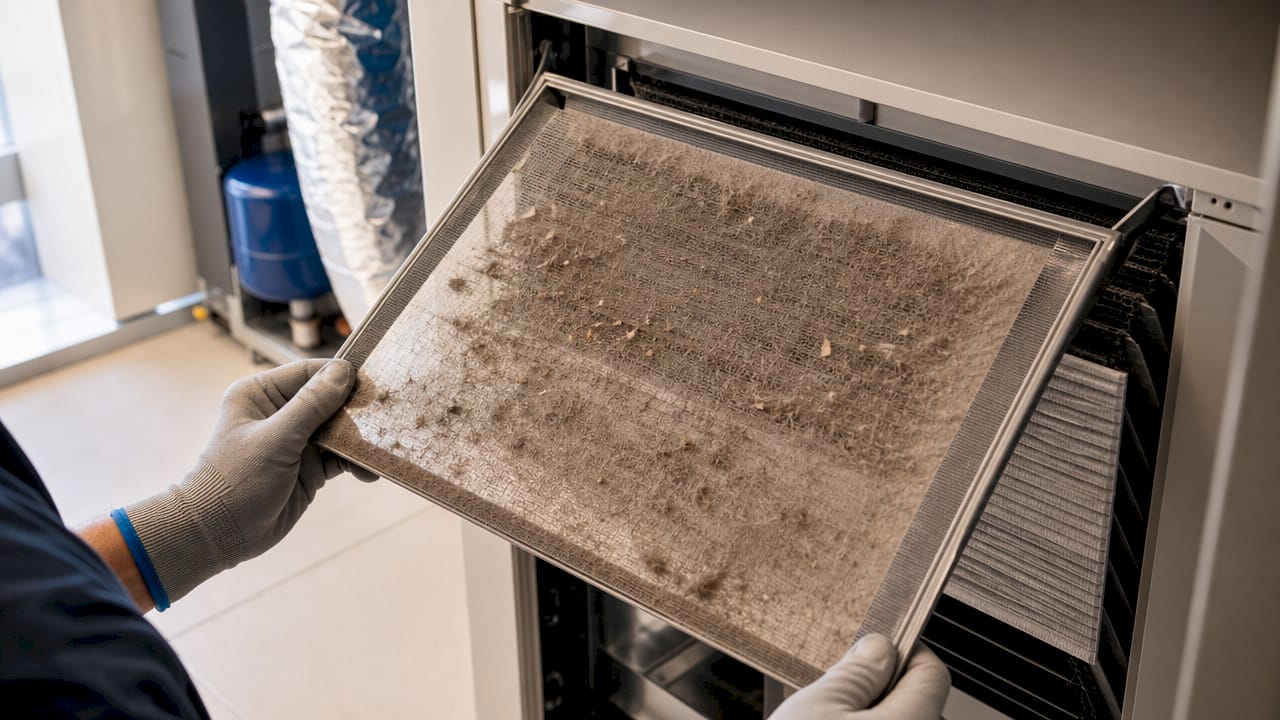
Upgrading your central HVAC filter to MERV 13 or higher is the most cost-effective step in a layered system. MERV 15 filters capture up to 95% of particles in the 1.0–3.0 micron range. This covers pollen, mould spores, and fine dust that circulate through your entire home via the air conditioning system.
True HEPA filtration: fine particle removal
True HEPA filters capture 99.97% of particles at 0.3 microns, including PM2.5, bacteria, and dust mite debris. HEPA filters also perform well on particles as small as 0.1 microns. Standalone HEPA purifiers placed in bedrooms and living areas complement your HVAC filter by targeting the finest airborne particles in the rooms where you spend the most time.
Activated carbon: the layer most homeowners skip
HEPA filters do not remove odours or volatile organic compounds (VOCs). Activated carbon adsorbs gas molecules that are too small for mechanical filtration. This layer is critical in Saudi homes where cooking fumes, cleaning products, and off-gassing from furniture all contribute to indoor chemical pollution.
UV-C and PCO: advanced active technologies
Combining MERV 13 with UV-C and Photo Catalytic Oxidation creates a three-layer system that targets particles, microorganisms, and VOCs simultaneously. UV-C neutralises bacteria and viruses. PCO breaks down gaseous pollutants that neither HEPA nor carbon layers fully address. These technologies are most relevant for tightly sealed villas and apartments.
| Filtration layer | Target pollutants | Effectiveness |
|---|---|---|
| Pre-filter | Dust, hair, large fibres | Captures particles above 10 microns |
| MERV 13–15 HVAC filter | Pollen, mould spores, fine dust | Up to 95% capture at 1.0–3.0 microns |
| True HEPA | PM2.5, bacteria, allergens | 99.97% capture at 0.3 microns |
| Activated carbon | VOCs, odours, chemical gases | Adsorbs gaseous pollutants |
| UV-C / PCO | Microorganisms, residual gases | Neutralises and breaks down biological and chemical pollutants |
Pro Tip: Always verify that a purifier states “True HEPA” on its specification sheet. HEPA-style or HEPA-type filters only achieve 85–90% capture rates and are not suitable for whole-house applications.
How to plan your home’s layered filtration system
Effective planning starts with your existing HVAC system. Before buying anything, check whether your air conditioning unit can handle a higher-rated filter. Upgrading to MERV 13+ filters increases airflow resistance, and if your blower motor is not rated for the extra load, you risk reduced efficiency or damage. Ask your HVAC technician to confirm static pressure compatibility before switching.
Once your HVAC is confirmed, identify the rooms that need the most attention. Bedrooms, living rooms, and home offices are the highest priority because you spend the most time in them. Layered systems manage pollutants at source and across whole volumes of air, but standalone HEPA purifiers fill the gaps that central filtration cannot reach on its own.
Sizing matters. Top whole-house air purifiers cover 540 to 1,500 square feet, with CADR ratings above 350–500 cfm recommended for allergy-prone homes. For a large villa in Riyadh, you will likely need one HEPA purifier per main living zone rather than a single unit for the whole property.
- Confirm HVAC static pressure tolerance before upgrading filters
- Choose MERV 13 as the minimum for central filtration in Saudi homes
- Place standalone HEPA purifiers in bedrooms and main living areas
- Add activated carbon filtration in kitchens and rooms with high VOC sources
- Check CADR ratings against room size before purchasing any purifier
Pro Tip: Run your HVAC fan continuously on low speed rather than only when heating or cooling. This keeps air circulating through your MERV filter at all times, significantly increasing the volume of air cleaned each day.
| Component | Recommended specification | Typical coverage |
|---|---|---|
| HVAC filter | MERV 13–15, True HEPA compatible | Whole home via ductwork |
| Standalone HEPA purifier | True HEPA, CADR 350+ cfm | 540–1,500 sq ft per unit |
| Activated carbon filter | Pellet-based carbon layer | Room or zone level |
| UV-C / PCO add-on | Integrated or duct-mounted | Whole home via HVAC |
Installation and maintenance steps for whole-house layered filtration
Installing a layered system is straightforward when you follow a clear sequence. Start with the HVAC filter upgrade, then add standalone purifiers, and finally introduce activated carbon where needed.
- Check your HVAC manual for the maximum MERV rating your system supports. Do not exceed this rating without professional advice.
- Replace your existing HVAC filter with a MERV 13 or MERV 15 filter. Note the installation date on the filter frame.
- Position standalone HEPA purifiers in bedrooms and living areas. Place them away from walls and furniture to allow full air circulation.
- Add activated carbon filtration either as a combined layer in your purifier or as a separate unit in the kitchen and any room with strong odours or chemical sources.
- Set a replacement schedule. HVAC filters typically need changing every 60–90 days in dusty Saudi environments. HEPA filters in standalone units last 6 months to 2 years depending on usage and air quality. Replacing HEPA filters regularly is the single most important maintenance task.
- Monitor filter condition visually. A grey or brown filter surface, reduced airflow, or increased dust settling on surfaces all signal that replacement is overdue.
- Clean pre-filters monthly. Most are washable. A blocked pre-filter forces the HEPA layer to work harder and shortens its lifespan.
Common mistakes to avoid include skipping the activated carbon layer entirely, assuming one purifier covers a whole villa, and ignoring the HVAC filter while focusing only on standalone units. Mechanical filtration alone does not fully remove biological or chemical gases in tightly sealed homes. Saudi villas and modern apartments with minimal natural ventilation fall squarely into this category.
Pro Tip: Keep a spare set of HEPA and carbon replacement filters at home. Filter availability can vary, and running a purifier with an exhausted filter provides almost no protection.
For detailed guidance on maintaining HEPA filters at home, Climasaudi’s blog covers replacement intervals and signs of degradation specific to Saudi conditions.
Comparing whole-house air filtration options available in Saudi Arabia
The Saudi market offers a range of products suited to different home sizes and budgets. The key distinction to understand before buying is True HEPA versus HEPA-style. True HEPA is the only standard that guarantees 99.97% particle capture at 0.3 microns. HEPA-style filters fall short and are not appropriate for homes with allergy or asthma concerns.
Blueair is one of the most widely available brands in Saudi Arabia, with models covering different room sizes and filtration needs. The Blueair Blue Max 3450i suits larger rooms and zonal filtration in villas, priced at SAR 1,114. The Blueair Blue 3610 combines HEPA and carbon filtration for smaller areas at SAR 1,193. The Blueair ComfortPure 3-in-1 T20i offers a three-in-one approach at SAR 1,503.
| Model | Filtration layers | Best for | Price (SAR) |
|---|---|---|---|
| Blueair Blue 3610 | HEPA + carbon | Bedrooms, smaller rooms | 1,193 |
| Blueair Blue Max 3450i | HEPA + carbon | Larger rooms, zonal use | 1,114 |
| Blueair ComfortPure 3-in-1 T20i | HEPA + carbon + advanced | Whole-room multi-layer | 1,503 |
For guidance on choosing between central HVAC filtration and standalone units for your specific home type, Climasaudi’s HVAC vs standalone purifier guide covers the decision clearly.
- Filter replacement costs range from SAR 90 to SAR 600 annually depending on the unit and usage
- Units with combined HEPA and carbon layers reduce the number of devices you need to manage
- Always check that replacement filters are locally available before purchasing a unit
Key takeaways
A layered air filtration system combining MERV 13–15 HVAC filters, True HEPA purifiers, and activated carbon layers delivers the most complete whole-house air quality improvement for Saudi homes.
| Point | Details |
|---|---|
| Layer your filtration stages | Combine MERV 13–15, True HEPA, and activated carbon to cover all pollutant types. |
| Verify HVAC compatibility first | Confirm your blower motor tolerates higher MERV ratings before upgrading. |
| True HEPA is non-negotiable | Only True HEPA guarantees 99.97% capture at 0.3 microns; avoid HEPA-style alternatives. |
| Activated carbon covers what HEPA cannot | Carbon adsorbs VOCs and odours that mechanical filters cannot remove. |
| Replace filters on schedule | In Saudi conditions, HVAC filters need changing every 60–90 days to maintain performance. |
Why I think most Saudi homeowners are solving this problem backwards
Most homeowners I speak with buy a single air purifier, place it in the living room, and assume the job is done. That approach misses the point entirely. The air in your bedroom, kitchen, and study is not the same air that passes through your living room purifier. Each space has its own pollution sources and its own air volume.
The layered approach works because it treats your home as a system, not a collection of rooms. Your HVAC filter handles the baseline across the whole property. Your standalone HEPA units handle the fine particles in the spaces where you sleep and breathe most deeply. Your carbon layer handles the chemical pollution that neither of those stages can touch.
Saudi homes present a specific challenge that generic filtration advice does not address. Desert dust events in Riyadh push PM10 and PM2.5 levels well above safe thresholds. Coastal humidity in Jeddah creates conditions where mould spores and biological pollutants thrive indoors. Tightly sealed, air-conditioned villas trap VOCs from furniture, cleaning products, and cooking. A single-stage system handles none of this adequately.
The cost argument against layering is also weaker than it appears. A MERV 15 HVAC filter costs a fraction of a standalone purifier and cleans the air across your entire home every time your air conditioning runs. Adding one or two True HEPA units for bedrooms and a carbon filter for the kitchen gives you comprehensive coverage for a total investment that is far less than most homeowners expect.
My honest recommendation: start with the HVAC filter upgrade, add a True HEPA purifier in the bedroom first, and then build outward. You will notice the difference within days, and you will not need to replace the whole system when your needs change. You just add another layer.
— Pauline
Whole-house air filtration solutions from Climasaudi
Saudi homes face air quality challenges that require more than one product to solve. Climasaudi stocks a full range of air purifiers and HEPA filters suited to apartments, villas, and offices across Riyadh, Jeddah, and Dammam.
Every product on the Climasaudi platform is selected for certified filtration performance and local availability. Replacement filters are stocked locally, so you are never left running an exhausted unit. Next-day delivery, transparent SAR pricing, and local customer support mean you can build your layered system at your own pace, with confidence that the right products are always within reach.
FAQ
What is layered air filtration for a whole house?
Layered air filtration uses multiple sequential filter stages, typically a pre-filter, MERV 13–15 HVAC filter, True HEPA purifier, and activated carbon layer, to remove different classes of pollutants from your home’s air. Each layer targets what the previous one cannot capture.
Do I need both an HVAC filter upgrade and a standalone purifier?
Yes. An upgraded HVAC filter cleans air across your whole home via the ductwork, while standalone HEPA purifiers handle fine particles in specific rooms. The two systems complement each other and neither fully replaces the other.
Can HEPA filters remove odours and VOCs?
No. HEPA filters are not designed for gaseous pollutants. Activated carbon is the only filtration layer that effectively adsorbs odours and VOCs. A purifier with both True HEPA and a carbon layer covers both particle and gaseous pollution.
How often should I replace filters in Saudi Arabia?
HVAC filters in Saudi conditions typically need replacing every 60–90 days due to high dust levels. Standalone HEPA purifier filters last 6 months to 2 years depending on usage and local air quality. Check filters visually each month.
Is a HEPA-style filter good enough for whole-house use?
No. HEPA-style filters achieve only 85–90% particle capture and do not meet the True HEPA standard of 99.97% at 0.3 microns. For allergy and dust management in Saudi homes, only True HEPA certified filters provide reliable protection.