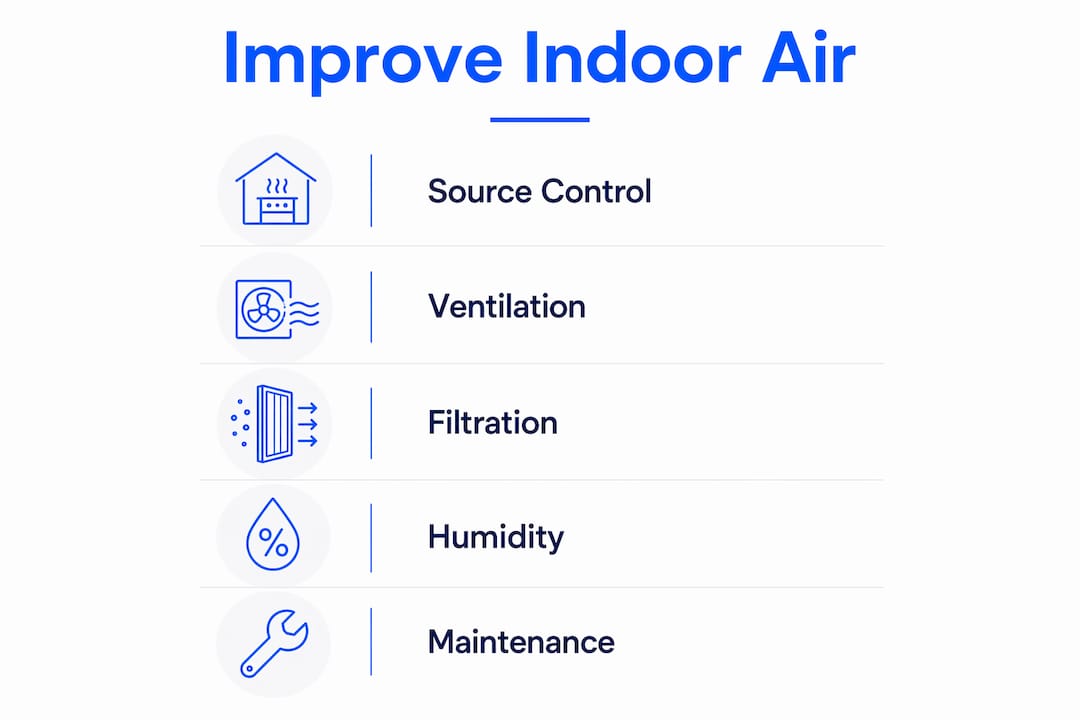
Improving indoor air quality at home means reducing the concentration of harmful particles, gases, and biological pollutants inside your living space. The three proven methods are source control, ventilation, and filtration. True HEPA filters capture 99.97% of airborne particles, including PM2.5 and fine dust. Maintaining indoor humidity between 35% and 50% prevents respiratory irritation and mould growth. For Saudi homeowners in Riyadh, Jeddah, and Dammam, these steps are not optional extras. Desert dust, coastal humidity, and extreme heat create indoor pollution challenges that require a deliberate, layered response. Climasaudi provides products and guidance built specifically for those conditions.
What are the main pollutant sources in Saudi Arabian homes?
Source control is the most impactful first step you can take. Removing or reducing the source of a pollutant is more effective than adding multiple air purifiers after the fact. Understanding what generates indoor pollution in your home gives you a clear starting point.
Common sources in Saudi homes include:
- Household cleaning products that release volatile organic compounds (VOCs) during and after use
- New furniture and flooring that off-gas formaldehyde and other chemicals for weeks or months
- Gas cookers and combustion appliances that produce nitrogen dioxide and carbon monoxide
- Desert dust entering through gaps around doors, windows, and air conditioning units
- Carpets and soft furnishings that trap allergens, dust mites, and fine particles
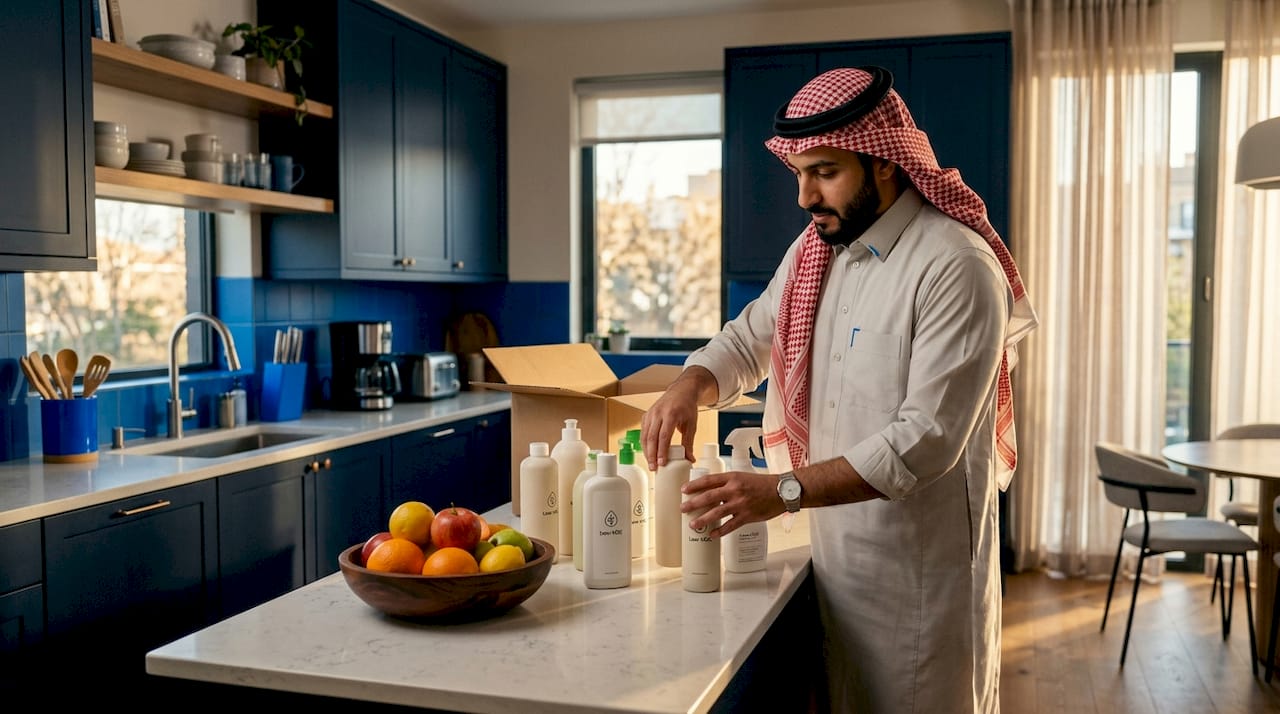
Switching to low-VOC household products reduces your pollutant burden without any technology investment. Store chemicals in sealed containers in ventilated cupboards rather than under the kitchen sink. When buying new furniture, air it out in a well-ventilated space before bringing it indoors.
Regular cleaning also matters more than most homeowners realise. Dry dusting spreads particles into the air. Damp dusting with a microfibre cloth captures them instead. Decluttering reduces the surface area where dust settles and accumulates.
Pro Tip: Damp dust surfaces weekly and vacuum upholstered furniture with a HEPA-filtered vacuum cleaner. This removes allergens at the source before they become airborne.
How can you improve ventilation without worsening indoor air?
Ventilation replaces stale, polluted indoor air with fresher air. The right approach depends on outdoor conditions, which in Saudi Arabia can change dramatically within hours.
- Check outdoor air quality before opening windows. During dust storms or periods of high PM2.5, natural ventilation introduces more pollutants than it removes. Use a local air quality app or sensor before opening anything.
- Use kitchen exhaust fans during and after cooking. Kitchen exhaust fans remove VOCs and moisture generated by gas hobs. Run them for at least 15 minutes after you finish cooking.
- Run bathroom fans during and after showering. Moisture from showers raises indoor humidity rapidly. High humidity encourages mould and dust mite growth. A bathroom fan running for 20 minutes after a shower removes the bulk of that moisture.
- Set your HVAC fan to run continuously on low. Continuous fan operation circulates air through your system’s filter even when heating or cooling is not active. This improves air exchange without opening windows.
- Time natural ventilation for early morning. In most Saudi cities, outdoor air quality and temperatures are most favourable in the early morning hours before traffic and heat build up.
Pro Tip: Install a simple CO2 monitor in your main living area. Rising CO2 levels are the clearest signal that ventilation is insufficient, even when the air smells fine.
The key principle is that ventilation and filtration work together. Ventilation dilutes pollutants. Filtration removes what remains. Neither works as well without the other.
Why is HEPA filtration the most reliable way to clean indoor air?
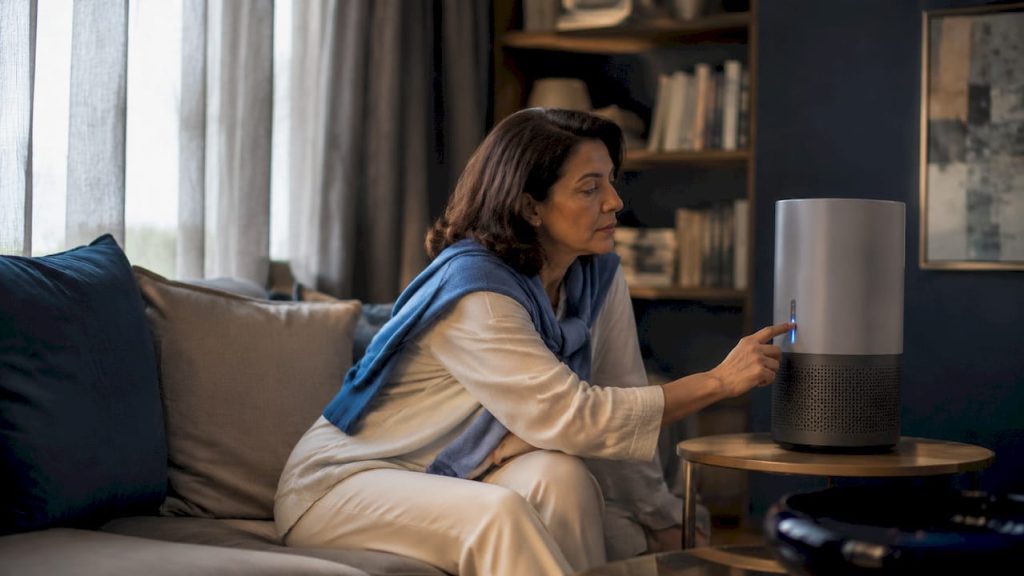
Mechanical filtration removes particles from the air by passing it through a filter medium. True HEPA filtration, rated at 99.97% particle capture, is the most reliable standard available for residential use. It captures PM2.5, pollen, pet dander, mould spores, and fine desert dust particles that other filter types miss.
Understanding the difference between filter types helps you choose correctly.
| Filter type | What it removes | Limitation |
|---|---|---|
| True HEPA (H13) | Particles 0.3 microns and above | Does not remove gases or VOCs |
| Activated carbon | VOCs, odours, gases | Does not remove particles |
| Combined HEPA + carbon | Particles and gases | Requires regular replacement of both layers |
| Basic mesh/foam | Large dust only | Ineffective against fine particles or PM2.5 |
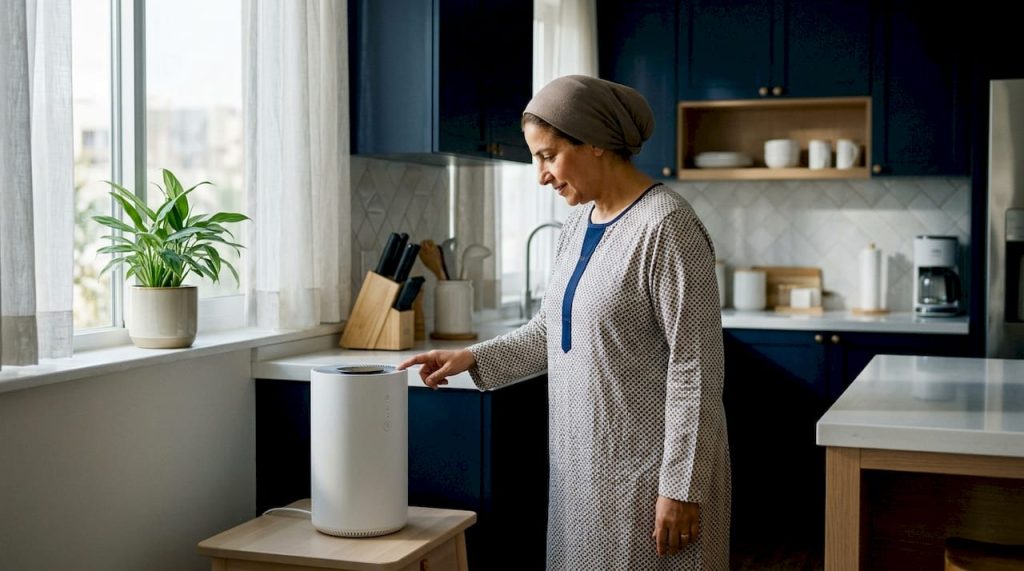
For Saudi homes, a combined True HEPA and activated carbon unit addresses both the fine dust problem and the VOC load from cooking and furnishings. Selecting the right unit size matters as much as the filter type. Air purifier performance depends on CADR (Clean Air Delivery Rate) relative to your room size. A unit rated for 20 square metres will underperform in a 40 square metre open-plan living area. Check the CADR figure and match it to the room you are treating.
HEPA filter benefits extend beyond dust removal. They reduce airborne allergens that trigger asthma and rhinitis, both of which are common in Saudi Arabia due to high ambient dust levels.
Pro Tip: Replace HEPA filters on schedule, not just when the indicator light appears. In dusty Saudi conditions, filters load faster than the manufacturer’s standard estimate. Check them every three months.
How does managing humidity improve lung health and air quality?
Indoor relative humidity between 35% and 50% is the target range for healthy air. Below 35%, air becomes dry enough to irritate the respiratory tract, dry out mucous membranes, and worsen conditions like asthma and dry cough. Above 60%, mould grows on walls and ceilings, and dust mite populations increase sharply.
Saudi Arabia presents two distinct humidity challenges depending on location and season.
| Condition | Location/season | Problem | Solution |
|---|---|---|---|
| Very dry air | Riyadh in winter, inland areas | Respiratory irritation, dry skin, static | Humidifier to raise RH to 40–50% |
| High humidity | Jeddah, coastal areas, summer | Mould risk, dust mite growth | Dehumidifier to bring RH below 55% |
Signs your air is too dry include persistent dry throat in the mornings, static electricity on fabrics, and cracking in wooden furniture. Signs of excess humidity include condensation on windows, a musty smell, and visible mould spots in corners or behind furniture.
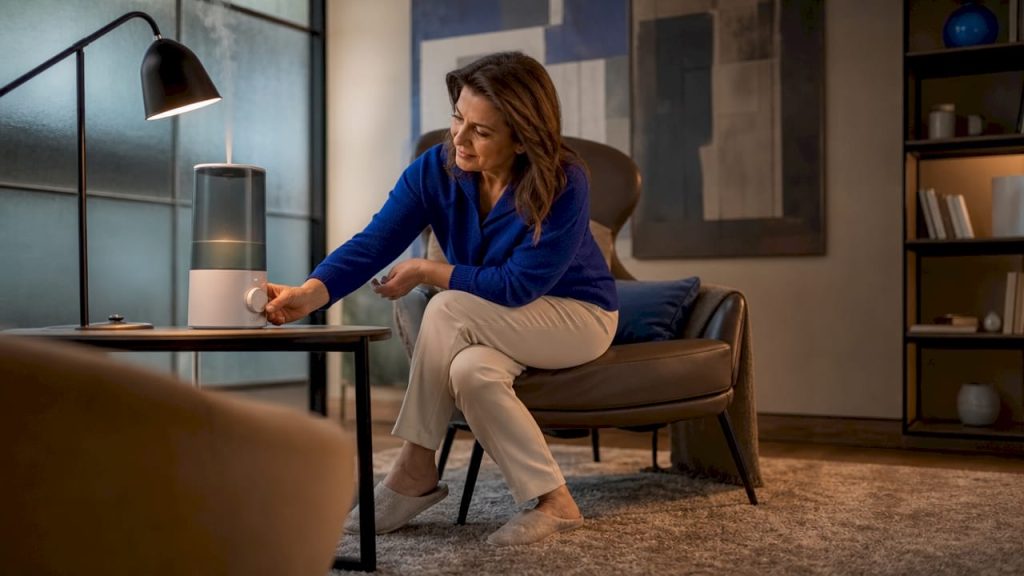
Ultrasonic humidifiers add moisture quietly and efficiently. They suit bedrooms and living areas where noise is a concern. Evaporative humidifiers are better suited to larger spaces. For coastal homes in Jeddah where humidity spikes seasonally, a dehumidifier running in the bedroom overnight makes a measurable difference to sleep quality and lung health in dry or humid conditions.
Do houseplants actually help with indoor air quality?
Houseplants do not clean indoor air to any meaningful degree in a real home environment. Laboratory studies overstate plant air-cleaning capacity because they use sealed chambers with concentrated pollutants. In a typical home with normal air exchange, you would need hundreds of plants per room to match the output of a single mid-range air purifier.
That said, plants are worth keeping for other reasons:
- They provide genuine psychological benefits, reducing stress and improving mood
- They add humidity to very dry rooms, which can complement a humidifier in winter
- They make a home feel more comfortable and lived-in
The problem arises when homeowners rely on plants as their primary indoor air quality solution. In Saudi homes with high dust loads, VOC sources, and seasonal humidity extremes, plants simply cannot compensate. Treat them as a pleasant addition, not a filtration system.
The practical rule: keep plants you enjoy, but invest in engineered filtration and humidity control for measurable air quality results.
Key takeaways
Improving indoor air quality in Saudi homes requires combining source control, timed ventilation, True HEPA filtration, and humidity management within the 35%–50% relative humidity range.
| Point | Details |
|---|---|
| Source control comes first | Switching to low-VOC products and damp dusting reduces pollutants before filtration is needed. |
| Ventilation requires timing | In Saudi Arabia, open windows only when outdoor air quality is confirmed safe, especially during dust storms. |
| True HEPA H13 is the standard | Filters rated at 99.97% particle capture remove PM2.5, pollen, and fine desert dust effectively. |
| Humidity range is 35%–50% | Use a humidifier or dehumidifier to stay within this range and prevent respiratory irritation and mould. |
| Plants are not air purifiers | Houseplants offer wellbeing benefits but cannot replace engineered filtration in a real home environment. |
What I have learned from years of watching homeowners get this wrong
People almost always buy an air purifier before they measure anything. They place it in the living room, feel reassured, and assume the problem is solved. The reality is that measuring baseline air quality before spending anything is the step that separates effective interventions from expensive guesswork.
I have seen homeowners in Riyadh spend thousands of riyals on large air purifiers while their bathroom had no exhaust fan and their kitchen hob was generating unvented combustion gases every morning. The purifier was fighting a battle it could not win.
The Saudi context adds specific complications that generic advice ignores. Dust storm season changes everything. A window that improves air quality on a clear morning in march can introduce a week’s worth of PM2.5 in 20 minutes during a haboob. You need a local air quality sensor and the habit of checking it.
My honest recommendation: start with a CO2 monitor and a basic PM2.5 sensor. Spend two weeks measuring before you buy anything. You will know exactly where the problem is, which room needs a purifier, and whether humidity or particles are your primary concern. That data makes every subsequent purchase more effective. Behaviour and maintenance matter as much as the products themselves. A HEPA filter left unchanged for 18 months in a dusty Saudi home is not protecting anyone.
— Pauline
Climasaudi’s range for Saudi homes
Saudi homes face a combination of fine desert dust, seasonal humidity swings, and high indoor temperatures that standard air quality products are not always built to handle. Climasaudi stocks a full range of air purifiers, humidifiers, and HEPA filters selected specifically for these conditions, with HEPA H13 filtration as the baseline standard across the purifier range.
Whether you need a purifier sized for a Riyadh villa, a humidifier for a dry Dammam winter, or a dehumidifier for a coastal Jeddah apartment, Climasaudi carries options with transparent SAR pricing, local inventory, and next-day delivery. The bedroom air quality guide on the Climasaudi blog helps you match the right product to your specific room and concern. Local customer support is available if you need help choosing between models.
FAQ
What is the fastest way to improve indoor air quality at home?
Source control is the fastest and most cost-effective first step. Removing or reducing pollutant sources, such as switching to low-VOC cleaning products and improving ventilation with exhaust fans, delivers immediate results without requiring new equipment.
How often should I replace a HEPA filter in Saudi Arabia?
In Saudi Arabia’s dusty conditions, check your HEPA filter every three months rather than relying on the manufacturer’s standard schedule. Filters load faster due to high ambient dust and PM2.5 levels, and a clogged filter reduces purifier performance significantly.
What indoor humidity level is healthy in a Saudi home?
The target range is 35%–50% relative humidity. Below 35%, air dries out the respiratory tract and worsens asthma symptoms. Above 60%, mould and dust mites thrive, adding biological pollutants to your indoor air.
Can I open windows to improve air quality in Riyadh or Jeddah?
Opening windows helps when outdoor air quality is good, typically in the early morning on calm days. During dust storms or periods of high PM2.5, natural ventilation worsens indoor air by introducing fine particles. Always check a local air quality reading first.
Do air purifiers work for desert dust and PM2.5?
Yes, provided the unit carries a True HEPA H13 rating and is correctly sized for the room. Purifier effectiveness depends on CADR relative to room size. A unit too small for the space will not achieve adequate air turnover to remove fine dust effectively.
Recommended
- Benefits of indoor air purification for Saudi homes — Blog | ClimaSaudi
- Apartment air purifier benefits for cleaner air in Saudi homes — Blog | ClimaSaudi
- How air purifiers cut cleaning time in Saudi homes — Blog | ClimaSaudi
- Layer air filtration whole house: the Saudi homeowner’s guide — Blog | ClimaSaudi