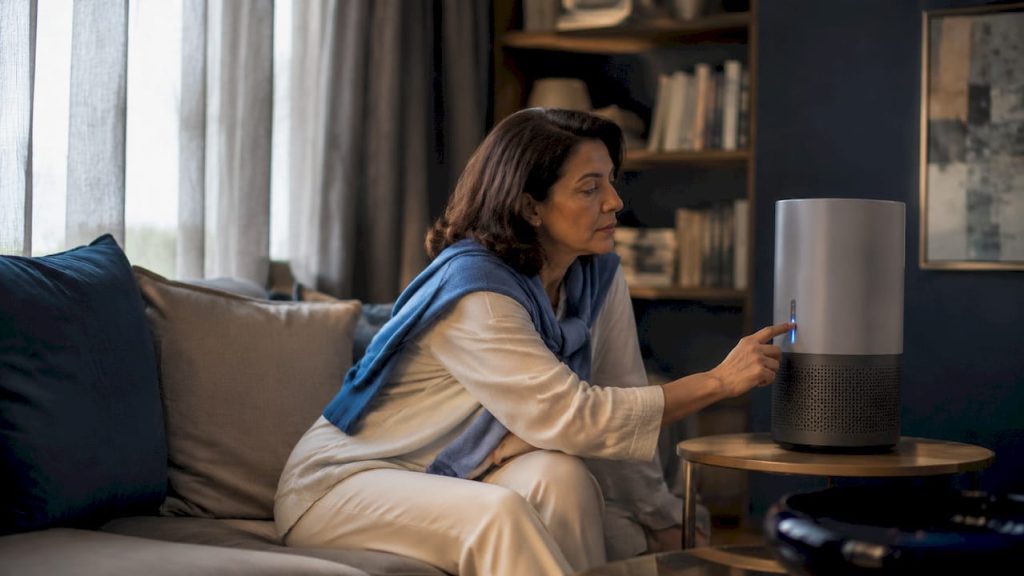
The right local climate air filter types for Saudi Arabian homes are HEPA H13 or H14 rated filters, which capture 99.95% to 99.995% of particles down to 0.3 microns. Standard filters sold in temperate markets simply cannot handle the fine silica dust that enters homes in Riyadh, Jeddah, and Dammam. Saudi Arabia’s desert environment demands multi-stage filtration: a pre-filter for large particles, a certified HEPA H13 filter for fine dust, and an activated carbon layer for gases and odours. Climasaudi specialises in exactly this combination, with products and guidance built around the Kingdom’s specific air quality challenges.
1. Local climate air filter types: what Saudi homes actually need
The air quality challenge in Saudi Arabia is not the same as in Europe or North America. Desert silica dust particles are extremely fine, and basic HEPA filters rated below H13 allow a meaningful proportion of those particles to pass through. Experts warn that insufficient filtration leads to premature HVAC wear and persistent indoor dust. That is a costly problem to fix after the fact.
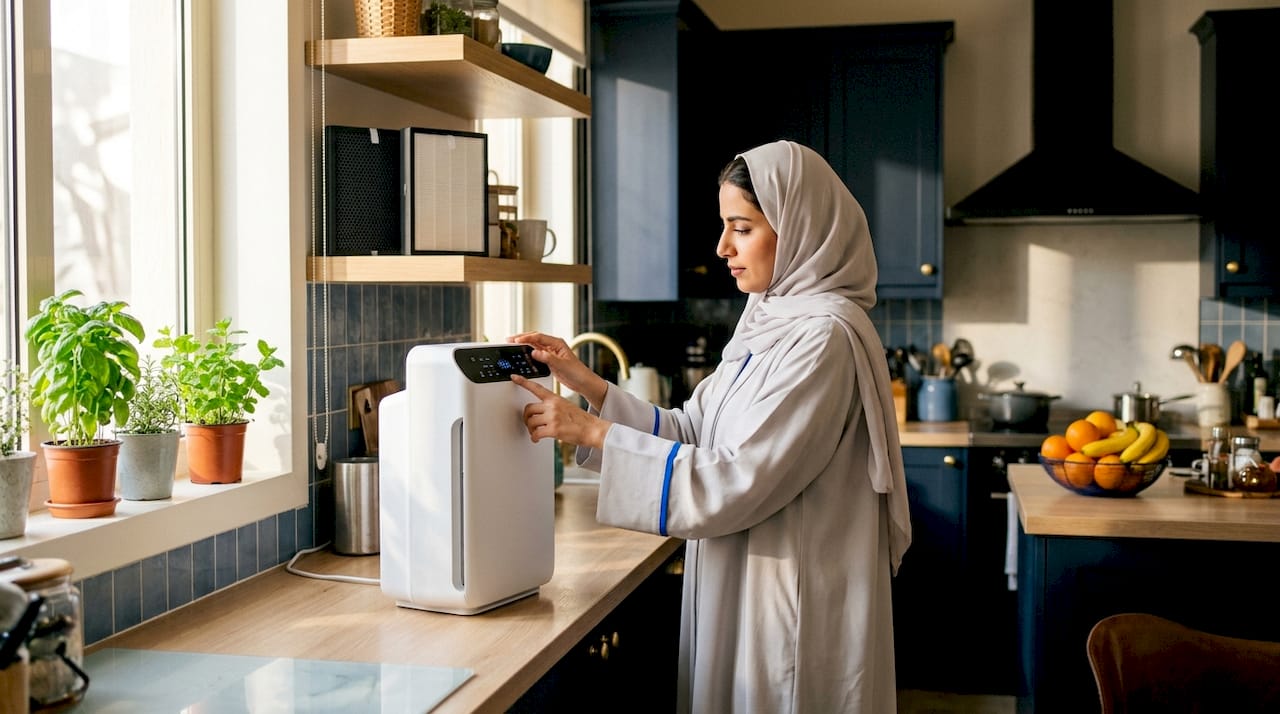
The industry standard term for the filter category you need is “True HEPA,” specifically at the H13 or H14 classification under the EN 1822 European standard. H13 captures 99.95% of particles at the most penetrating particle size. H14 raises that to 99.995%. For most Saudi homes, H13 is the practical baseline.
Three filter categories form the foundation of effective home filtration in this climate:
- HEPA H13 or H14 filters: the primary defence against fine desert dust and PM2.5 particles
- Activated carbon filters: absorb volatile organic compounds (VOCs), cooking odours, and chemical off-gassing from building materials heated by intense sun
- Pre-filters: capture larger dust particles and sand grains before they reach and clog the main filter
Understanding HEPA filter ratings before you buy prevents costly mistakes. A filter labelled simply “HEPA-type” or “HEPA-like” carries no certified efficiency guarantee and should be avoided.
2. HEPA filters: H13 and H14 for desert dust
HEPA H13 and H14 filters are the only mechanical filter types proven to capture the ultrafine silica particles common in Saudi desert dust. Low-quality fiberglass and low-MERV filters allow dust infiltration that causes HVAC failure over time. The financial case for upgrading to certified H13 filtration is straightforward.
Pleated filters with MERV 8–13 ratings serve a useful secondary role. They capture larger allergens, pollen, and coarser dust particles before they reach the HEPA layer. Think of them as the first line of defence in a layered system, not a standalone solution.
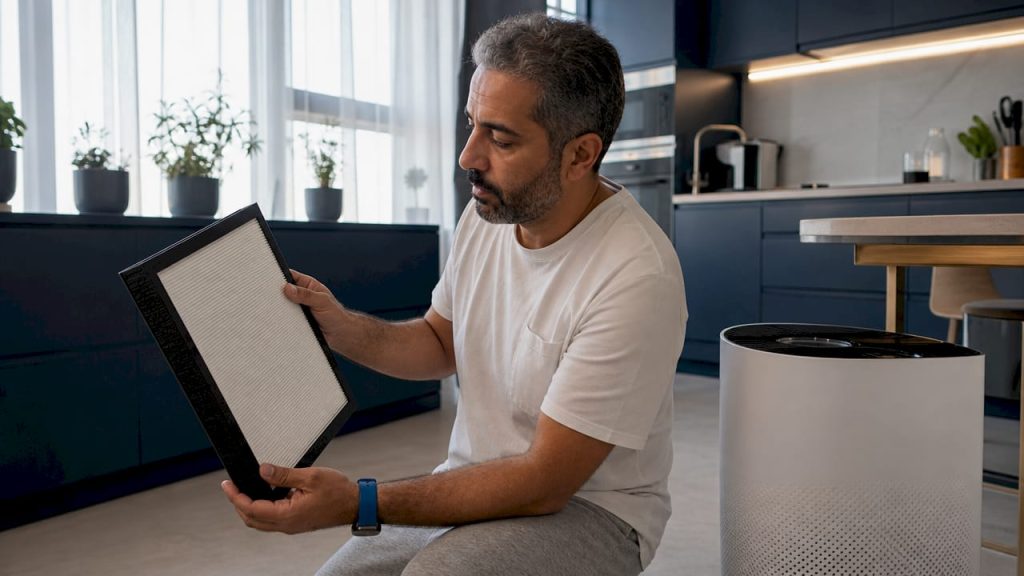
Key specifications to check when selecting a HEPA filter for a Saudi home:
- EN 1822 certification: confirms the H13 or H14 classification is independently verified
- Micron rating: H13 filters must capture particles at 0.3 microns, the most penetrating particle size
- Filter surface area: larger pleated surface area means longer service life before replacement
- Frame seal integrity: a poor frame seal allows air to bypass the filter media entirely
Pro Tip: Ask for the filter’s test certificate, not just the label. Genuine H13 certification includes a document showing efficiency at the most penetrating particle size (MPPS), typically 0.1–0.3 microns.
3. Activated carbon filters and multi-stage filtration
Activated carbon filters address a problem HEPA filters cannot: gases, odours, and VOCs. In Saudi Arabia, intense heat causes building materials, adhesives, and furnishings to off-gas chemicals at higher rates than in cooler climates. HEPA and activated carbon filters work complementarily: one traps particles, the other absorbs gases. You need both.
Volume matters with carbon filters. A thin carbon layer, common in budget purifiers, saturates quickly and stops absorbing effectively. Activated carbon filters for Saudi homes require approximately 1kg of carbon per average-sized room to absorb VOCs adequately. That specification rules out most entry-level units sold with token carbon layers.
A properly specified multi-stage system for a Saudi home includes:
- Stage 1, pre-filter: captures sand, hair, and large dust particles; washable types reduce running costs
- Stage 2, True HEPA H13: captures fine silica dust, PM2.5, allergens, and bacteria
- Stage 3, activated carbon: absorbs VOCs, cooking smells, and chemical off-gassing
- Stage 4, UV-C (optional): provides additional antimicrobial action, useful in humid coastal areas like Jeddah
The layered filtration approach for Saudi homes is well documented. Each stage protects the next, extending the overall system’s service life.
Pro Tip: Choose a purifier where the activated carbon filter is independently replaceable. Units with combined HEPA and carbon in a single block force you to replace both simultaneously, even when only one is exhausted. That wastes money.
4. Replacement intervals in desert climates
Filter replacement in Saudi Arabia happens faster than manufacturer guidelines suggest. Those guidelines are written for temperate climates with moderate dust loads. Saudi conditions are categorically different.
Monthly pre-filter checks are the minimum maintenance standard in high-dust environments. Neglecting a clogged pre-filter forces the HEPA layer to work harder, shortens its life, and raises energy consumption as the fan compensates for reduced airflow.
| Filter type | Recommended replacement interval (Saudi conditions) |
|---|---|
| Pre-filter (washable) | Clean monthly; replace every 3 months |
| Pleated MERV 8–13 | Every 3–6 months |
| True HEPA H13/H14 | Every 6–12 months depending on dust load |
| Activated carbon | Every 9–12 months |
| UV-C lamp | Every 12 months |
Pleated filters with MERV 8–13 ratings require replacement every 3–6 months under desert dust conditions, which is shorter than the 12-month cycles often printed on packaging. Following the packaging schedule in Riyadh or Dammam means running a clogged filter for months.
A pressure sensor built into the purifier removes the guesswork. It measures airflow resistance and alerts you when the filter genuinely needs changing, rather than relying on a fixed calendar. This is particularly useful during shamal dust storms, when filters can clog in days rather than months.
Ionic and electrostatic purifiers without collection plates should be avoided entirely in desert climates. They charge dust particles but do not capture them, causing fine silica to settle on furniture and floors instead of being removed from the air. Mechanical HEPA filtration is the only reliable option for Saudi conditions.
Pro Tip: Keep a spare pre-filter and HEPA filter at home before shamal season. Dust storm events can exhaust a pre-filter within 48 hours, and waiting for delivery means days of unfiltered air.
The HEPA filter replacement checklist for Saudi homes covers the full maintenance schedule in detail, including how to assess filter condition visually between sensor alerts.
5. How to choose the right air filter for your home
Choosing the best air filters for your climate starts with understanding your home’s layout and HVAC setup. A standalone portable purifier works well for a single room but cannot protect a large villa from distributed dust infiltration. Integrated in-duct systems are the preferred solution for large Saudi homes, as they filter air across every room simultaneously.
For homes with central HVAC, the priority is fitting a high-grade filter at the return air duct. This protects the entire system and every room it serves. The HVAC versus standalone purifier decision depends on your home’s size, duct condition, and budget.
Key factors to assess before selecting a filter system:
- Room size and CADR rating: the Clean Air Delivery Rate must match or exceed the room’s volume for effective filtration
- Humidity levels: coastal homes in Jeddah face higher humidity, making antimicrobial filter treatments and dehumidification more relevant
- VOC sources: new builds and recently renovated homes off-gas more heavily, requiring a larger carbon filter volume
- Filter certification: look for EN 1822 for HEPA classification and independent third-party test data, not just brand claims
- Whole-home versus room-by-room: large villas benefit from in-duct filtration; apartments can often rely on one or two well-placed portable units
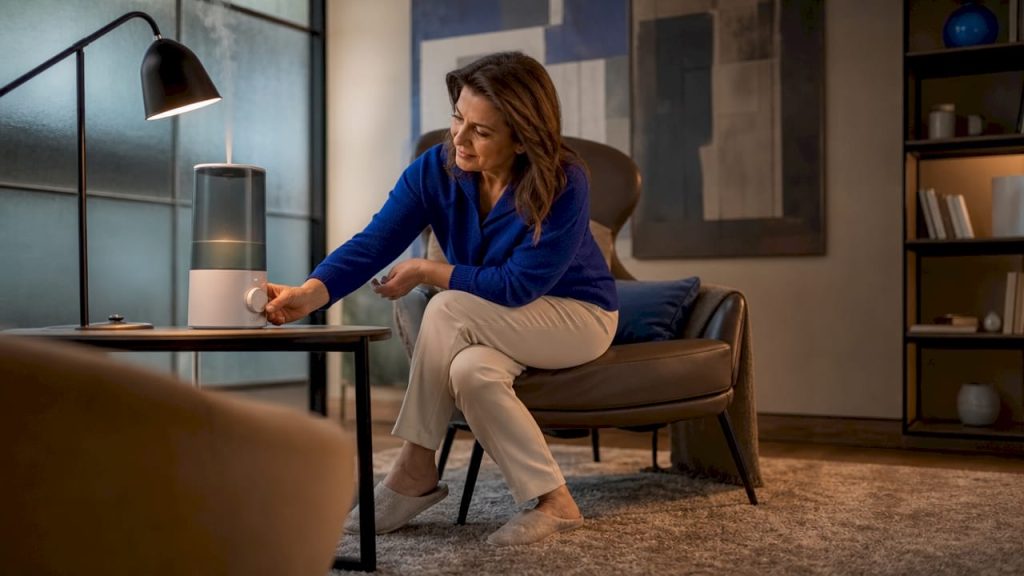
Humidity management is a separate but related concern. In Jeddah and coastal areas, high humidity encourages mould growth inside ductwork and on filter media. A purifier and humidifier combination, or a standalone dehumidifier, addresses this alongside filtration. Improving indoor air quality at home in Saudi Arabia requires treating dust and humidity as connected problems, not separate ones.
Key takeaways
The most effective air filtration for Saudi homes combines a certified HEPA H13 filter, a substantial activated carbon layer, and a washable pre-filter, with replacement intervals shorter than standard manufacturer guidance.
| Point | Details |
|---|---|
| HEPA H13 is the baseline | Only H13 or H14 certified filters reliably capture fine desert silica dust at 0.3 microns. |
| Carbon volume matters | Activated carbon filters need approximately 1kg per room to absorb VOCs effectively. |
| Replace filters more often | Saudi dust loads require pre-filter cleaning monthly and HEPA replacement every 6–12 months. |
| Avoid ionic purifiers | Electrostatic units without collection plates scatter dust onto surfaces rather than removing it. |
| Match system to home size | Large villas need in-duct filtration; portable units alone cannot cover distributed dust infiltration. |
What I have learned about air filters in Saudi homes
By Pauline
After years of advising homeowners on indoor air quality across the Gulf, the single most common mistake I see is buying a filter that works perfectly well in a European or American home and expecting the same results in Riyadh. It does not work that way. The dust here is categorically different. Fine silica particles from desert storms are smaller and more abrasive than typical urban particulate matter, and they expose every weakness in an undersized or under-rated filter.
The second mistake is treating filtration as a one-time purchase. I have seen HEPA filters in Saudi homes that were last changed two years ago, visually grey and compacted, with the purifier still running and the homeowner assuming everything is fine. A clogged filter does not just stop working. It actively strains the motor, raises electricity consumption, and can push particles back into the room as pressure builds.
My honest recommendation is to invest in a multi-stage system with independently replaceable filters, fit a pressure sensor if possible, and treat the pre-filter as a consumable you check every month without exception. The carbon filter is the component most people underestimate. A thin carbon sheet does almost nothing in a climate where building materials bake in 45°C heat all summer. You need real volume.
Climasaudi is the resource I point Saudi homeowners to when they want products that are actually specified for local conditions, not just relabelled imports. The difference in product selection and the availability of local support makes a genuine practical difference when you need advice or a replacement filter quickly.
— Pauline
Air filtration solutions built for Saudi conditions
Saudi homes face a combination of fine desert dust, intense heat, and variable coastal humidity that most imported air purifiers are not designed to handle. Climasaudi stocks a range of HEPA H13 certified purifiers, multi-stage filtration systems, and activated carbon filters selected specifically for the Saudi market.
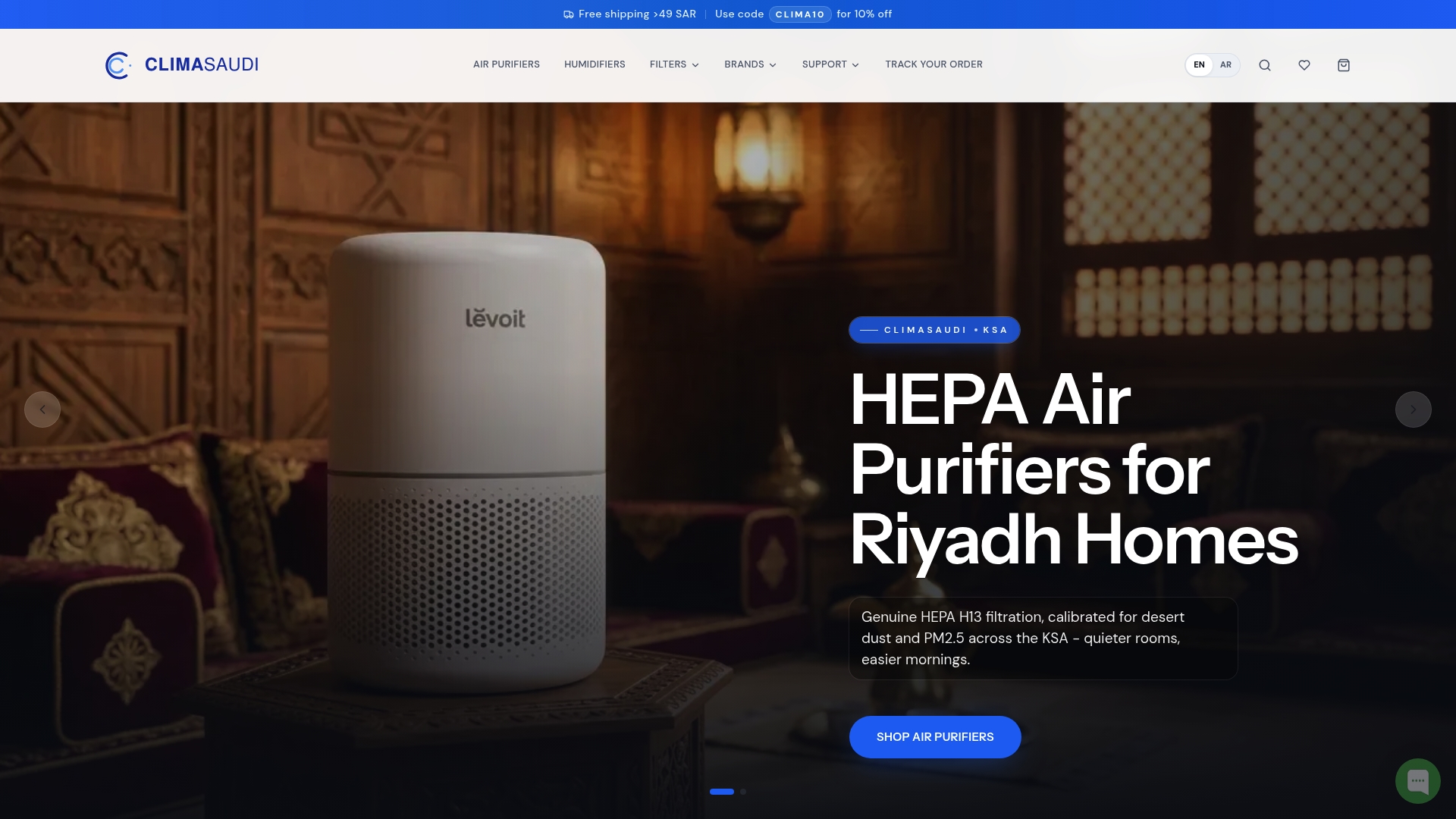
Whether you live in a Riyadh villa, a Jeddah apartment, or a Dammam family home, Climasaudi’s catalogue covers room-specific and whole-home solutions. The range includes purifier and humidifier combinations for coastal humidity management, alongside genuine replacement filters for ongoing maintenance. Browse the full selection of air purifiers and HEPA filters with transparent SAR pricing and next-day delivery across the Kingdom.
FAQ
What is the best air filter type for desert dust in Saudi Arabia?
HEPA H13 or H14 certified filters are the most effective option for fine desert silica dust. They capture 99.95% to 99.995% of particles at 0.3 microns, which standard filters cannot match.
How often should I replace air filters in a Saudi home?
Pre-filters need cleaning monthly and replacement every three months. True HEPA H13 filters last 6–12 months, and activated carbon filters should be replaced every 9–12 months under Saudi dust conditions.
Do I need an activated carbon filter as well as a HEPA filter?
Yes. HEPA filters capture particles but cannot absorb gases or odours. Activated carbon handles VOCs and chemical off-gassing from building materials, which is a significant issue in Saudi Arabia’s hot climate.
Are ionic or electrostatic air purifiers suitable for Saudi homes?
No. Ionic and electrostatic purifiers without collection plates charge dust particles but do not remove them. Fine silica settles on surfaces instead of being captured, worsening indoor air quality.
What is the difference between MERV and HEPA ratings?
MERV rates filters on a scale of 1–16 for general particulate capture. HEPA is a separate, higher standard: H13 and H14 classifications under EN 1822 certify efficiency at the most penetrating particle size, making them the appropriate choice for Saudi desert conditions.
Recommended
- Layer air filtration whole house: the Saudi homeowner’s guide — Blog | ClimaSaudi
- Air purifier vs air filter: what works for Saudi homes? — Blog | ClimaSaudi
- Improve indoor air quality at home: 2026 Saudi guide — Blog | ClimaSaudi
- Top 4 Zamilac.com Indoor Air Quality Alternatives 2026 — Blog | ClimaSaudi