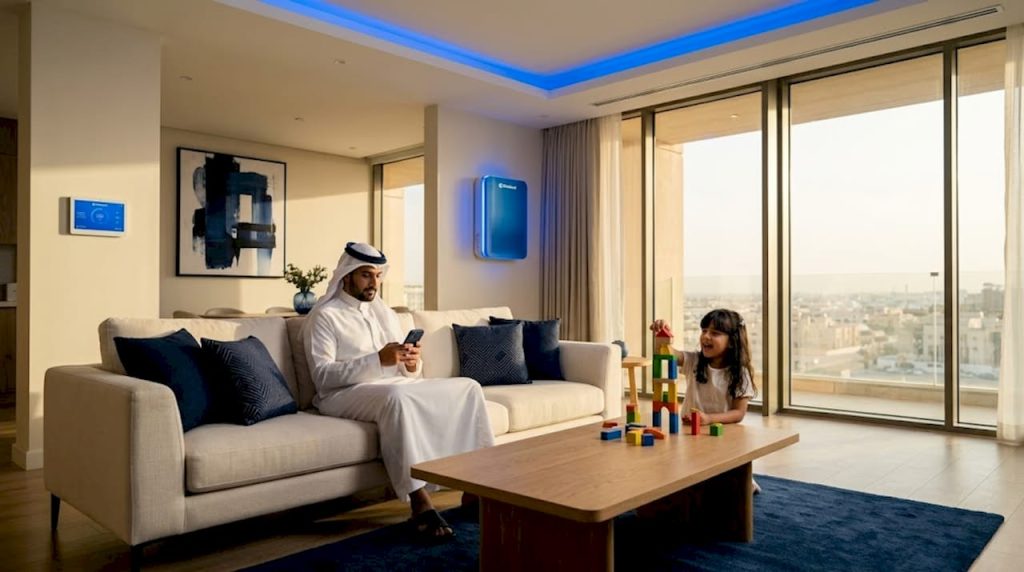
Indoor air quality in Saudi homes can shift dramatically within minutes. A gentle breeze through a cracked window, a dust storm rolling into Riyadh, or cooking fumes drifting through a Jeddah flat can push PM2.5 (fine particulate matter) levels well beyond safe limits before you even notice. Many homeowners own an air purifier but leave it running on a fixed setting, uncertain what auto mode actually does. This guide explains exactly how auto mode works, why it matters for Saudi living, and how to use it to protect your household’s respiratory health every single day.
Table of Contents
- What is air purifier auto mode?
- How does auto mode work in air purifiers?
- Auto mode vs manual mode: Pros and cons
- Maximising indoor air quality in Saudi Arabia with auto mode
- Our perspective: What most Saudi homeowners miss about auto mode
- Explore advanced air purifiers for your home
- Frequently asked questions
Key Takeaways
| Point | Details |
|---|---|
| Auto mode explained | Auto mode allows your purifier to adjust itself for optimal cleaning based on current air conditions. |
| Saudi dust challenges | Auto mode is especially helpful in Saudi Arabia for handling unpredictable fine dust and humidity. |
| Maximum convenience | Set-and-forget operation means less worry and better indoor air without manual adjustments. |
| Efficiency and health | Continuous auto mode use supports energy savings and can improve respiratory wellbeing. |
| Practical maintenance | Keeping purifier sensors clean ensures auto mode works as designed for lasting air quality results. |
What is air purifier auto mode?
Auto mode is one of the most useful features on a modern air purifier, yet it remains one of the least understood. At its core, auto mode allows the device to monitor air quality continuously and adjust its own fan speed and operation without any input from you.
Here is what that means in practice:
- Built-in sensors measure pollutants such as PM2.5, PM10, volatile organic compounds (VOCs), and sometimes humidity.
- When pollution rises, the purifier increases fan speed to filter air more rapidly.
- When air quality improves, it reduces fan speed to conserve energy and reduce noise.
- You never need to adjust a setting manually unless you want to.
A common misconception is that auto mode exists purely to save electricity. It does help with energy efficiency, but its primary purpose is always-optimal filtration. In Saudi Arabia, where indoor air quality can shift from acceptable to hazardous during a sandstorm within 20 minutes, having a purifier that reacts instantly is genuinely important. As city-specific air purifier features for Saudi homes demonstrate, responsive auto mode is a critical feature rather than a luxury add-on.
Auto mode removes the guesswork. Instead of wondering whether to increase your purifier’s speed during a dusty afternoon, the device responds to real data from your room’s air.
Studies on indoor air pollution in arid climates consistently show that fine desert dust can penetrate well-sealed buildings. Even with windows closed, particles travel through door gaps, ventilation systems, and clothing fibres. A static fan setting cannot respond to these fluctuations. Auto mode can.
How does auto mode work in air purifiers?
With an understanding of what auto mode is, let us uncover how these intelligent features actually operate inside your purifier.
The engine of auto mode is the sensor array. Different purifiers use different combinations of sensors, and knowing which sensors your unit has helps you understand how reliably it responds to Saudi-specific conditions.
| Sensor type | What it detects | Saudi relevance |
|---|---|---|
| Laser particle sensor | PM2.5 and PM10 dust particles | Critical for desert dust and sandstorms |
| VOC sensor | Cooking fumes, cleaning chemicals, off-gassing | Useful in kitchens and newly furnished rooms |
| Humidity sensor | Moisture levels in the air | Important for coastal cities like Jeddah and Dammam |
| Odour sensor | Smoke, food smells, pet odours | Helpful for multi-purpose living spaces |
| CO2 sensor | Carbon dioxide from occupants | Supports ventilation decisions in sealed rooms |
When a sensor detects a rise in any of these readings, the purifier’s control logic triggers a response. Here is how that response typically unfolds:
- Detection: The sensor records a reading above a preset threshold, for example PM2.5 above 35 micrograms per cubic metre.
- Classification: The control system classifies the air quality as poor, moderate, or good using a colour-coded display (usually red, orange, or green).
- Speed adjustment: The fan ramps up to a higher speed, sometimes instantly to turbo in severe cases, sometimes gradually over 30 to 60 seconds.
- Stabilisation: Once readings improve, the fan gradually reduces back to a quieter level.
- Monitoring: The sensor continues checking every few seconds to ensure conditions remain stable.
Consider a practical example. A sandstorm approaches Riyadh. Even with all windows closed, fine PM2.5 particles begin infiltrating your villa through ventilation gaps. Your purifier’s laser particle sensor detects the spike. Within seconds, the fan accelerates from quiet sleep mode to maximum speed, processing the room’s air multiple times per hour through its HEPA H13 filter. Once the storm passes and indoor readings drop, the fan settles back down. You slept through the entire event undisturbed.
Pro Tip: If your purifier has a colour ring or LED display, glance at it when you walk into a room. A red or orange reading means auto mode is already working hard. A consistent green means your air is clean. This small habit tells you a lot about your home’s daily air quality patterns.
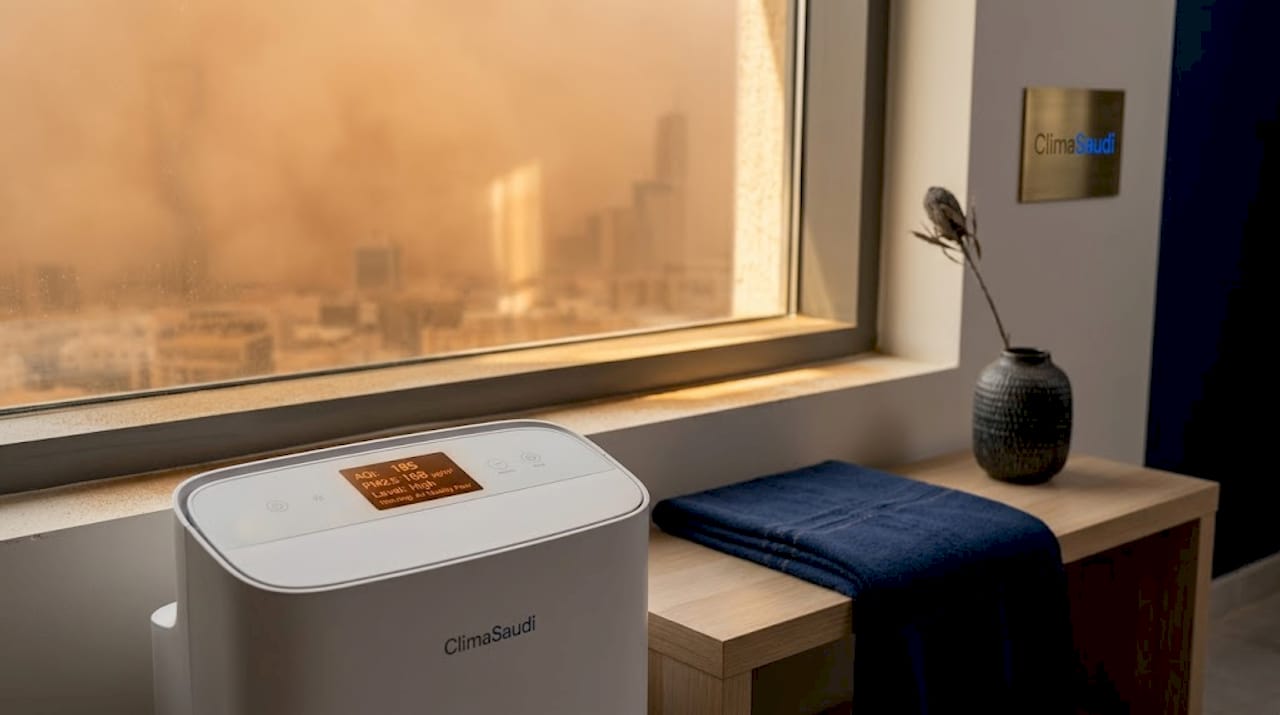
Air purifiers and sensors designed for Saudi conditions prioritise fine particulate detection because desert dust particles are often smaller than 2.5 micrometres, the most dangerous size for respiratory health. Larger particles like visible dust are actually easier to filter. It is the invisible particles that auto mode is built to combat.
Auto mode vs manual mode: Pros and cons
Knowing how auto mode functions, it is worth weighing it against manual control for Saudi home needs.
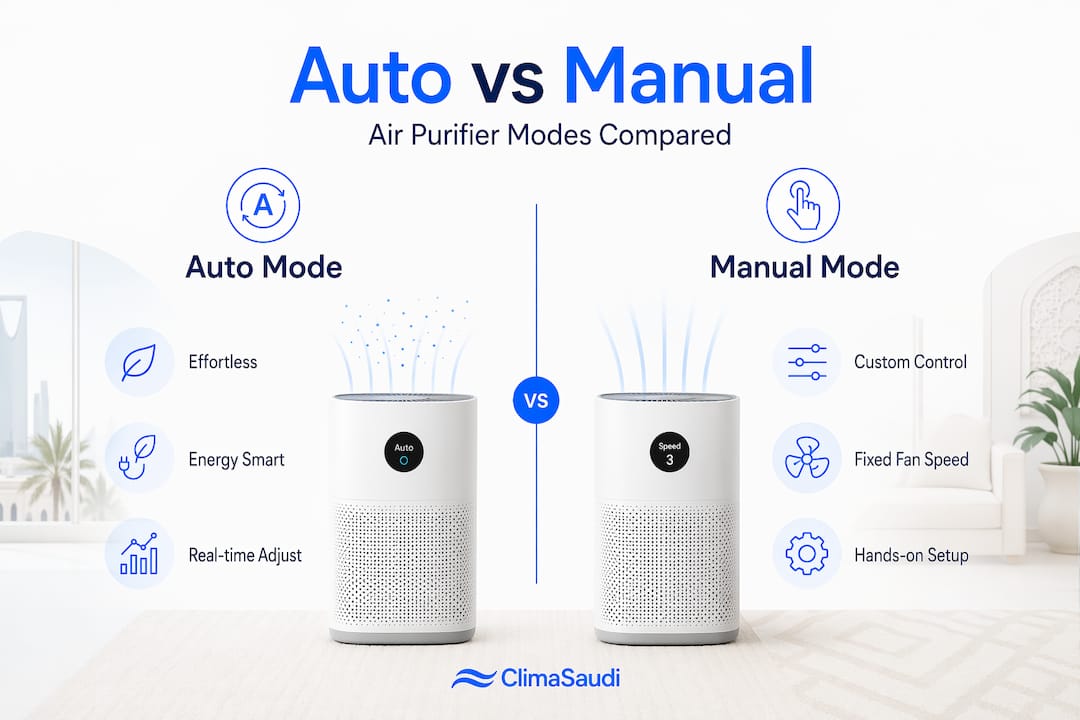
Both modes have genuine merit, and the right choice depends on your situation. The table below gives a clear comparison.
| Feature | Auto mode | Manual mode |
|---|---|---|
| Ease of use | Very easy, no daily adjustments needed | Requires regular monitoring and changes |
| Response to dust spikes | Instant, sensor-driven | Only as fast as you notice and react |
| Energy efficiency | Good, fan slows when air is clean | Depends on setting chosen |
| Noise control | Quieter during clean periods | Fixed noise at chosen speed |
| User control | Limited mid-use control | Full control at all times |
| Best suited for | Most homes, busy lifestyles, overnight use | Specific scenarios, known pollutant events |
Auto mode offers convenience, reacting to environmental changes many users might not even notice. For a family in Dammam managing coastal humidity alongside dust, auto mode handles both without requiring you to switch between settings throughout the day.
That said, manual mode has its uses. If you are hosting guests and want the purifier running at full speed for an extended period regardless of readings, manual is your option. Or if you are cooking something particularly aromatic and want immediate maximum airflow, switching to manual turbo for 15 minutes is perfectly reasonable.
Key advantages of auto mode for Saudi homes:
- Responds immediately to sandstorms, cooking events, and outdoor air intrusions.
- Reduces fan noise during clean night-time air, supporting better sleep.
- Extends filter life by not running at full power unnecessarily.
- Requires no routine adjustments, ideal for busy households.
Potential drawbacks to be aware of:
- Sensors require occasional cleaning. Dusty sensors give inaccurate readings.
- During extreme sandstorms, auto mode may not be as aggressive as manually setting turbo.
- Some lower-cost units have less sensitive sensors that respond slowly.
Pro Tip: During a major sandstorm or haboob, consider switching to manual turbo for the first 30 minutes, then returning to auto mode once the initial surge of particles is processed. Models like the Blueair Blue Max 3450i are designed for exactly this kind of reliable, consistent performance under demanding Saudi conditions.
Maximising indoor air quality in Saudi Arabia with auto mode
Once you have decided to rely on auto mode, here is how to get the very best results, uniquely adapted for Saudi living.
Positioning your purifier correctly is the single biggest factor after the unit itself. Auto mode can only filter the air it reaches. Place your purifier in the centre of the room if possible, or at least away from walls and curtains. Avoid corners where air circulation is poor. In large villas, a single unit may not cover the whole floor, so consider one purifier per main living area.
Practical steps for getting the most from auto mode:
- Position centrally: Keep at least 30 centimetres of clearance on all sides of the unit.
- Run continuously: Leave auto mode on 24 hours a day, especially during Riyadh’s spring dust season and Jeddah’s humid summer months.
- Monitor the display: Check the air quality indicator daily to build an awareness of your home’s typical pollution patterns.
- Clean sensors monthly: Use a soft dry cloth or the small brush from your unit’s accessories. Dirty sensors cause the purifier to under-react.
- Keep doors closed: Auto mode performs best in a defined space. Open-plan areas with constantly moving air confuse sensor readings.
- Replace filters on schedule: Auto mode cannot compensate for a saturated HEPA filter. A clogged filter means reduced airflow regardless of fan speed.
Auto mode is especially valuable for filtering fine desert dust and maintaining consistent air quality with minimal user intervention. This is particularly true overnight, when you cannot manually adjust settings and your respiratory system is most vulnerable during deep sleep.
Special scenarios worth noting:
- Pet dander: If you have cats or dogs, auto mode will detect dander particles and respond. Position the purifier near where your pets spend the most time.
- Seasonal humidity: In Jeddah and Dammam during summer, consider pairing your purifier with a dehumidifier. High humidity can affect sensor accuracy in some units. The Blueair 2-in-1 DH3i handles both purification and humidity management in one unit.
- Construction dust: If renovation work is happening in or near your home, switch to manual turbo during active construction hours, then return to auto mode once work stops.
- Cooking: Auto mode will detect cooking fumes. For heavy cooking sessions, run the kitchen extractor fan simultaneously to reduce the load on your purifier.
Pro Tip: Note what time of day your purifier display most often shows orange or red. Many Saudi homes see peak indoor pollution in the early afternoon when outdoor temperatures peak and fine dust re-enters through ventilation systems. This knowledge helps you plan activities and ventilation accordingly.
Our perspective: What most Saudi homeowners miss about auto mode
Most homeowners activate auto mode when they first set up their purifier and never interact with it again. That is understandable. The whole point of auto mode is convenience. But there is a meaningful difference between passive ownership and informed ownership.
The display on your purifier is not decoration. It is real-time data about your home’s air. We see many customers who have owned their purifiers for months and never noticed that their unit spikes to red every evening during cooking, or that their bedroom air is consistently orange during Riyadh’s March dust season. That data is being collected. It is just not being read.
Sensor location matters far more than people expect. Placing a purifier behind a sofa or inside a cabinet because it looks tidier means the sensor reads stale, trapped air rather than the room’s actual conditions. The unit may report clean air while the rest of your room is full of fine particulates. This is one of the most common reasons people feel their purifier “is not working.”
Running auto mode continuously on modern units is entirely safe and genuinely beneficial. Many customers worry about motor wear or electricity costs from 24/7 operation. In reality, because auto mode reduces fan speed during clean periods, the motor runs gently for much of the day. The electricity cost of running a quality purifier in auto mode is typically quite low over a full month.
There are moments when auto mode’s quieter cycles can be insufficient, particularly in the first 10 to 15 minutes after you open a window or return home on a dusty day. In these moments, a brief manual boost at full speed, then a return to auto mode, gives you the best of both approaches. Read more on purifier settings to understand which features your specific model supports.
Auto mode is an excellent foundation. Informed use of it is what genuinely protects your household’s respiratory health over the long term.
Explore advanced air purifiers for your home
You now have a clear understanding of auto mode and how to use it effectively in a Saudi home. Taking that knowledge and applying it to the right purifier makes all the difference.
At ClimaSaudi, our full product range includes air purifiers with intelligent auto mode sensors, HEPA H13 filtration, and designs suited to Saudi dust, heat, and humidity. Whether you live in a compact Riyadh apartment or a large coastal villa in Jeddah, there is a model matched to your room size and air quality concerns. The Blueair ComfortPure 3-in-1 T20i is a strong choice for homeowners who want reliable auto mode performance with clear air quality feedback. We offer next-day delivery across Saudi Arabia, transparent SAR pricing, and local customer support to help you choose the right unit with confidence.
Frequently asked questions
Does air purifier auto mode use more electricity?
Typically, auto mode is energy efficient because it adjusts fan speed only when needed, rather than running at full power constantly. Because it reduces speed during clean air periods, total energy consumption is often lower than running a fixed medium or high setting.
Is it safe to leave auto mode on all day?
Yes, most modern air purifiers are designed for continuous use in auto mode, especially during high-dust seasons. Units with responsive sensors for dust and particulate matter run efficiently without overloading the motor during long operating periods.
How do I know auto mode is working correctly?
If your device display shows changing fan speeds or air quality readings across the day, the sensors are working as intended. A purifier that shows a consistent single colour and never adjusts its speed is worth checking for sensor cleanliness.
Should I use auto mode during a sandstorm?
Yes. Auto mode will sense the dust spike and automatically ramp up speed for maximum filtration. For very severe storms, consider starting on manual turbo for the first 15 to 30 minutes, then switching back to auto mode once the initial surge is cleared.
How often should I clean my purifier’s sensors?
Check your user manual, but typically once a month is recommended for Saudi conditions due to high dust levels. A quick wipe with a soft dry cloth keeps sensors accurate and ensures auto mode responds correctly to your room’s actual air quality.
Recommended
- City-specific air purifier features for Saudi homes — Blog | ClimaSaudi
- Air Purifiers, Humidifiers & HEPA Filters in Saudi Arabia | ClimaSaudi
- How HEPA filters trap allergens for cleaner air at home — Blog | ClimaSaudi
- Buy Blueair ComfortPure 3-in-1 T20i Air Purifier in Saudi Arabia | Best Price SAR 1,503 | ClimaSaudi