An effective air purifier maintenance checklist is the single most reliable way to protect your indoor air quality and extend your device’s lifespan. In Saudi Arabia, where desert dust, PM2.5 particles, and seasonal humidity create year-round filtration demands, a structured upkeep routine is not optional. It is the difference between a purifier that performs and one that quietly fails. This guide covers every task you need, from pre-filter cleaning to sensor care, with schedules and techniques tailored to local conditions. Climasaudi has built this checklist around the real challenges Saudi homeowners and renters face daily.
1. What does an air purifier maintenance checklist include?
A maintenance checklist for air purifiers covers all routine tasks that keep the device filtering air at full capacity. The core components are pre-filter cleaning, HEPA H13 filter inspection and replacement, activated carbon filter replacement, exterior wiping, and air quality sensor cleaning. Missing any one of these tasks causes the others to work harder, accelerating wear across the whole unit.
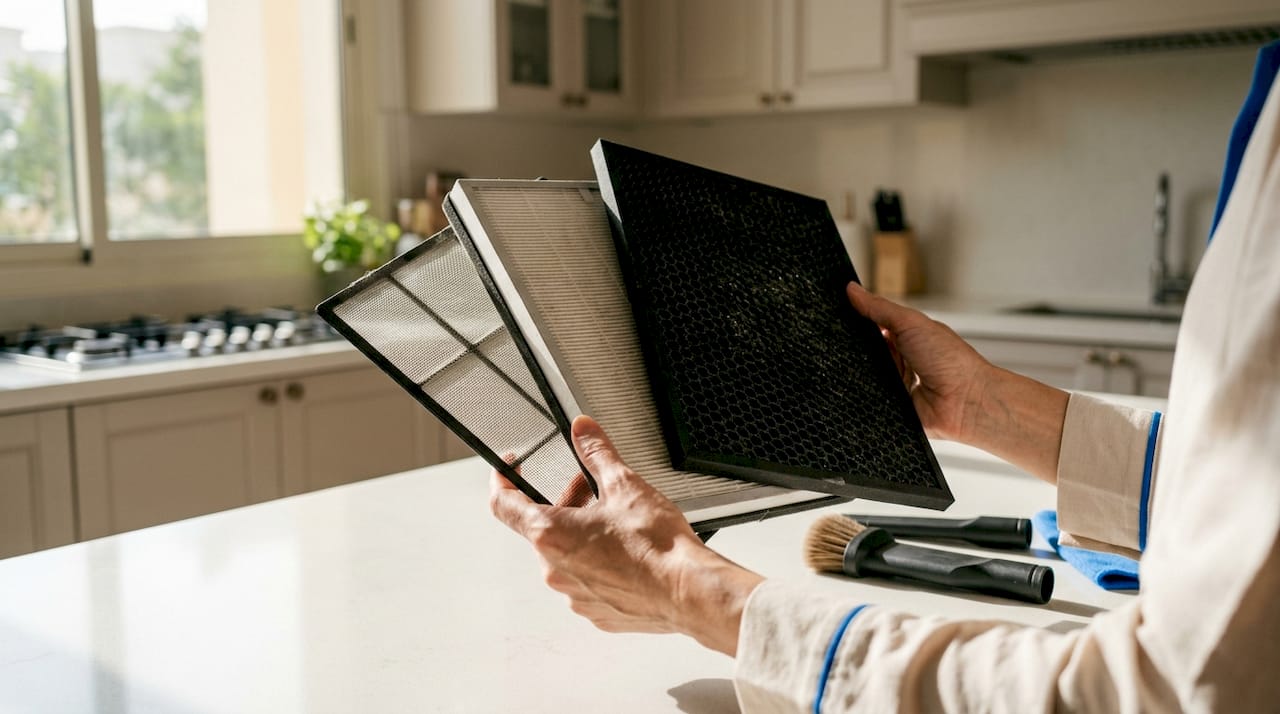
Most residential air purifiers use a three-stage filtration system: a washable pre-filter, a HEPA filter, and an activated carbon filter. Each stage has a different maintenance interval and a different cleaning method. Understanding which filter does what prevents the most common and costly mistakes.
Pro Tip: Keep a simple paper log or phone note with the date of each maintenance task. Saudi dust seasons can shorten filter life significantly, and a written record removes all guesswork.
2. How to clean each part of your air purifier
Pre-filter
The pre-filter catches large particles like dust, hair, and pet dander before they reach the HEPA layer. Clean it every 2–4 weeks by removing it and tapping it gently over a bin, then rinsing under cool water if it is washable. Washable pre-filters need a full 24–48 hours of air drying before you reinstall them. Putting a damp filter back into the unit is the leading cause of musty odours and mould growth inside the casing.
In Jeddah or Dammam, where coastal humidity slows drying, leave the filter in a well-ventilated indoor space rather than outside in humid air. In Riyadh’s dry climate, drying is faster, but never rush it below 24 hours.
HEPA H13 filter
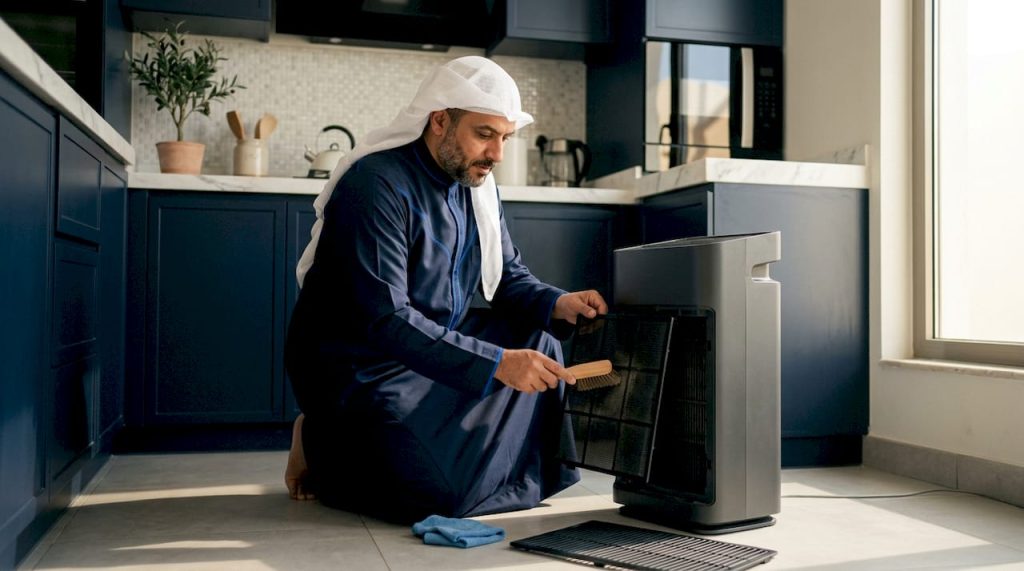
HEPA filters cannot be washed. Water destroys the fine fibre structure that captures particles as small as 0.3 microns. To remove surface dust safely, use a vacuum cleaner with a brush attachment and apply long, parallel strokes across the filter face. Circular strokes drive particles deeper into the fibres and reduce filtration efficiency. This technique extends filter life between scheduled replacements without causing damage.
Activated carbon filter
The activated carbon filter absorbs odours, volatile organic compounds, and gases. It cannot be cleaned effectively. Replace it on schedule, regardless of how it looks, because saturation is invisible.
Exterior and air vents
Wipe the outer casing with a dry or lightly damp microfibre cloth every two weeks. Use a soft brush or vacuum to clear dust from the air intake vents. Blocked vents reduce the clean air delivery rate (CADR) and force the motor to work harder.
Air quality sensor
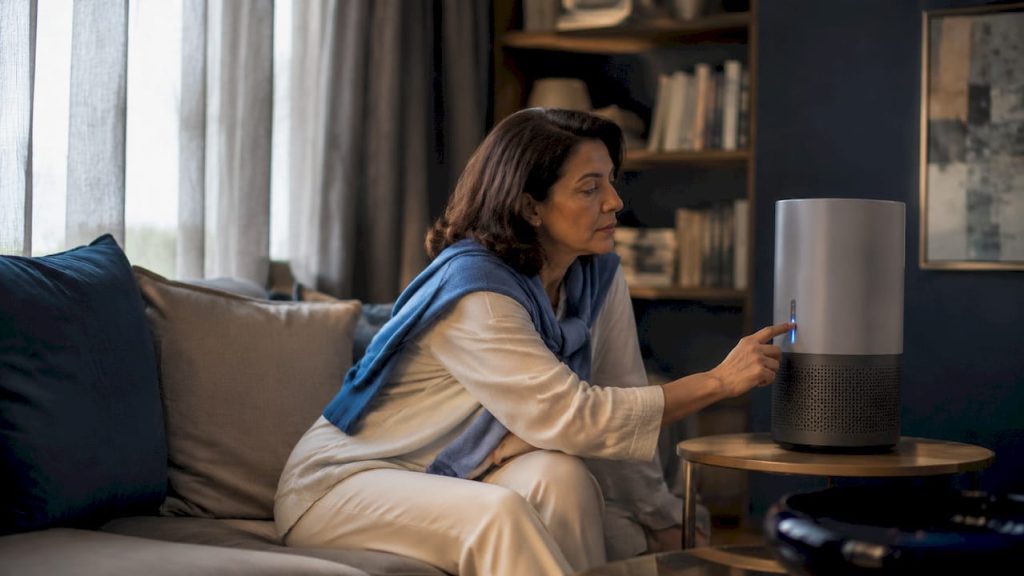
Dusty air quality sensors produce false pollution readings, causing the unit to run unnecessarily or miss real spikes. Clean the sensor port monthly using a dry cotton swab. The port is usually a small opening on the side of the unit, marked in the manual.
Pro Tip: Set a monthly phone reminder specifically for sensor cleaning. It takes under two minutes and prevents the most common cause of erratic auto-mode behaviour.
3. How often should you clean or replace each component?
Maintenance frequency depends on your environment, not just the calendar. A villa in central Riyadh during a dust storm season needs weekly pre-filter attention. A Jeddah apartment with no pets and good ventilation may stretch to four weeks between cleans.
| Component | Standard interval | High-pollution or pet household |
|---|---|---|
| Pre-filter (washable) | Every 2–4 weeks | Weekly |
| HEPA H13 filter | Every 6–12 months | Every 4–6 months |
| Activated carbon filter | Every 3–6 months | Every 2–3 months |
| Air quality sensor | Monthly | Monthly |
| Exterior and vents | Every 2 weeks | Weekly |
Industry standard intervals place pre-filter cleaning at every 2–4 weeks and carbon filter replacement at every 3–6 months. These are baselines. Saudi homes with open windows during dust season, multiple occupants, or pets should treat these as minimum frequencies, not targets.
Most modern purifiers include a filter indicator light. Use it as a prompt, not a deadline. Filter indicator lights help avoid unnecessary early replacements, which saves money over the device’s lifetime. However, if you notice reduced airflow or increased motor noise before the light activates, inspect the filter immediately. Experts recommend monitoring filter condition through airflow changes and noise levels alongside time-based schedules.
Ignoring filter replacement leads to poor air quality, increased allergens, and motor overwork, all of which shorten device lifespan. A clogged HEPA filter also reduces airflow and increases energy consumption. For a deeper look at why timely swaps matter, the Climasaudi guide on replacing HEPA filters regularly explains the health and performance case clearly.
4. Where to place your air purifier for best performance and easier maintenance
Placement directly affects how quickly filters clog and how well the unit cleans the room. Proper placement requires at least 18 inches of clearance on all sides of the unit. Placing a purifier in a corner or against a wall restricts airflow and reduces CADR measurably.
Follow these placement rules to reduce maintenance demands and improve results:
- Place the unit in the room where you spend the most time, typically the bedroom or living room.
- Keep it away from corners, curtains, and furniture that block air circulation.
- Elevate it slightly in rooms with heavy floor-level dust, using a low table or shelf.
- Avoid placing it near open windows during dust storms, as this overwhelms the pre-filter rapidly.
- Do not position it directly next to a humidifier, as excess moisture accelerates filter saturation.
Effective air purifier maintenance involves not only filter care but also correct unit placement and surrounding environment management. A well-placed purifier in a tidy room cleans air more efficiently and requires less frequent filter attention. For apartment-specific advice, the Climasaudi article on air filtration for apartments covers room-by-room placement in detail.
Vacuum and dust the area around the purifier regularly, as air purifiers do not remove settled dust from surfaces. Dust on nearby shelves and floors gets drawn back into the intake, clogging the pre-filter faster than normal. Keeping the surrounding area clean is one of the simplest ways to extend filter life between replacements.
5. Common mistakes that damage your air purifier
Most maintenance errors are not about neglect. They come from using the wrong technique or the wrong schedule. These are the mistakes that cause the most damage in Saudi homes.
- Reinstalling a damp pre-filter. This is the single most common cause of mould inside air purifiers. Always wait the full 24–48 hours before reinstalling, even if the filter feels dry to the touch.
- Vacuuming HEPA filters with circular strokes. Circular strokes drive particles deeper into the filter fibres, reducing effectiveness. Use long, parallel strokes only.
- Skipping sensor cleaning. A dirty sensor causes the unit to run on incorrect data. The auto mode becomes unreliable, and the purifier either overworks or underperforms.
- Washing a HEPA filter. Water collapses the fibre structure permanently. A washed HEPA filter looks intact but no longer captures fine particles effectively.
- Ignoring the manual before cleaning. Routine cleaning following manufacturers’ recommendations does not void warranties, but improper cleaning methods can. Always check the manual before washing or modifying any component.
- Running the unit in a cluttered space. Clutter near the intake restricts airflow and causes the motor to strain, increasing energy use and reducing filter life.
Pro Tip: Before any cleaning session, photograph the filter and its orientation inside the unit. Reinstalling a filter backwards is a surprisingly common error that cuts airflow significantly.
For a thorough walkthrough of correct HEPA care, the Climasaudi guide on maintaining HEPA filters at home covers every step with Saudi-specific context. Understanding how your HVAC system interacts with your standalone purifier also helps. The HVAC air quality improvements guide from e320air explains how the two systems complement each other in residential settings.
Key takeaways
A structured air purifier maintenance checklist, followed consistently, is the most effective way to protect indoor air quality and extend device lifespan in Saudi homes.
| Point | Details |
|---|---|
| Clean pre-filters every 2–4 weeks | High-dust or pet households should clean weekly to prevent rapid clogging. |
| Always dry washable filters fully | Wait 24–48 hours before reinstalling to prevent mould growth inside the unit. |
| Vacuum HEPA filters with parallel strokes | Circular strokes push particles deeper into fibres and reduce filter effectiveness. |
| Clean the air quality sensor monthly | Use a dry cotton swab to prevent false readings and erratic auto-mode behaviour. |
| Maintain 18 inches of clearance around the unit | Correct placement preserves CADR and reduces how quickly filters become saturated. |
What I have learned from maintaining air purifiers in Saudi homes
By Pauline
The advice I give most often is the simplest: write down the date every time you touch your purifier. Saudi homeowners consistently underestimate how quickly filters clog here compared to milder climates. A pre-filter that lasts four weeks in a European flat may need attention after ten days during a Riyadh dust season. Without a record, you are always guessing.
The mistake I see most in coastal homes, particularly in Jeddah, is reinstalling filters that feel dry but are not. The humidity there is deceptive. A filter that feels dry on the surface can still hold moisture in its core. I always recommend leaving washable filters for the full 48 hours, even when the climate feels dry indoors.
Sensor cleaning is the most overlooked task on any upkeep list. Homeowners assume the unit is working correctly because it is running. A dirty sensor means the purifier is reacting to phantom data. I have seen units running on maximum speed in a clean room and idling during genuine pollution events, all because the sensor had not been cleaned in months. Two minutes with a cotton swab every month prevents all of that.
My broader observation is that maintenance is not a burden when it is scheduled. Build it into your routine the same way you change your water filter or service your air conditioning. Your purifier works every hour of every day. It deserves the same attention.
— Pauline
Climasaudi’s range of air quality products and support
Keeping your purifier in top condition is straightforward when you have the right filters and guidance to hand.
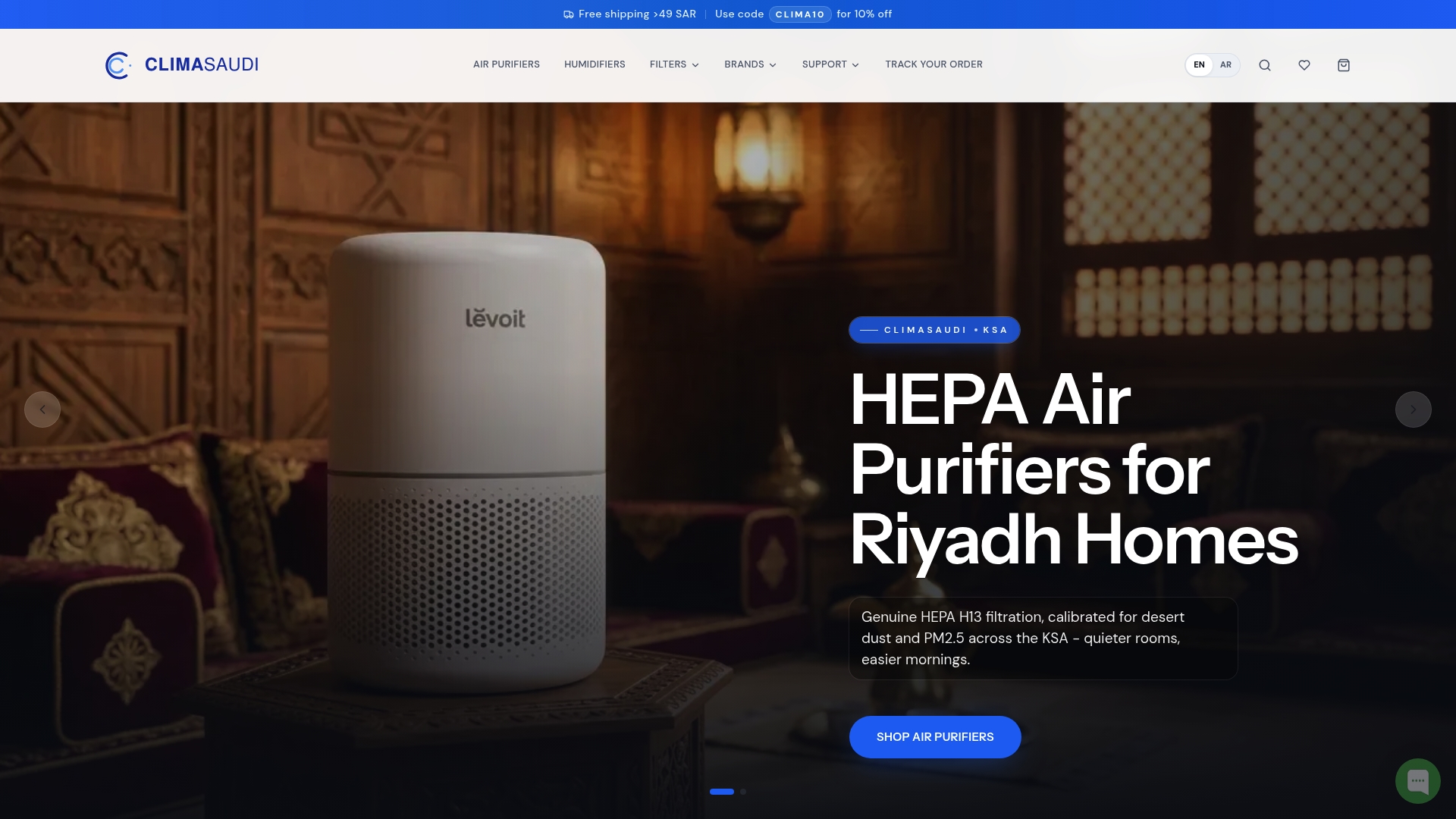
Climasaudi stocks genuine HEPA H13 replacement filters, activated carbon filters, and accessories for a wide range of residential purifiers, with next-day delivery across Riyadh, Jeddah, and Dammam. Every product listing includes clear replacement interval guidance so you always know what to order and when. If you are unsure which filter fits your unit, the Climasaudi team offers local customer support in both Arabic and English. Visit Climasaudi’s air purifier range to find the right replacement filters, browse purifiers sized for your room, and get advice tailored to your home’s air quality needs.
FAQ
How often should I clean my air purifier’s pre-filter?
Clean the pre-filter every 2–4 weeks under standard conditions. In high-dust environments or homes with pets, weekly cleaning is recommended.
Can I wash a HEPA H13 filter?
No. HEPA filters cannot be washed, as water permanently damages the fibre structure. Vacuum them gently using long, parallel strokes instead.
What happens if I skip filter replacement?
A clogged filter reduces airflow, increases allergens in the room, and forces the motor to overwork, shortening the device’s lifespan.
How do I clean the air quality sensor?
Use a dry cotton swab to clean the sensor port monthly. This prevents false pollution readings and keeps the auto mode functioning correctly.
Does poor placement affect how often I need to maintain my purifier?
Yes. Placing a unit in a corner or against furniture restricts airflow and causes filters to clog faster. Keep at least 18 inches of clearance on all sides.