Activated carbon filtration is defined as the process of adsorbing gaseous chemical pollutants onto a porous carbon surface, removing them from indoor air before you breathe them in. The role of carbon filter chemical allergens management plays in respiratory health is significant and frequently underestimated. Most people focus on particulate filters for dust and pollen, yet the chemical allergens in air, including volatile organic compounds (VOCs) such as formaldehyde, benzene, and toluene, pass straight through a HEPA filter unchallenged. Understanding indoor air pollution sources is the first step toward choosing the right protection for your home.
How do carbon filters work to remove chemical allergens?
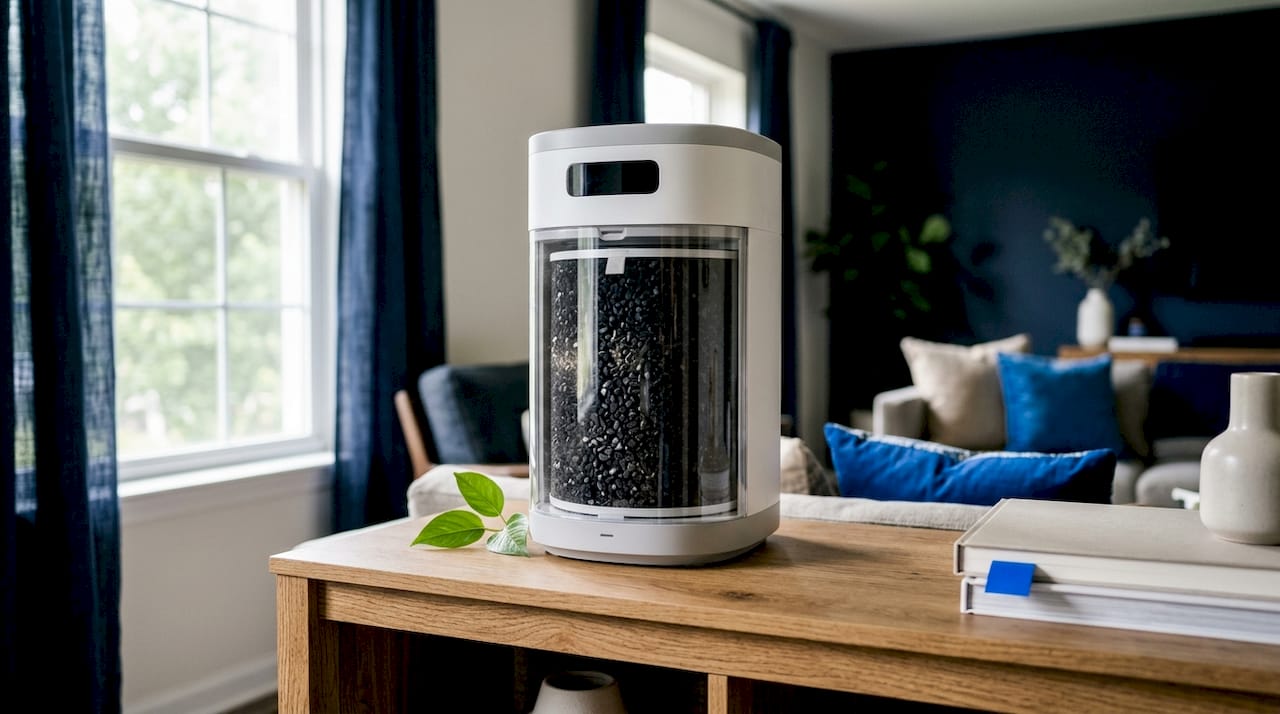
Activated carbon works through adsorption, not absorption. Adsorption means gaseous molecules bond to the surface of the carbon rather than being soaked into it. Activated carbon is processed to create an enormous internal surface area, sometimes thousands of square metres per gram, giving pollutant molecules countless sites to attach to.
Several factors determine how well a carbon filter performs:
- Carbon mass and bed depth. Heavier, thicker carbon beds sustain adsorption longer and capture more pollutants than thin carbon coatings. A filter with only a light carbon layer will saturate quickly and offer little real protection.
- Contact time. Effective VOC removal requires sufficient contact time between the air and the carbon bed. Running a purifier at maximum fan speed can reduce contact time and lower adsorption efficiency.
- Chemical impregnation. Standard activated carbon cannot capture every gas. Potassium permanganate impregnation allows carbon to adsorb formaldehyde and acidic gases through chemisorption, a chemical reaction rather than physical bonding alone.
- Pore size and structure. Different pore sizes target different molecular weights. A well-designed filter matches pore structure to the pollutants most common in your environment.
Pro Tip: When comparing air purifiers, check the weight of the carbon media, not just whether a carbon layer is present. A filter listed as “carbon-enhanced” may contain only a few grams of carbon, which is insufficient for meaningful VOC removal in a typical room.
What chemical allergens and VOCs are commonly found indoors?
Chemical allergens in indoor air come from sources you encounter every day. Furniture, flooring, cleaning products, paints, and cigarette smoke all release VOCs continuously. The problem is invisible and persistent.
Common indoor VOCs and chemical allergens include:
- Formaldehyde, released by pressed wood furniture, insulation, and some fabrics
- Benzene, found in tobacco smoke, stored fuels, and some adhesives
- Toluene, emitted by paints, lacquers, and cleaning agents
- Propylparaben, a preservative detected in household dust and personal care products
The health consequences are well documented. Indoor VOC levels in some clinical environments exceed 400 μg/m³, and experimental reduction of those levels inhibited atopic dermatitis symptoms in mice. That finding matters because it shows a direct causal link between VOC concentration and inflammatory skin and respiratory conditions, not merely a correlation.
Propylparaben was detected in 100% of urine samples and over 90% of household dust samples in one study, correlating with increased paediatric asthma and allergic rhinitis risks. Children in homes with high chemical allergen loads face a measurably greater risk of developing chronic respiratory conditions. Reducing those concentrations through carbon filtration is a direct, evidence-backed intervention.
Pro Tip: If you or a family member has asthma or eczema, consider testing your indoor air for formaldehyde specifically. It is one of the most common and reactive indoor VOCs, and standard carbon filters without chemisorptive agents may not capture it reliably.
Why carbon filters must work alongside HEPA filters
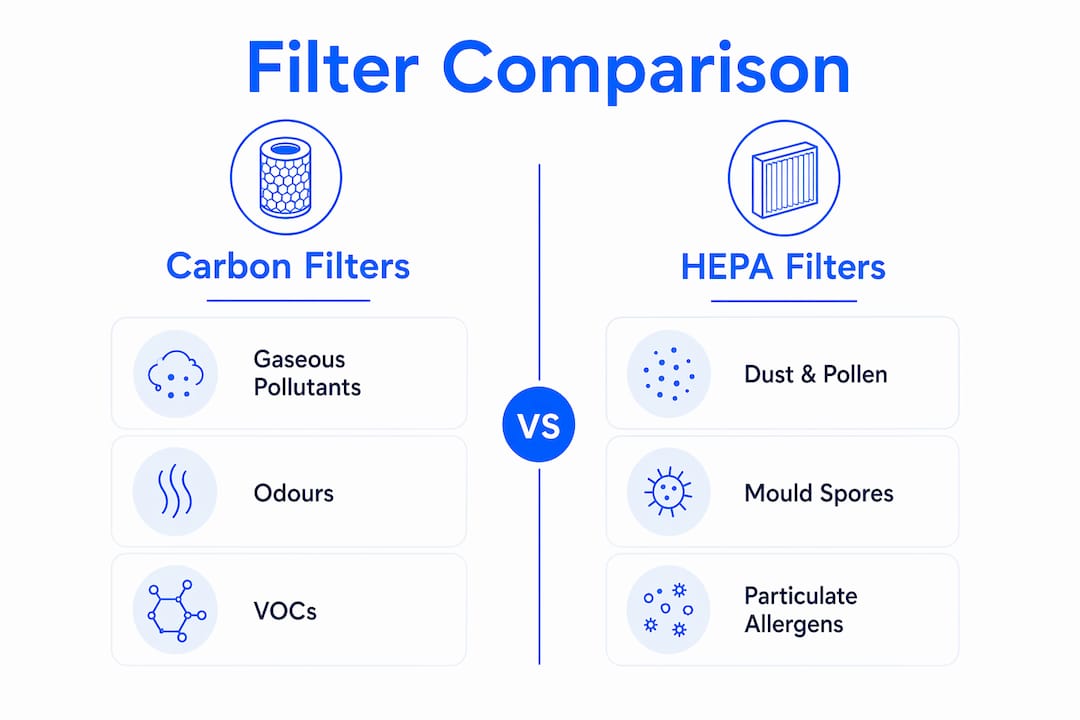
HEPA filters capture particles down to 0.3 microns at 99.97% efficiency, but they cannot remove VOCs or gases. Carbon filters adsorb chemical vapours but do not trap solid particles. Neither filter type is superior in absolute terms. They target entirely different categories of pollutant.
“Carbon filters are indispensable for removing chemical allergens but must be paired with HEPA filters to tackle particulate allergens effectively for asthma and allergy management. HEPA removes particulate allergens; carbon removes chemical allergens. Neither replaces the other.”
The table below shows what each filter type removes and what it leaves behind.
| Filter type | What it removes | What it cannot remove |
|---|---|---|
| HEPA H13 | Dust, pollen, mould spores, PM2.5, bacteria | VOCs, gases, odours, chemical allergens |
| Activated carbon | VOCs, formaldehyde, benzene, odours, chemical vapours | Particles, dust, pollen, mould spores |
| Combined HEPA + carbon | Particles and gaseous pollutants together | Very heavy VOC loads without frequent replacement |
Multi-stage air purifier designs combine HEPA and carbon filtration to provide comprehensive allergen removal. This is the standard approach recommended for people managing asthma or chemical sensitivities. A purifier with only one filter type leaves a significant gap in protection. You can read more about HEPA filter allergy benefits to understand how the two technologies complement each other in practice.
Understanding HEPA filter ratings also helps you assess whether a combined system meets the H13 standard required for genuine allergen protection in Saudi homes.
How to choose and maintain carbon filters for best results
Choosing the right carbon filter requires looking beyond marketing claims. The following steps give you a practical framework.
- Check carbon weight. Ask for the carbon media weight in grams. Filters with less than 100g of carbon in a standard room-sized purifier offer limited protection. Heavier filters last longer and perform better.
- Match filter type to your pollutants. If formaldehyde is a concern, choose a filter with chemisorptive agents such as potassium permanganate. Standard activated carbon alone will not reliably capture formaldehyde at typical indoor concentrations.
- Set a replacement schedule. Carbon filters do not show visible signs of saturation the way a dusty HEPA filter does. Replace carbon media every three to six months in typical residential use, or sooner if you notice returning odours.
- Control fan speed deliberately. High-speed airflow reduces contact time, lowering adsorption efficiency. Run your purifier at a moderate speed for VOC removal rather than maximum power.
- Address emission sources directly. Carbon filters remove existing VOCs but do not stop new emissions. Ventilate after painting, choose low-VOC furniture, and store cleaning products in sealed containers.
- Pair with ventilation. Opening windows when outdoor air quality permits dilutes indoor VOC concentrations and reduces the load on your carbon filter, extending its effective life.
Pro Tip: If you have recently moved into a new home or installed new furniture, run your carbon filter continuously for the first four to six weeks. Off-gassing from new materials is heaviest in this period, and a fresh carbon bed will capture the bulk of it.
Understanding how to improve indoor air quality in Saudi homes also means accounting for local factors such as desert dust and high temperatures, which can accelerate off-gassing from synthetic materials. For a broader view of how filters protect respiratory health, the clean air filters guide covers the full picture across filter technologies. You can also explore HEPA filtration for mould cleanup to understand how specialised filtration handles biological alongside chemical pollutants.
Key takeaways
Carbon filters and HEPA filters together form the only complete defence against both gaseous chemical allergens and particulate pollutants in indoor air.
| Point | Details |
|---|---|
| Carbon filters target gases, not particles | Activated carbon adsorbs VOCs and chemical allergens that HEPA filters cannot capture. |
| Carbon mass determines performance | Heavier, thicker carbon beds last longer and remove more pollutants than thin carbon coatings. |
| Chemisorption handles formaldehyde | Filters impregnated with potassium permanganate capture reactive gases that standard carbon misses. |
| Replace carbon every 3–6 months | Carbon saturates invisibly; returning odours are the clearest sign that replacement is overdue. |
| Source control remains non-negotiable | Carbon filtration reduces VOC levels but cannot eliminate emissions at their source. |
Carbon filters: my honest assessment after years of watching people get this wrong
By Pauline
The most common mistake I see is people buying an air purifier with a thin carbon layer and assuming the chemical allergen problem is solved. It is not. A carbon coating of a few grams will saturate within weeks in a typical living room, and from that point the filter is doing nothing for VOCs. The machine keeps running, the HEPA stage keeps catching dust, and the owner assumes everything is fine. Meanwhile, formaldehyde from the new sofa is circulating freely.
The second misconception is that running the fan at full power means better filtration. For HEPA, higher airflow generally helps. For carbon, it works against you. Faster air means less contact time with the carbon bed, which means lower adsorption rates. The physics are counterintuitive, and most product manuals do not explain it clearly.
What I have found genuinely effective is a three-part approach: a purifier with substantial carbon media (not a token layer), a deliberate fan speed setting for VOC-heavy periods, and consistent source control. New furniture, fresh paint, and cleaning products are the real culprits. The filter manages what you cannot eliminate at source. Treat it as a last line of defence, not the only one.
One more thing. If you live in Riyadh or Jeddah, the combination of desert dust and indoor off-gassing from heat-stressed synthetic materials creates a dual burden that a single-stage filter simply cannot address. A combined HEPA H13 and carbon system is not a luxury in that environment. It is the baseline.
— Pauline
Climasaudi’s carbon and HEPA filtration options for Saudi homes
If you are ready to act on what you have read, Climasaudi stocks a range of air purifiers with combined filtration designed specifically for the Saudi environment, covering apartments, villas, and offices across Riyadh, Jeddah, and Dammam.
Products such as the Blueair ComfortPure 3-in-1 T20i integrate both carbon and HEPA filtration in a single unit, addressing chemical allergens and particulate pollutants together. The Blueair Blue 3610 offers carbon filtration at an accessible price point for smaller rooms. All products are held in local inventory with next-day delivery and SAR pricing, so you are not waiting weeks for protection that your home needs now.
FAQ
What does a carbon filter actually remove from air?
A carbon filter removes gaseous pollutants including VOCs, formaldehyde, benzene, toluene, and odours through adsorption. It does not remove solid particles such as dust, pollen, or PM2.5.
How often should I replace a carbon filter?
Replace carbon filters every three to six months in typical residential use. If odours return before that period, the carbon is saturated and replacement is needed sooner.
Can a carbon filter replace a HEPA filter?
No. HEPA and carbon filters target entirely different pollutants and work best together in a multi-stage system. Neither replaces the other.
Are chemical allergens in indoor air genuinely harmful?
Yes. Propylparaben and similar chemical allergens found in household dust correlate with increased paediatric asthma and allergic rhinitis risks. VOC reduction through carbon filtration is a direct, evidence-backed health intervention.
Does running a purifier at high fan speed improve carbon filter performance?
No. High fan speed reduces the contact time between air and the carbon bed, which lowers adsorption efficiency. A moderate fan speed setting produces better VOC removal from a carbon filter.