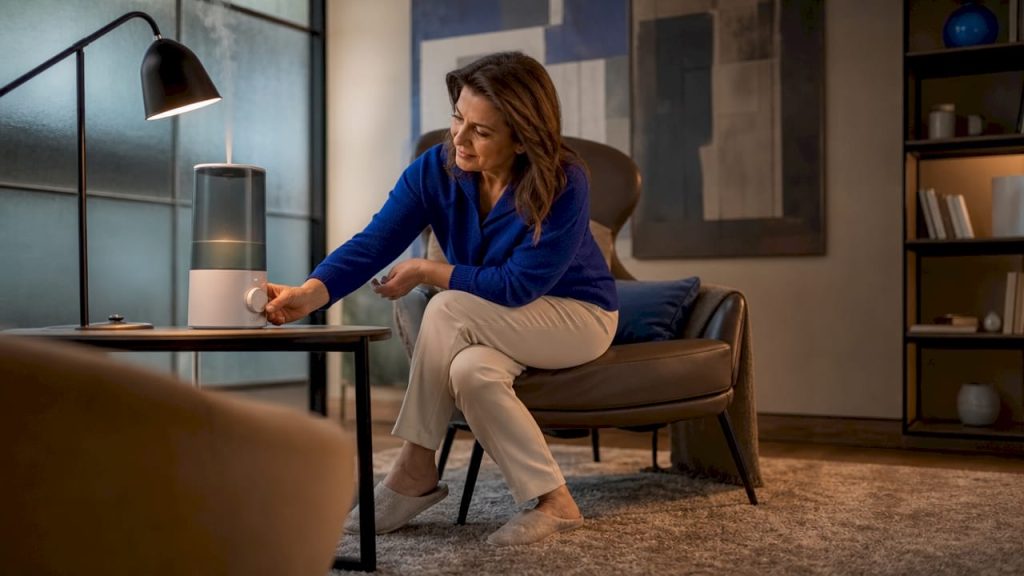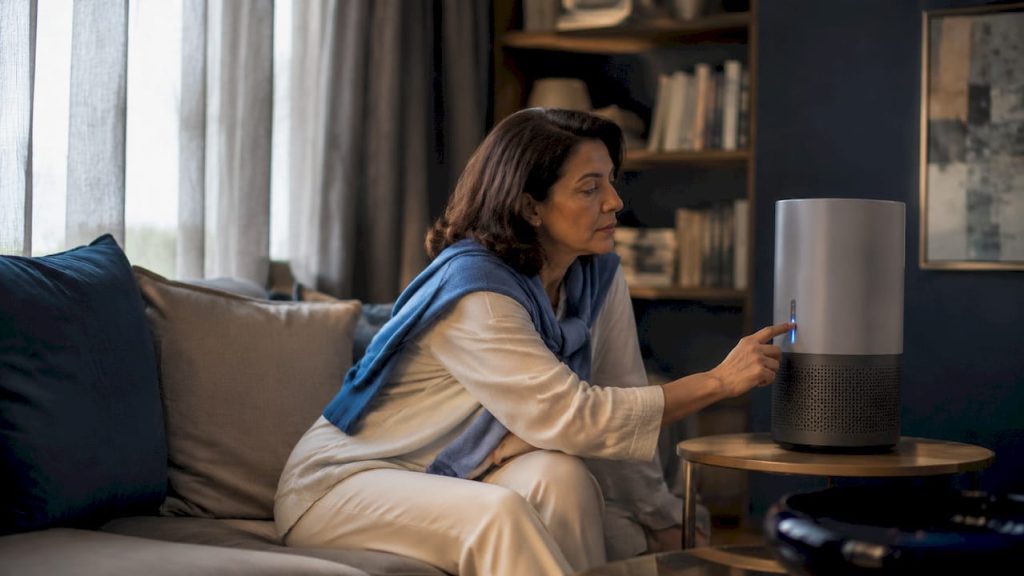
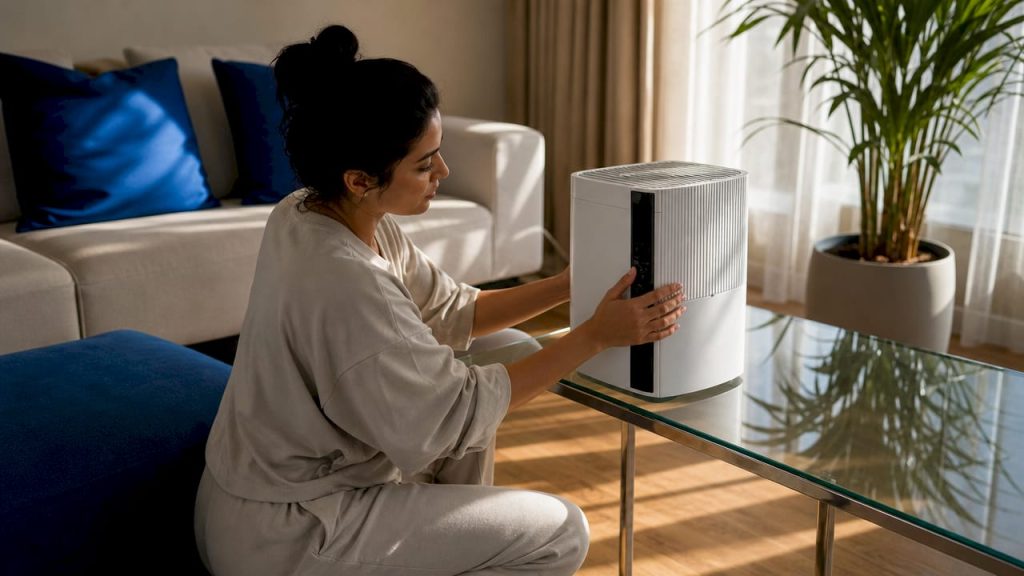
A dehumidifier reduces dust mites by lowering indoor relative humidity below 50%, the threshold below which dust mites cannot survive or reproduce. Dust mites are microscopic arachnids that absorb moisture from the air rather than drinking water. Remove that moisture and you remove their ability to live. The EPA recommends maintaining indoor humidity at 40–50% RH to suppress mite populations without causing dry-air discomfort. Understanding how dehumidifier reduces dust mites in practice, and what it cannot do alone, is the difference between partial relief and lasting allergy control.
How does a dehumidifier reduce dust mites?
Dust mites thrive above 50% relative humidity and begin to collapse within 6–11 days when humidity drops to or below that level. That collapse happens because dust mites have no kidneys. They regulate body water entirely through the surrounding air. When the air becomes too dry, they dehydrate and die. This is not a slow decline. It is a population crash driven by a single environmental variable.
“Maintaining 45% relative humidity or lower reduces dust mite allergens by 50–70% over a 3-month period, showing that dehumidification is a long-term strategy rather than an immediate fix.”
That 3-month window matters. You will not wake up symptom-free after one week of running a dehumidifier. What you will see is a steady decline in the mite population, followed by a measurable reduction in allergen load as old debris is cleaned away. The process is cumulative, not instant.
The EPA’s recommended comfort range of 40–50% RH is not arbitrary. Below 40%, dry air can irritate nasal passages and skin, which is counterproductive for allergy sufferers. Above 50%, mite reproduction resumes. The 40–50% band is the precise zone where mite control and human comfort coexist. A digital hygrometer, which costs very little, lets you monitor this band in real time.

Sustained low humidity also prevents reproduction. Dust mite reproduction requires humidity above 70% to reach peak rates. Keeping your home consistently below 50% does not just kill existing mites. It breaks the breeding cycle entirely, preventing the next generation from establishing.

Why dehumidifiers alone won’t clear all allergens
Dehumidifiers prevent future dust mite reproduction but do not remove existing allergenic proteins from your home. This is the most common misconception about humidity control. Dead dust mites and their faecal matter remain in your bedding, carpets, and upholstery. Those particles are still allergenic. They still trigger sneezing, itching, and asthma symptoms.
Dust mite allergen fragments persist in bedding and carpets even after mites die. Physical removal is the only way to address this. A HEPA-rated vacuum cleaner traps particles as small as 0.3 microns, which includes mite faecal fragments. Regular vacuuming of mattresses, carpets, and upholstered furniture is not optional if you want genuine relief.
Complementary allergen control practices that work alongside dehumidification include:
- Weekly bedding washing at 60°C. Heat at this temperature kills any surviving mites and denatures allergenic proteins.
- Allergen-proof mattress and pillow encasements. These create a physical barrier between you and the mite debris already inside your mattress.
- HEPA vacuuming of carpets and upholstery. Standard vacuum cleaners recirculate fine particles. HEPA filtration captures them.
- Removing or reducing carpets in bedrooms. Hard flooring holds far fewer mites than carpet fibres.
- Air purifiers with HEPA H13 filtration. These capture airborne allergen particles that become suspended during movement and cleaning.
The triple-action protocol of humidity control below 50%, weekly washing at 60°C, and allergen-proof encasements typically improves symptoms within 1–2 weeks. That timeline is realistic because it addresses both the living mite population and the residual allergen load simultaneously.
Pro Tip: Run your dehumidifier before and during your weekly bedroom clean. Lower humidity means fewer airborne particles are disturbed during vacuuming, reducing your allergen exposure at the most vulnerable moment.
How to use a dehumidifier effectively for dust mite control
Effective dehumidifier usage for allergy relief comes down to placement, monitoring, and consistency. A unit running in the wrong room, or set to the wrong level, delivers little benefit.
-
Target the bedroom first. You spend roughly a third of your life in bed. Targeted dehumidification in bedrooms yields the highest health benefit per unit of energy used. Start here before treating other rooms.
-
Use a digital hygrometer. Place one in the bedroom and one in any other treated room. Aim for a consistent reading of 40–50% RH. Do not rely on the dehumidifier’s built-in display alone. Separate sensors are more accurate.
-
Address lower floors separately. Basements and ground-floor bedrooms often carry relative humidity 10–15% higher than upper floors. A single whole-home unit rarely compensates for this difference. Dedicate a separate unit to these spaces.
-
Run continuously during humid seasons. In coastal cities like Jeddah, humidity spikes are frequent and prolonged. Intermittent use allows humidity to rebound between cycles, giving mites the recovery window they need. A unit with a built-in humidistat maintains your target level automatically.
-
Choose a unit with continuous drainage. Manual emptying interrupts operation. A unit with a gravity drain or condensate pump runs unattended, which is critical for consistent humidity control during sleep hours.
-
Improve ventilation to support the dehumidifier. Open windows during dry periods to allow natural air exchange. Use extractor fans in bathrooms and kitchens to prevent moisture from migrating into bedrooms.
Pro Tip: Dehumidifiers are more energy-efficient than air conditioning for reaching the 40–50% RH target. If you are running an air conditioner primarily to reduce humidity, a dedicated dehumidifier will achieve the same result at lower running cost.
You can also read more about how a dehumidifier works to understand the mechanics behind moisture extraction and unit sizing before you buy.
Dehumidifiers vs air purifiers vs HVAC: which controls dust mites best?
Each device addresses a different part of the dust mite problem. Understanding the distinction prevents you from spending money on the wrong tool or expecting one device to do another’s job.
Dehumidifiers target moisture, which is the root condition enabling dust mite survival. Air purifiers remove airborne particles, including allergen fragments, but have no effect on humidity. HVAC systems can dehumidify as a secondary function, but HVAC systems alone are inefficient and costly for precise humidity control in individual rooms.
| Device | Primary function | Effect on dust mites | Limitation |
|---|---|---|---|
| Dehumidifier | Removes moisture from air | Kills mites by dehydration; stops reproduction | Does not remove existing allergen proteins |
| Air purifier (HEPA H13) | Captures airborne particles | Removes suspended allergen fragments | No effect on humidity or living mites |
| HVAC system | Heating and cooling | Partial dehumidification as a side effect | Imprecise; costly for room-level humidity control |
The most effective approach combines all three functions. A dehumidifier suppresses the mite population. A HEPA H13 air purifier captures the allergen particles that become airborne during daily activity. An HVAC system maintains general comfort. None of these devices replaces the others. They address different stages of the same problem.
For homes in Riyadh or Dammam, where desert dust compounds indoor allergen load, pairing a dehumidifier with a HEPA air purifier is particularly worthwhile. You can explore the HEPA filter allergy benefits in detail to understand what certified H13 filtration captures and why the grade matters for allergy sufferers.
Key takeaways
A dehumidifier reduces dust mites by maintaining indoor humidity at 40–50% RH, which dehydrates and kills mites within days while preventing reproduction over the following weeks.
| Point | Details |
|---|---|
| Target humidity range | Keep indoor RH at 40–50% to suppress mites without causing dry-air irritation. |
| Population collapse timeline | Dust mite populations begin to collapse within 6–11 days at or below 50% RH. |
| Allergen reduction takes time | Maintaining 45% RH reduces allergen load by 50–70% over 3 months, not overnight. |
| Dehumidifiers need support | Physical cleaning, HEPA vacuuming, and encasements are required to remove existing allergen proteins. |
| Bedroom is the priority | Targeting the bedroom first delivers the highest health benefit per unit of energy used. |
Why I think most people underestimate the bedroom
Most allergy advice focuses on what to buy rather than where to use it. After years of looking at how people manage dust mite allergies at home, the single most consistent mistake I see is treating the whole house as one problem. It is not.
Your bedroom is where you spend 7–9 hours breathing the same air, face pressed into a pillow that may contain thousands of mites and years of accumulated allergen debris. No air purifier in the living room fixes that. A dehumidifier running in a hallway does not fix that either. The bedroom is the intervention point that matters most, and it deserves its own dedicated unit, its own hygrometer, and its own cleaning routine.
The other mistake I see regularly is expecting results in days. The science is clear: allergen reduction at 45% RH takes 3 months to reach 50–70% improvement. People run a dehumidifier for two weeks, feel no different, and conclude it does not work. What they have actually done is stop the mite population from growing. The existing allergen load is still there, sitting in the mattress. That requires encasements, hot washing, and a HEPA vacuum to address. The dehumidifier is not the whole answer. It is the foundation.
Consistent humidity control, combined with a disciplined cleaning routine, is the only approach that produces lasting relief. The equipment is straightforward. The discipline is the hard part. For bedroom-specific guidance relevant to Saudi homes, the bedroom air quality guide covers the environmental factors that make this room the most important one to get right.
— Pauline
Climasaudi’s range for dust mite and allergen control
If you are ready to act on what you have read, Climasaudi stocks a curated range of dehumidifiers and HEPA air purifiers suited to Saudi homes, from compact bedroom units to models covering larger villas and offices.

Every product in the Climasaudi dehumidifier catalogue is selected for performance in the humidity conditions found across Riyadh, Jeddah, and Dammam. Alongside dehumidifiers, Climasaudi offers HEPA H13 air purifiers that capture the allergen particles a dehumidifier cannot remove. You can browse the full indoor air quality range with transparent SAR pricing, next-day delivery, and local customer support. If you are unsure which unit suits your room size and allergy needs, the Climasaudi team is available to advise directly.
FAQ
How quickly does a dehumidifier reduce dust mites?
Dust mite populations begin to collapse within 6–11 days when indoor humidity is held at or below 50% RH. Allergen levels take longer, with a 50–70% reduction typically occurring over 3 months at 45% RH.
What humidity level kills dust mites?
Dust mites cannot survive when indoor humidity remains consistently below 50% RH. The EPA recommends 40–50% RH as the target range, balancing mite control with human comfort.
Do dehumidifiers remove dust mite allergens from the air?
No. Dehumidifiers kill mites by removing moisture but do not extract allergen proteins from bedding or carpets. An air purifier with HEPA H13 filtration is needed to capture airborne allergen particles.
Where should I place a dehumidifier for dust mite control?
Place it in the bedroom first, as this is where allergen exposure is highest during sleep. Ground-floor rooms and basements often need a separate unit because their humidity runs 10–15% higher than upper floors.
Can I use a dehumidifier instead of an air purifier for allergies?
The two devices serve different functions and work best together. A dehumidifier suppresses the mite population by controlling humidity. An air purifier removes the allergen fragments that become airborne during daily activity. Neither replaces the other.