
Indoor air quality (IAQ) is the measure of pollutants, humidity, and ventilation inside your home that directly determines your health and comfort. The industry standard term is IAQ, and understanding it is the first step towards protecting everyone in your household. Pollutant levels indoors are typically 2 to 5 times higher than outdoors, and most people spend roughly 90% of their time inside. That combination makes the air in your home one of the most significant environmental factors affecting your well-being.
What does indoor air quality actually mean?
IAQ covers every factor that influences the air you breathe inside a building: particulate matter, gases, biological contaminants, temperature, and humidity. Poor IAQ is not always visible or obvious. You cannot smell PM2.5, and carbon dioxide builds up silently overnight. The US EPA defines acceptable residential IAQ as PM2.5 below 12 µg/m³, humidity between 30 and 50%, and CO2 below 800 ppm. These three numbers give you a practical baseline for understanding indoor air quality in your own home.
What are the main indoor air pollutants and their health impacts?
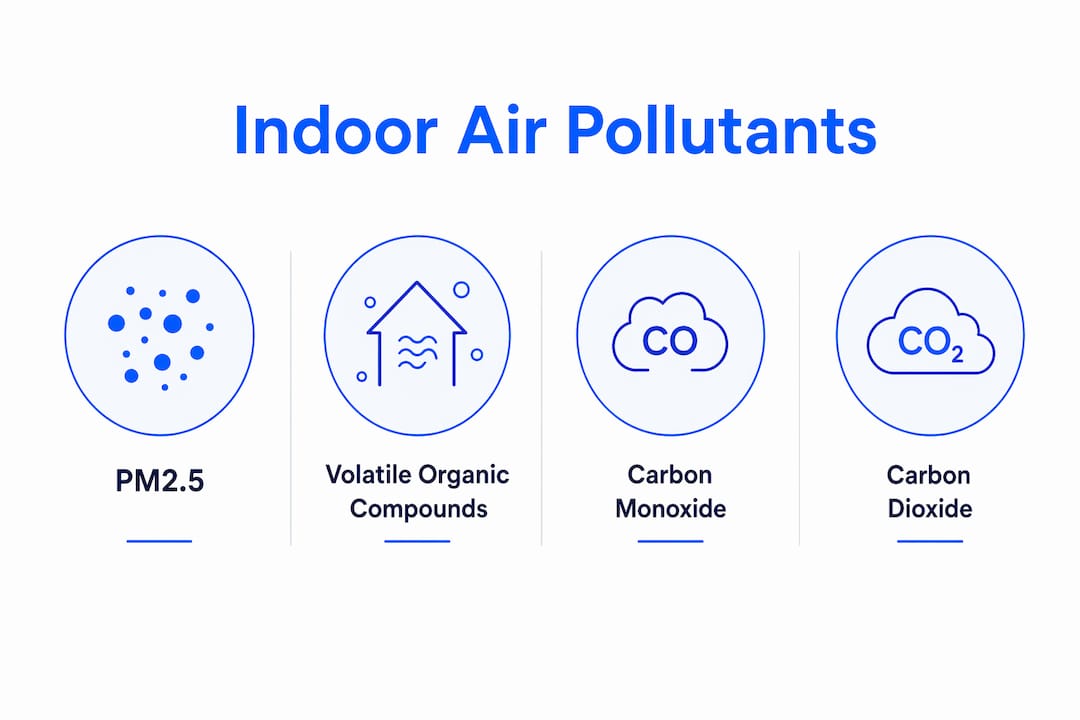
Indoor air pollutants fall into several distinct categories, each with different sources and health consequences. Knowing which ones are present in your home tells you where to focus your efforts.
Particulate matter (PM2.5)
PM2.5 particles are 2.5 micrometres or smaller, which means they bypass the nose and throat entirely and penetrate deep into the lungs. Researchers have linked long-term PM2.5 exposure to respiratory disease, cardiovascular conditions, and premature mortality, with no safe threshold identified. In Saudi homes, desert dust storms significantly raise outdoor PM2.5 levels, which then infiltrate indoors through gaps and ventilation systems. Children and older adults face the greatest risk from sustained exposure.
Volatile organic compounds (VOCs)
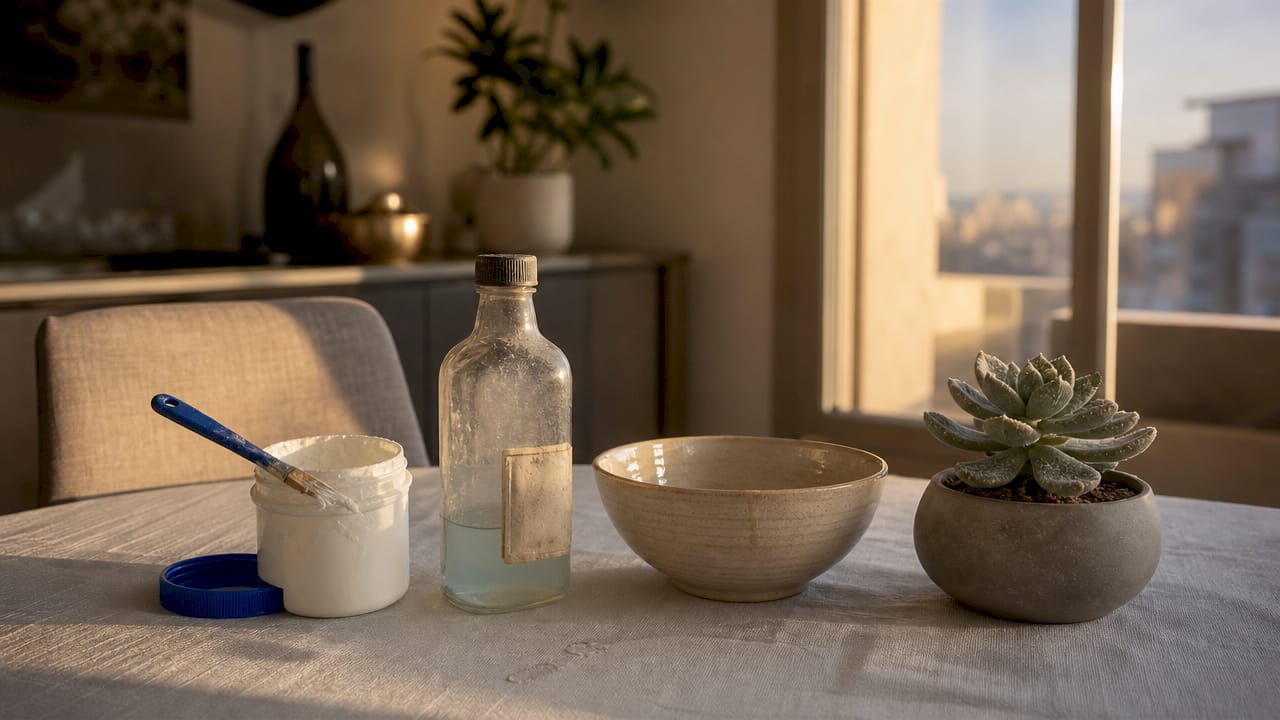
VOCs come from paints, cleaning products, adhesives, and furniture. The challenge is that VOCs include compounds with very different health impacts. Formaldehyde, for example, is a known carcinogen, while ethanol from hand sanitiser is largely harmless at similar concentrations. A total VOC reading on a consumer monitor does not distinguish between them, which is why TVOC numbers can mislead you into thinking your air is either safe or dangerous when the reality is more nuanced.
Carbon dioxide and carbon monoxide
CO2 is not a pollutant in the traditional sense. It is a ventilation indicator. When CO2 rises above 800 ppm, it signals that fresh air exchange is insufficient and that other pollutants are also accumulating. Carbon monoxide is a different matter entirely. It is colourless, odourless, and deadly. Malfunctioning combustion appliances cause approximately 400 accidental deaths from CO poisoning in the US each year. Every home with a gas cooker, water heater, or boiler needs a CO alarm.
Biological allergens
Dust mites, mould spores, and pet dander are among the most common triggers for asthma and allergic rhinitis. Dust mites thrive in bedding, carpets, and upholstered furniture, particularly in humid conditions. Mould spores become airborne and are inhaled without any visible mould growth being present. Vulnerable populations including children, older adults, and those with asthma are disproportionately affected by biological allergens, making allergen control a priority in family homes.
Poor IAQ is not a single problem with a single solution. It is a combination of pollutants, each requiring a targeted response.
How do humidity and ventilation shape your indoor environment?
Humidity and ventilation are the two most controllable factors in IAQ, and both are frequently mismanaged in Saudi homes.
Getting humidity right
Humidity above 60% encourages mould and dust mite growth, while humidity below 30% causes dry eyes, irritated airways, and cracked skin. The optimal residential range is 30 to 50%. In coastal cities like Jeddah and Dammam, humidity regularly exceeds this range during summer months, creating conditions where mould can establish itself inside walls, under flooring, and in air conditioning units. In Riyadh, the desert climate pushes humidity in the opposite direction, particularly in air-conditioned spaces where the air becomes excessively dry.
The practical steps for managing humidity are straightforward:
- Use a hygrometer to measure current humidity levels in each room.
- Run a dehumidifier in rooms where humidity consistently exceeds 55%.
- Use a humidifier in air-conditioned rooms where humidity drops below 35%.
- Fix any water leaks promptly, as persistent moisture is the primary driver of mould growth.
- Ventilate bathrooms and kitchens during and after use to remove moisture at the source.
Why ventilation matters more than most people realise
Ventilation dilutes every pollutant in your home simultaneously. Opening a window for 10 minutes after cooking removes cooking fumes, moisture, and CO2 in one action. Mechanical ventilation systems, including exhaust fans and heat recovery ventilators, provide controlled air exchange without relying on weather conditions. The risk with modern, well-insulated homes is that airtight construction reduces natural air infiltration to near zero. Without deliberate ventilation, CO2 accumulates, humidity rises, and VOC concentrations build up over hours.
Pro Tip: Crack a bedroom window by 5 cm before sleeping. This single habit can prevent CO2 from exceeding 1500 ppm overnight, which research links to disrupted sleep and reduced cognitive performance the following morning.
How is indoor air quality measured and monitored at home?
Measuring IAQ accurately requires understanding what each type of sensor does and does not tell you.
| Sensor type | What it measures | Reliability for home use |
|---|---|---|
| Laser particle counter (PM2.5) | Airborne particles by size | High. Consistent and well-calibrated in quality devices. |
| NDIR CO2 sensor | Carbon dioxide concentration | High. Non-dispersive infrared is the gold standard for residential use. |
| Electrochemical CO sensor | Carbon monoxide gas | High. Required safety device in any home with combustion appliances. |
| Metal oxide TVOC sensor | Total volatile organic compounds | Low. Readings are often dominated by harmless compounds and lack specificity. |
| Capacitive humidity sensor | Relative humidity percentage | Moderate. Accurate within ±3% in quality devices; degrades over time. |
The most important sensors for most homes are CO2 and PM2.5. Bedroom CO2 levels frequently exceed 1500 ppm overnight in sealed rooms, which correlates with poor sleep quality and reduced alertness the next day. A CO2 monitor placed on your bedside table gives you direct, actionable data. PM2.5 monitors are particularly valuable in Saudi Arabia, where sandstorms can push indoor particle counts to dangerous levels within hours of an outdoor dust event.
Consumer TVOC readings are often misleading because the sensor aggregates dozens of different chemicals into a single number. Formaldehyde at 50 ppb is genuinely harmful, but if ethanol from a hand sanitiser dominates the reading, the monitor may show a high TVOC number that does not reflect actual risk. Treat TVOC data as a rough indicator, not a precise measurement.
Pro Tip: When buying a consumer air quality monitor, check whether it uses an NDIR sensor for CO2 specifically. Devices that use non-dispersive infrared for CO2 and a laser counter for PM2.5 give you the two most reliable readings available at a consumer price point.
Professional IAQ testing, carried out by a certified indoor air quality specialist, provides laboratory-grade analysis of specific VOCs, mould spore counts, and allergen levels. This is worth considering if you have persistent respiratory symptoms that do not resolve after basic interventions.
What practical steps improve indoor air quality at home?
The most effective IAQ improvement approach is three-tiered: eliminate pollution sources first, ventilate to dilute what remains, then use filtration as a supplement. Skipping to filtration without addressing sources is the most common mistake homeowners make.
Here are the steps that deliver the greatest results:
- Remove or reduce pollutant sources. Switch from aerosol sprays to pump bottles. Replace solvent-based paints with low-VOC alternatives. Avoid burning incense or scented candles in enclosed rooms, as both release PM2.5 and VOCs directly into your breathing zone.
- Use an exterior-vented range hood when cooking. Gas hobs produce nitrogen dioxide and CO2 with every use. A recirculating hood filters particles but does not remove gases. An exterior-vented hood removes both.
- Ventilate deliberately. Open windows on opposite sides of your home for cross-ventilation. Run bathroom and kitchen exhaust fans for at least 15 minutes after use. In heavily polluted outdoor conditions, rely on mechanical ventilation with filtered intake instead.
- Use HEPA-filtered air purifiers in high-use rooms. A HEPA H13 filter captures 99.95% of particles at 0.3 micrometres, including PM2.5, dust mite debris, and mould spores. For guidance on choosing the right device, the air purifier selection guide for Saudi homes covers room size, filter ratings, and running costs. Replace filters on schedule; a clogged filter reduces airflow and can re-release captured particles.
- Manage humidity actively. Use a dehumidifier in humid rooms and a humidifier where air conditioning dries the air excessively. The Blueair InvisibleMist Humidifier H35i uses ultrasonic technology to maintain healthy humidity without overheating the room.
- Service combustion appliances annually. Annual inspections of gas stoves and water heaters prevent CO leaks before they become dangerous. Install a CO alarm on every floor of your home.
- Choose furnishings carefully. New furniture, particularly flat-pack items made with MDF or particleboard, off-gasses formaldehyde for months. Air out new furniture outdoors or in a well-ventilated room before bringing it into your living space.
For apartment residents, where opening windows may not always be practical, the air filtration guide for apartments covers portable air cleaner placement and HVAC filter upgrades that work within the constraints of shared buildings.
Key takeaways
Improving indoor air quality requires source control first, accurate monitoring second, and filtration as a supporting layer, not a standalone fix.
| Point | Details |
|---|---|
| Source control is primary | Removing pollutant sources delivers more IAQ improvement than any purifier alone. |
| Monitor CO2 and PM2.5 first | These two sensors give the most reliable and actionable data for home use. |
| Maintain humidity at 30 to 50% | This range prevents mould growth and respiratory irritation simultaneously. |
| TVOC readings can mislead | A high TVOC number does not confirm dangerous air; check specific compounds instead. |
| Ventilation and filtration work together | Neither alone is sufficient; combine deliberate air exchange with HEPA filtration. |
Why I think most homeowners are solving IAQ in the wrong order
Most people buy an air purifier and consider the problem solved. I understand the appeal. A purifier is tangible, it has a filter you can see, and it hums reassuringly in the corner. But source control accounts for 90% of IAQ improvement. A purifier running in a room where someone is burning candles, cooking on a gas hob without ventilation, and sleeping with the windows sealed is fighting a losing battle.
The second mistake I see constantly is over-reliance on TVOC readings. People buy a consumer monitor, see a high TVOC number, and panic. Or they see a low number and assume their air is clean. Neither conclusion is reliable. The sensor cannot tell you whether the dominant compound is formaldehyde or ethanol. Invest in a quality CO2 monitor with an NDIR sensor and a PM2.5 laser counter. Those two readings will tell you far more about your actual air quality than any TVOC figure.
The bedroom is where I would start every IAQ audit. You spend seven to nine hours there with the door closed. CO2 above 1500 ppm in a sealed bedroom is not unusual, and it directly affects how rested and alert you feel the next day. Crack the window, add a HEPA purifier, and monitor the results. That single room, improved consistently, will have a greater impact on your health than any other change you make to your home.
IAQ is not a one-time fix. It is an ongoing process of measuring, adjusting, and maintaining. The homes that consistently have good air quality are the ones where the residents treat it as a habit, not a project.
— Pauline
Breathe cleaner air at home with Climasaudi
If you are ready to act on what you have read, Climasaudi stocks a full range of air quality solutions built for Saudi homes and the specific challenges of desert dust, coastal humidity, and air-conditioned interiors.
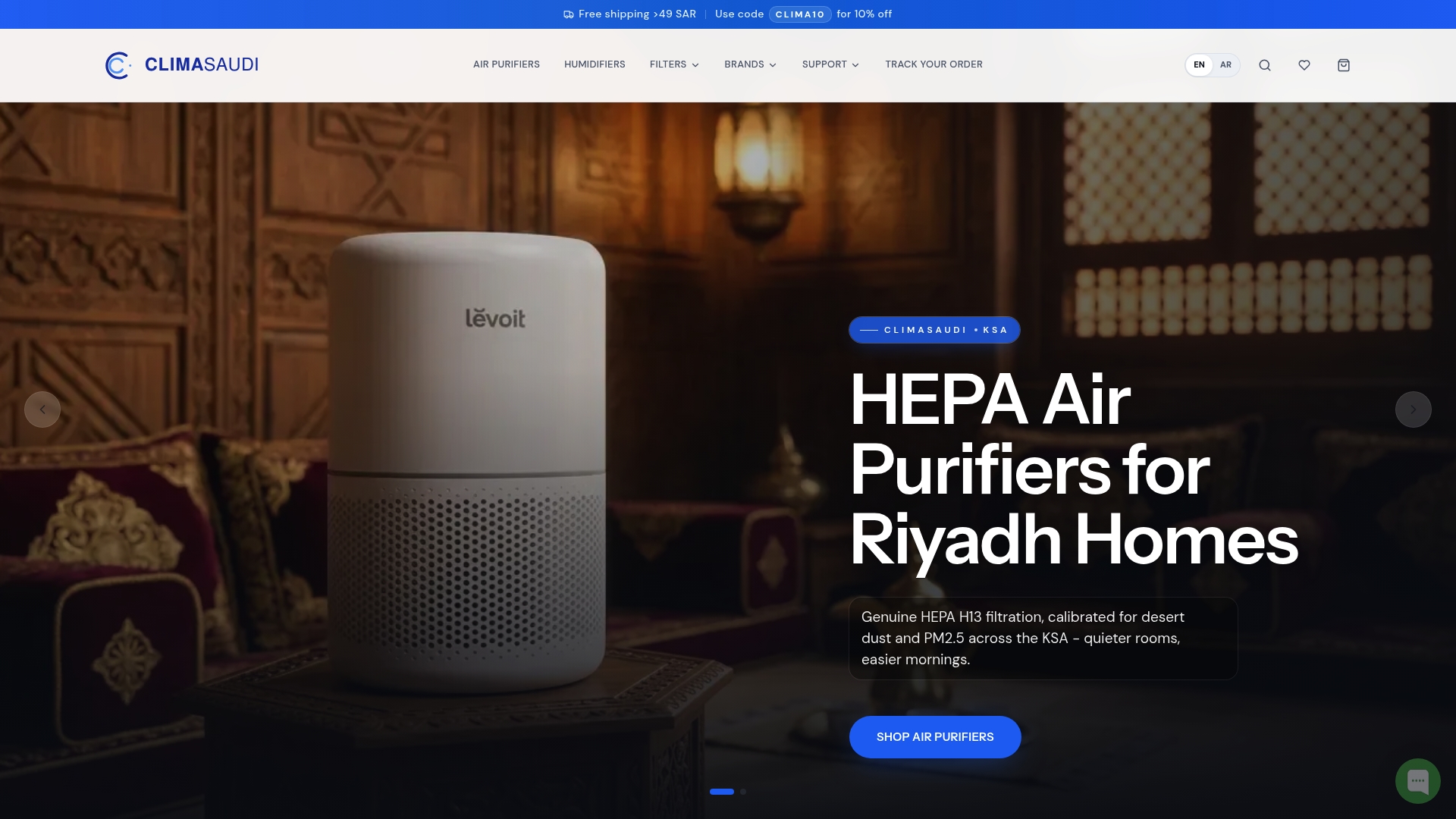
The Blueair ComfortPure 3-in-1 T20i combines HEPA H13 filtration with activated carbon for both particles and gases. The Blueair Blue 3610 is a straightforward, high-performance option for living rooms and bedrooms. For humidity control, the Blueair InvisibleMist H35i maintains the 30 to 50% range that protects against mould and dryness. All products are available with next-day delivery across Riyadh, Jeddah, and Dammam, with SAR pricing and local customer support. Browse the full range to find the right solution for your home.
FAQ
What is indoor air quality and why does it matter?
Indoor air quality (IAQ) refers to the condition of the air inside a building, including levels of pollutants, humidity, and ventilation. Poor IAQ is linked to respiratory conditions, cardiovascular disease, and reduced sleep quality, making it a direct health concern for every household.
What are the most harmful indoor air pollutants?
PM2.5 and carbon monoxide are the most immediately dangerous. PM2.5 penetrates deep into the lungs with no safe exposure threshold, while CO from faulty combustion appliances can be fatal. VOCs such as formaldehyde also pose long-term cancer risks at sustained concentrations.
What humidity level is healthy indoors?
The optimal indoor humidity range is 30 to 50%. Above 60%, mould and dust mites proliferate. Below 30%, airways become irritated and skin dries out. A hygrometer and either a dehumidifier or humidifier will keep you within the healthy range.
How do I test the air quality in my home?
Start with a consumer-grade CO2 monitor using an NDIR sensor and a PM2.5 laser counter. These two devices give the most reliable readings for home use. For a detailed analysis of specific VOCs or mould spore counts, a professional IAQ assessment provides laboratory-grade results.
Do air purifiers actually improve indoor air quality?
Yes, but only as part of a broader approach. HEPA H13 air purifiers effectively capture PM2.5, dust mite debris, and mould spores. Their impact is limited if pollution sources remain active. Combine filtration with source control and proper ventilation for meaningful, lasting improvement.