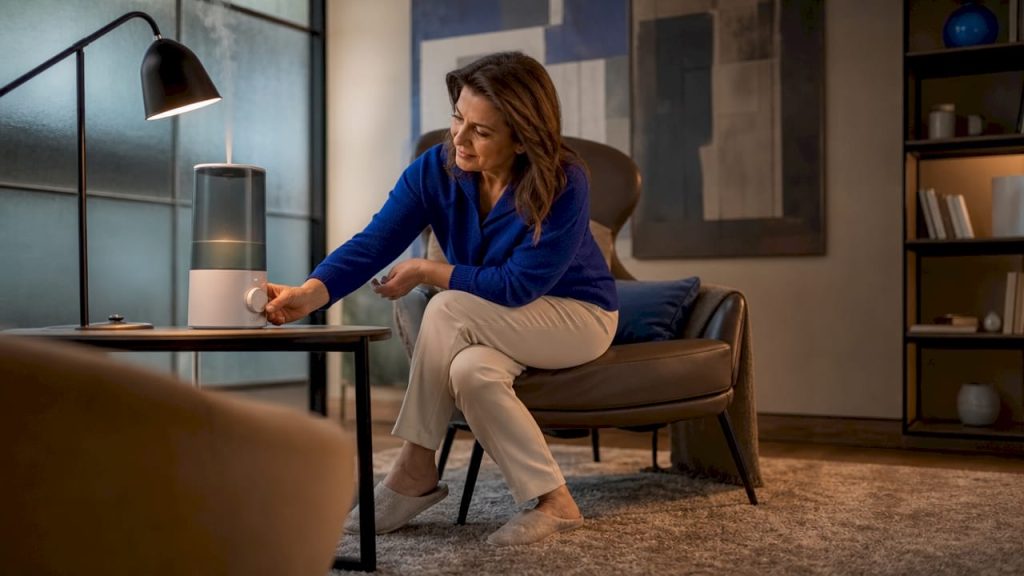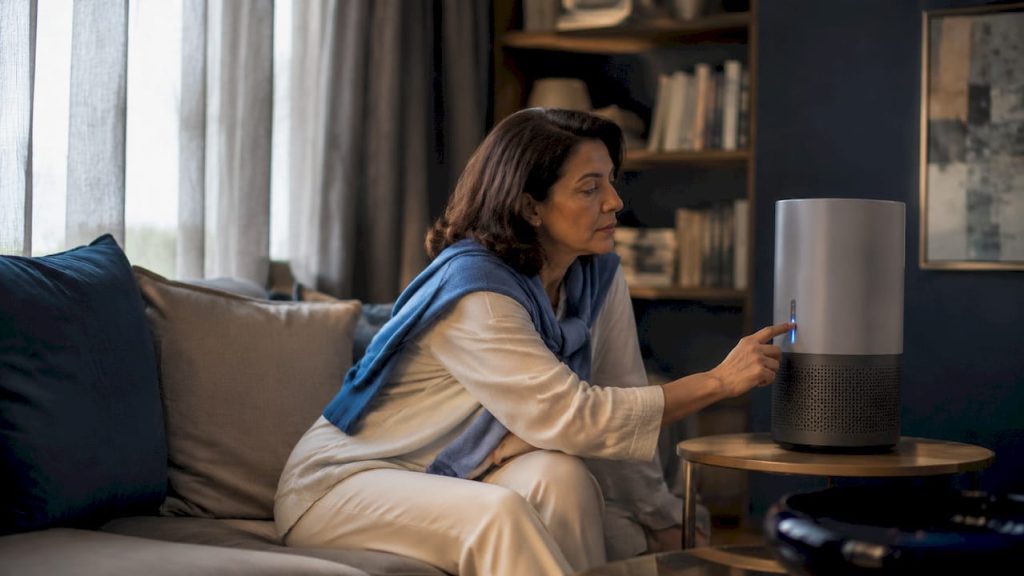
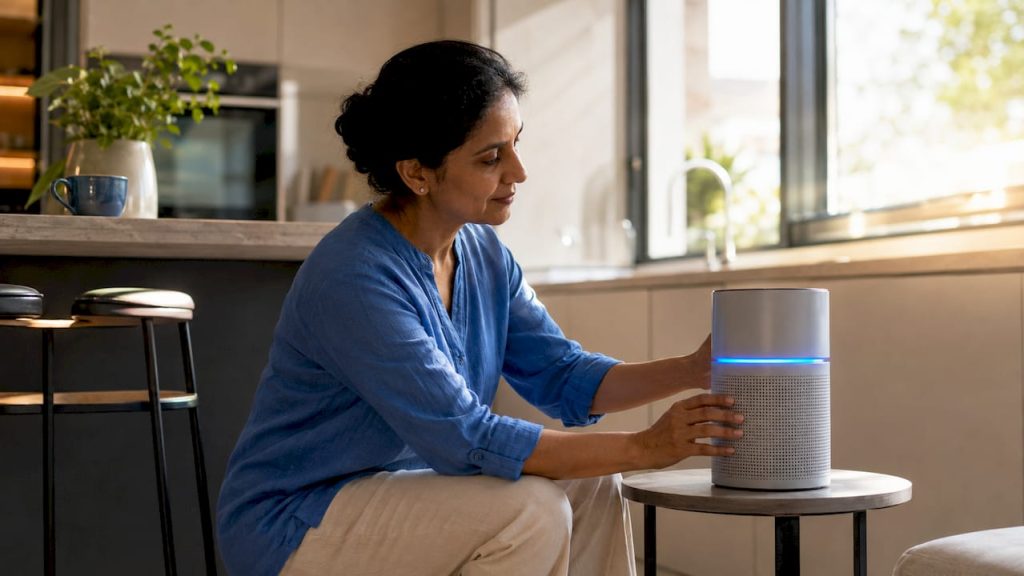
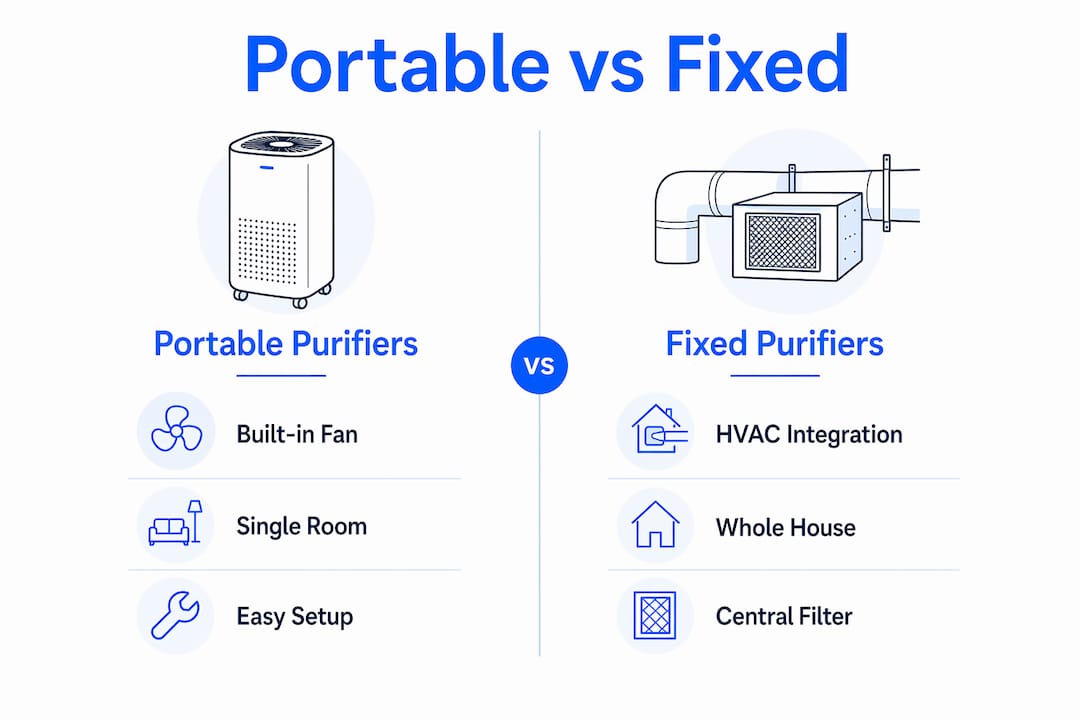
A portable air purifier is a standalone plug-in unit designed to clean the air in a single room, while a fixed air purifier integrates directly with a home’s HVAC system to filter air throughout the entire property. Understanding what is portable vs fixed air purifier means recognising that these two types serve fundamentally different purposes. Portable units target specific rooms, while fixed systems provide continuous, passive filtration across every space your HVAC serves. For anyone managing allergies, dust, or the desert conditions common across Riyadh, Jeddah, and Dammam, choosing the right type makes a measurable difference to daily comfort.
How do portable and fixed air purifiers work?
Portable and fixed air purifiers use completely different mechanisms to clean indoor air. A portable unit runs its own built-in fan to draw air through a filter stack, typically including a True HEPA filter. True HEPA filters capture 99.97% of particles at 0.3 microns. That benchmark covers the particle sizes most responsible for allergic reactions, including dust mite debris, pollen, and PM2.5.
A fixed whole-house system works differently. Fixed systems rely on the HVAC blower to push air through a central filter, rather than using a dedicated fan. This means the purifier only cleans air when the HVAC is actively running. The filter rating for fixed systems is measured using the MERV scale, not CADR.
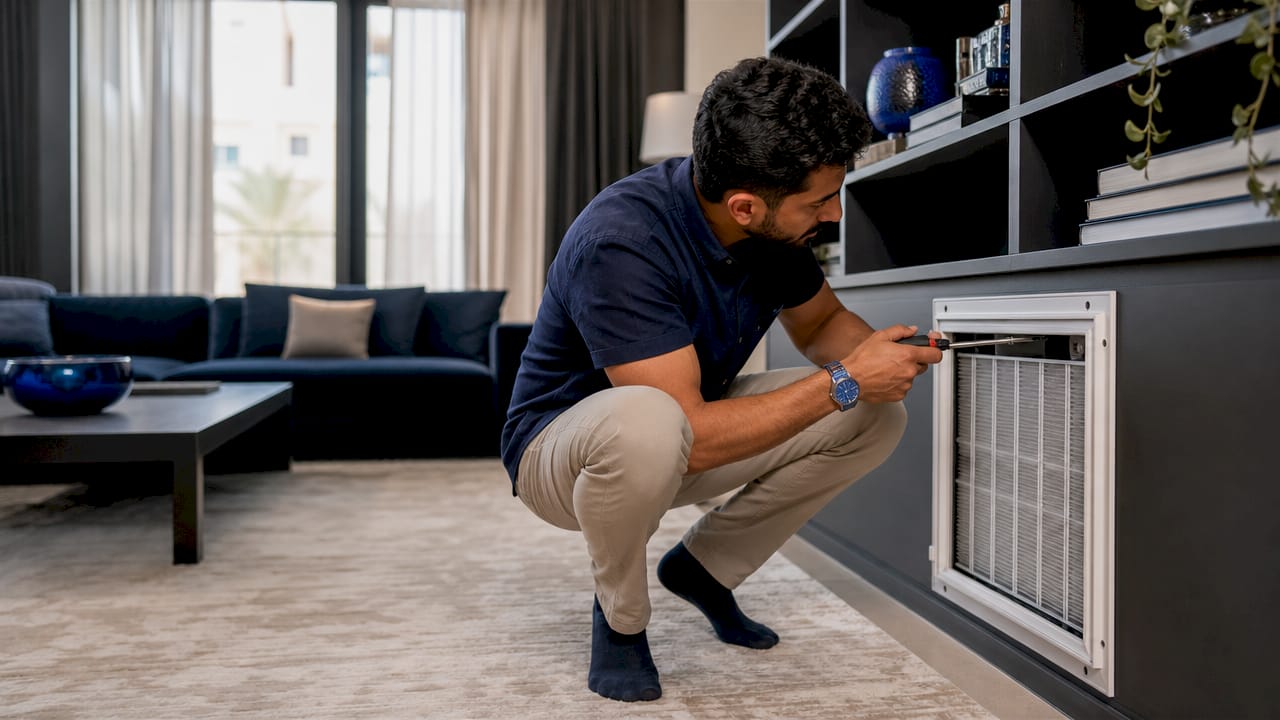
CADR, or Clean Air Delivery Rate, is the key performance metric for portable purifiers. It measures how quickly a unit cleans a specific volume of air for a given pollutant type. Fixed systems do not use CADR because their output depends entirely on HVAC airflow, not a self-contained fan. Many buyers compare these two numbers directly, which leads to poor purchasing decisions.
| Feature | Portable purifier | Fixed whole-house purifier |
|---|---|---|
| Air movement | Built-in fan | HVAC blower |
| Key rating | CADR | MERV filter rating |
| Filtration standard | True HEPA (99.97% at 0.3 microns) | MERV 8–16 depending on filter |
| Coverage | Single room | Whole home via ductwork |
| Installation | Plug and play | Professional installation required |
| Carbon filter option | Yes, often included | Yes, as add-on media |
Pro Tip: If you run a portable purifier in a room with the door closed, you get the fastest and most concentrated air cleaning. Open doors reduce effectiveness significantly.
Does coverage really differ between room and whole-home systems?
Coverage is the most misunderstood difference between these two purifier types. Portable purifiers clean only the room they occupy. Closed doors, walls, and compartmentalised layouts all block the unit from affecting air quality in adjacent spaces. This is not a flaw. It is simply how the physics of airflow works.
Fixed systems circulate filtered air through every duct-connected room in the home. This provides continuous, passive protection without any manual repositioning. The trade-off is that filtration only occurs during HVAC blower cycles, so rooms with poor duct coverage may still receive inconsistent filtration.
For allergy sufferers in Saudi Arabia, where desert dust and fine particulates are persistent concerns, the practical implication is clear:
- A single portable unit in the bedroom delivers targeted, high-efficiency filtration where you sleep.
- A fixed system keeps background dust levels lower across the whole home but may not achieve the same particle removal rate in any single room.
- Closed doors and compartmentalised layouts greatly reduce portable purifier effectiveness beyond the immediate room, often requiring multiple units for full coverage.
- Running two or three portable units in key rooms can replicate whole-home coverage without HVAC integration.
- A layered approach, using both a fixed system for baseline filtration and a portable HEPA unit in the bedroom, gives the most complete protection.
Pro Tip: For allergy relief, place your portable unit in the bedroom or the room where you spend the most time. That single placement delivers the greatest health benefit per unit.
Advantages and drawbacks of portable vs fixed air purifiers
Neither type is universally better. The right choice depends on your home, budget, and health priorities.
Portable air purifiers: key advantages
- No installation required. Portable units are plug-and-play, making them ideal for renters or anyone who wants immediate results.
- Most portable units weigh 10–20 pounds, and models with casters move easily between rooms as your needs change.
- Lower upfront cost. A quality portable HEPA unit costs a fraction of a fixed system installation.
- Targeted cleaning. You control exactly which room receives the highest filtration intensity.
- Independent operation. The unit runs regardless of whether your HVAC is on, giving you consistent air cleaning 24 hours a day.
Fixed whole-house purifiers: key advantages
- Invisible integration. The system operates within your HVAC, requiring no floor space or visible hardware.
- Whole-home coverage. Every duct-connected room receives filtered air without manual repositioning.
- Lower per-room maintenance. One central filter services the entire home rather than multiple individual units.
- Fixed HVAC systems handle whole-house dust and protect HVAC equipment from particulate build-up, extending system life.
Key drawbacks to consider
- Whole-house installation costs range from approximately $419 to $12,000, averaging around $2,610. That is a significant commitment compared to a portable unit.
- Portable units require individual filter replacements per room, which adds up if you run multiple units.
- Fixed systems only filter air during HVAC operation, leaving gaps during mild weather when heating and cooling are off.
- Portable units can produce noticeable fan noise on higher settings, which some people find disruptive in bedrooms.
Which type suits your lifestyle and allergy concerns?
Matching purifier type to your specific situation produces better results than choosing based on price alone. The right fit depends on your home type, tenancy status, and the specific air quality problems you face.
Portable units are the better choice when:
- You rent your home and cannot modify the HVAC system.
- You need immediate relief in a specific room, such as a child’s bedroom or a home office.
- Your primary concern is allergen control in one or two key spaces rather than whole-home dust management.
- You want flexibility to move the unit between rooms seasonally or as your routine changes.
- Budget is a priority and you want high-performance filtration without installation costs.
Fixed systems are the better choice when:
- You own your home and want a permanent, low-visibility solution.
- Your home is large, with multiple rooms that all require consistent air quality improvement.
- You want continuous background filtration without managing multiple devices.
- Your HVAC system already runs frequently, making passive filtration highly efficient.
For allergy sufferers, the HEPA filter allergy benefits are most pronounced when the unit runs continuously in the room where you sleep. Bedroom placement consistently outperforms living room placement for overnight symptom relief. A fixed system alone may not deliver the concentrated particle removal that a bedroom-based portable HEPA unit achieves.
Proper CADR sizing for allergens requires higher air change rates than sizing for smoke or VOCs. For allergy relief, aim for at least four to five air changes per hour in the target room. Use the Climasaudi sizing guide to match CADR to your room dimensions accurately.
How to choose and maintain your air purifier
Selecting the right unit starts with two numbers: room size and CADR rating. Match the CADR to your room’s square footage, then add a buffer of around 20% to account for high-pollution days, such as sandstorm conditions common in Riyadh and the Eastern Province.
For fixed systems, the MERV rating of the central filter determines particle capture efficiency. A MERV 13 filter captures particles down to 0.3–1.0 microns, making it suitable for allergy management. Upgrading from MERV 8 to MERV 13 in an existing HVAC system is one of the most cost-effective improvements a homeowner can make.
Maintenance schedules differ significantly between the two types. Portable units concentrate all filter wear in one location, so replacement frequency depends on local air quality and runtime hours. In dusty Saudi environments, HEPA filters in portable units may need replacing every four to six months rather than the standard twelve. Fixed system filters distribute wear across the entire HVAC cycle, but high-use periods in summer can accelerate degradation. Review the HEPA filter maintenance guide for specific replacement intervals by environment type.
Energy consumption is a practical consideration for units running continuously. Check the air purifier energy rating before purchasing to understand long-term running costs. Portable units with DC motors consume significantly less power than older AC motor models at equivalent fan speeds.
Pro Tip: Pre-filter layers in portable units capture large dust particles before they reach the HEPA filter. Cleaning the pre-filter monthly extends HEPA filter life considerably, reducing replacement costs over time.
Key takeaways
Portable air purifiers deliver targeted, room-level HEPA filtration with no installation required, while fixed whole-house systems provide passive, continuous filtration across every HVAC-connected room at a significantly higher upfront cost.
| Point | Details |
|---|---|
| Core distinction | Portable units clean single rooms; fixed systems filter air across the whole home via HVAC. |
| Filtration standard | True HEPA captures 99.97% of 0.3-micron particles, the benchmark for allergy and dust control. |
| Coverage limitation | Closed doors block portable units from cleaning adjacent rooms, often requiring multiple units. |
| Cost difference | Fixed whole-house installation averages $2,610; portable units require no installation cost. |
| Best placement for allergies | Place a portable HEPA unit in the bedroom for the greatest overnight allergy relief. |
My view after years of watching people choose the wrong purifier
People consistently overestimate what a fixed HVAC system delivers for allergy sufferers. A whole-house filter running on MERV 13 is genuinely useful for background dust control. But it does not replace the concentrated, continuous airflow that a dedicated portable HEPA unit provides in a bedroom at night. The HVAC cycles off. The portable unit does not.
The mistake I see most often is buying a fixed system upgrade and expecting it to resolve bedroom allergy symptoms. It rarely does, because the air change rate in any single room from an HVAC system is far lower than what a properly sized portable unit achieves. The two systems are not competitors. They are complementary.
For homes in Saudi Arabia specifically, the combination approach makes the most sense. Desert dust, PM2.5 from traffic, and seasonal humidity shifts in coastal cities like Jeddah create layered air quality challenges. A fixed system handles the baseline. A portable HEPA unit in the bedroom handles the rest. If you can only afford one, start with the portable unit in the room where you sleep. That single decision will have the greatest impact on how you feel each morning.
— Pauline
Air purifiers for every Saudi home, from Climasaudi
Climasaudi stocks a curated range of portable air purifiers suited to Saudi homes, from compact bedroom units to larger models covering open-plan living areas. Every unit in the range uses certified HEPA H13 filtration, designed to handle desert dust, PM2.5, and the fine particulates common across Riyadh, Jeddah, and Dammam.
The Blueair Blue 3610 delivers quiet True HEPA filtration ideal for bedrooms, while the Blueair ComfortPure T20i combines purification with humidification for rooms affected by dry desert air. All products are available with next-day delivery across Saudi Arabia, transparent SAR pricing, and local customer support. Browse the full range at Climasaudi to find the right unit for your room size and air quality needs.
FAQ
What is the main difference between portable and fixed air purifiers?
A portable air purifier is a standalone unit that cleans air in a single room using its own fan and HEPA filter. A fixed air purifier integrates with a home’s HVAC system to filter air throughout the entire property during blower cycles.
Are portable air purifiers effective for allergies?
Yes. Portable HEPA units capture 99.97% of 0.3-micron particles, covering the particle sizes most responsible for allergic reactions. Placing the unit in the bedroom delivers the most consistent relief.
How does a fixed air purifier work?
A fixed air purifier uses the home’s HVAC blower to push air through a central filter, typically rated on the MERV scale. It cleans air passively across all duct-connected rooms but only operates when the HVAC system is running.
What is CADR and why does it matter for portable purifiers?
CADR measures how quickly a portable purifier cleans a specific volume of air for a given pollutant. It is the primary sizing metric for portable units and does not apply to fixed HVAC systems, which depend on duct airflow instead.
Can I use both a portable and a fixed air purifier together?
Yes, and for allergy sufferers this layered approach is the most effective strategy. The fixed system manages background dust across the whole home, while a portable HEPA unit in the bedroom provides concentrated overnight filtration.