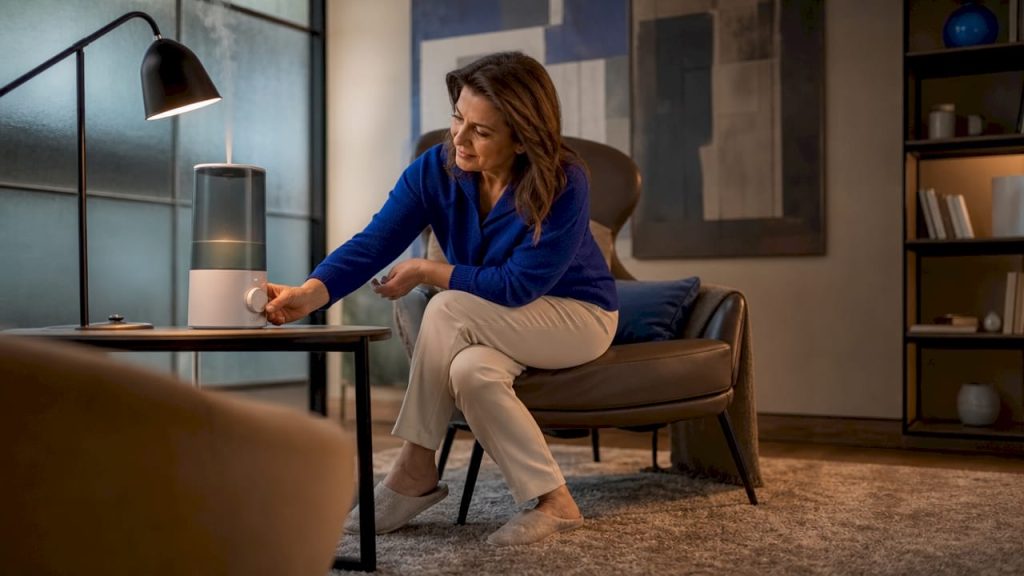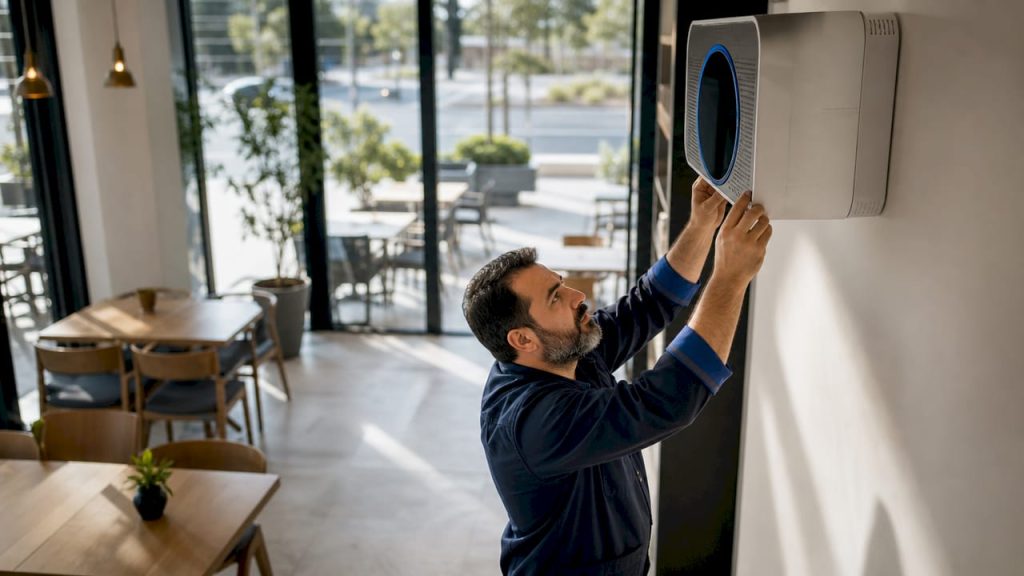
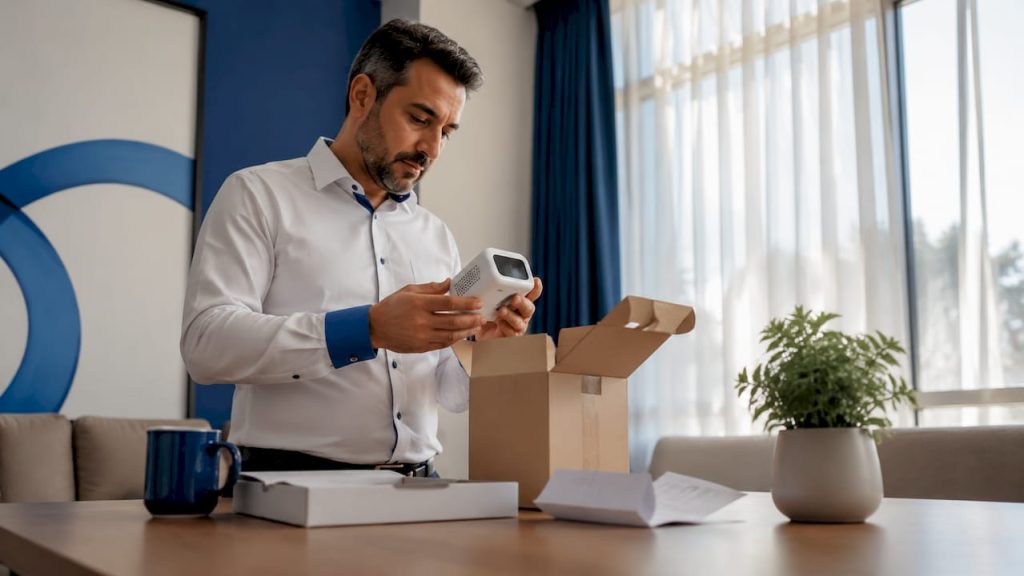
Small office air quality devices are defined as compact indoor air quality solutions that remove pollutants, monitor air conditions, or do both simultaneously within workspaces under 100 square metres. The three core categories are air purifiers with True HEPA filtration, standalone air quality monitors, and combined smart systems that link sensing to purification automatically. In Saudi Arabian offices, where sealed buildings trap desert dust, VOCs from office equipment, and CO2 from limited ventilation, choosing the right device type is not optional. This guide covers every major category so you can make a confident, informed decision.
1. what small office air quality device types actually exist
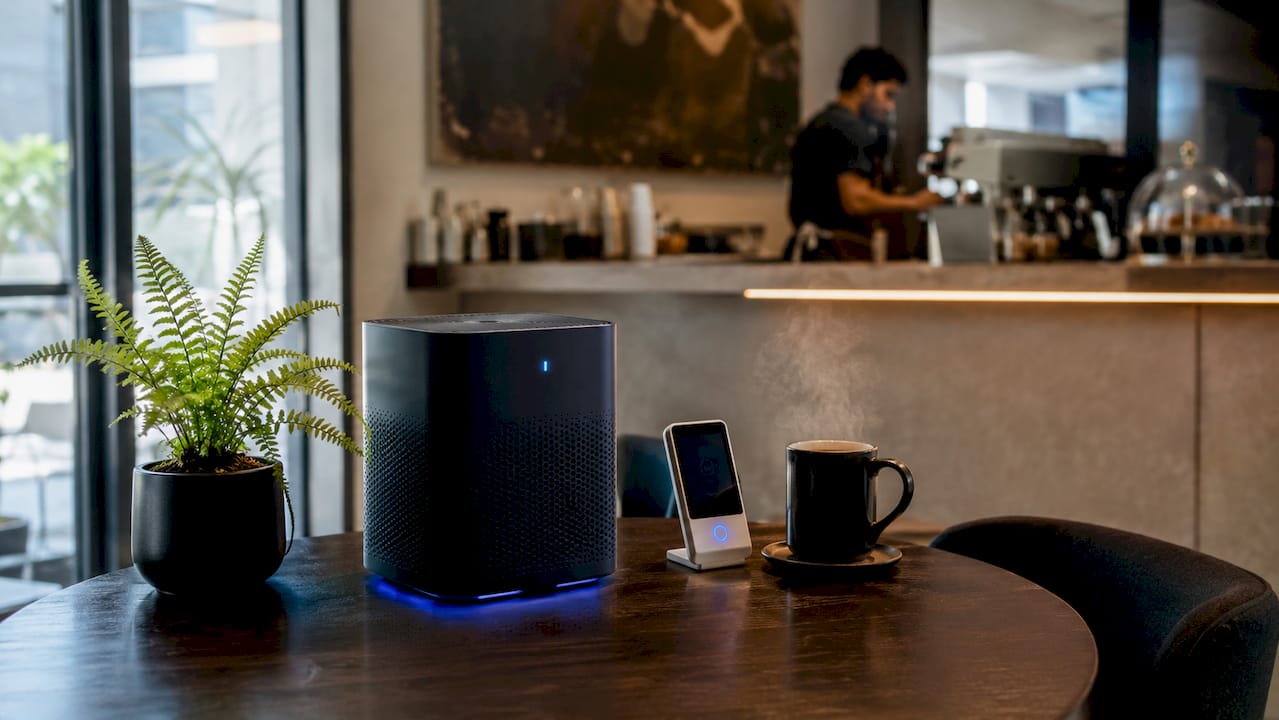
The recognised industry term for this product category is indoor air quality (IAQ) devices. Small office air quality device types fall into three distinct groups: air purifiers, air quality monitors, and integrated smart systems. Air purifiers clean the air physically. Monitors measure what is in the air. Smart systems do both and respond automatically. Understanding which group you need, or whether you need all three, is the starting point for every good purchasing decision.
2. true HEPA air purifiers vs hepa-type purifiers
The single most important distinction in office air purifiers is the difference between True HEPA and HEPA-type filters. True HEPA filters capture 99.97% of particles down to 0.3 microns, while HEPA-type products carry no certified standard and can leave fine particles unfiltered. In an office environment, that gap matters directly for health.
HEPA H13 filters go further still. HEPA H13 filtration captures 99.95% of ultrafine pollutants, including PM2.5 particles that penetrate deep into the lungs. That level of performance is the minimum worth specifying for any professional workspace.
Key features to compare when selecting office air purifiers:
- Filter grade: True HEPA or HEPA H13 only. Reject anything labelled “HEPA-type.”
- CADR rating: Matches the device’s cleaning speed to your room size.
- ACH (Air Changes per Hour): Industry guidance recommends 3–4 air changes per hour for effective open office purification.
- Activated carbon stage: Removes VOCs and odours that HEPA alone cannot capture.
- Noise level: Purifiers below 30 dB are recommended for quiet office zones.
Models such as the Fellowes AeraMax SV and Coway Airmega 450 are frequently specified for small office use because they combine certified filtration with low operating noise. The Blueair Blue 3610 is another strong option, offering smart controls and a compact footprint suited to offices in Riyadh or Jeddah.
Pro Tip: Use the air purifier sizing guide from Climasaudi to calculate the exact CADR and ACH your office requires before purchasing. Buying undersized is the most common and most costly mistake.
3. activated carbon filters for vocs and office odours
Activated carbon filtration is a separate filter stage, not a replacement for HEPA. It targets VOCs, chemical odours, and gases that HEPA fibres cannot trap. Office VOC pollution commonly comes from furniture off-gassing, printer toner, cleaning products, and adhesives. This is the root cause of sick building syndrome in many small offices across Saudi Arabia.
An activated carbon filter works by adsorbing gas molecules onto a porous carbon surface. The thicker the carbon bed, the longer it lasts and the more effectively it removes chemical pollutants. Thin carbon pre-filters, common in budget purifiers, offer minimal protection. Look for devices with a dedicated, replaceable carbon stage rather than a thin carbon coating on a pre-filter.
4. how air quality monitors improve office health management
Air quality monitors are the diagnostic layer of any IAQ strategy. They do not clean the air. They tell you precisely what is in it, so you can act before problems affect productivity or health.
Modern small space air monitors track multiple metrics simultaneously:
- PM2.5 and PM10: Fine and coarse particulate matter from dust and outdoor pollution.
- CO2: A direct indicator of ventilation adequacy. High CO2 causes fatigue and reduced concentration.
- TVOC: Total volatile organic compounds from furniture, equipment, and cleaning products.
- Humidity and temperature: Both affect comfort and the behaviour of airborne pollutants.
Devices such as the Temtop M10+ offer 6-in-1 sensing with real-time display and app connectivity. Some monitors provide up to 40 days of battery life with continuous pollutant tracking. That makes them practical for offices without convenient power access near the ideal sensor location.
Placement is as important as the device itself. Monitors placed at breathing zone height (1–1.5 metres) give accurate, representative readings. Positioning near air vents, doors, or windows produces misleading data and leads to poor decisions.
Pro Tip: Think of a quality air monitor as a smoke detector for invisible pollutants. You would not skip a smoke detector in your office. Apply the same logic to CO2 and PM2.5.
5. combined and automated smart systems for offices
Combined systems integrate sensing and purification in a single unit or connected network. They automatically adjust fan speed, filtration intensity, or ventilation based on real-time sensor data. Automated air quality devices maintain optimal conditions without requiring manual checks throughout the working day.
AprilAire’s Healthy Air Intelligence™ is a well-documented example of this approach. It uses patented control logic to respond to changing pollutant levels and connects with HVAC systems to manage ventilation alongside filtration. For small offices with existing HVAC infrastructure, this kind of integration removes the need for separate manual management.
“Online control apps and integration with building management systems increase the efficiency and ease of maintaining healthy air environments in offices.” — AprilAire Healthy Air Intelligence™
Practical considerations for small offices evaluating combined systems:
- Cost: Combined systems carry a higher upfront cost but reduce ongoing manual effort.
- HVAC compatibility: Confirm compatibility with your existing system before purchasing.
- App control: Remote monitoring via smartphone is standard in most 2026 systems.
- Scalability: A single smart purifier with built-in sensors suits most offices under 50 square metres.
6. comparing device types: features, costs, and suitability
The table below summarises the key differences across the three main device categories to help you match the right type to your office situation.
| Feature | Air Purifier | Air Quality Monitor | Combined Smart System |
|---|---|---|---|
| Primary function | Removes pollutants | Measures pollutants | Measures and removes |
| Coverage area | 20–80 sq m (typical) | Up to 3,500 sq ft per unit | 20–80 sq m (typical) |
| Noise level | 25–55 dB | Near silent | 25–55 dB |
| Filter maintenance | Every 6–12 months | None | Every 6–12 months |
| Price range (SAR) | 950–2,500+ | 300–1,200 | 1,500–4,000+ |
| Best for | Dust, allergens, VOCs | CO2, TVOC tracking | Full automated control |
| Smart features | Optional | Standard | Standard |
Industry guidance recommends one IAQ monitor per 3,500 square feet of office space. For most small Saudi offices, one monitor and one purifier cover the core need. Larger open-plan offices benefit from adding a combined system or multiple purifiers with a central monitor.
7. which devices should saudi arabian small offices prioritise?
Saudi Arabian offices face a specific combination of air quality challenges that shapes which device types deliver the most value. Sealed, air-conditioned buildings in Riyadh, Jeddah, and Dammam trap CO2 and VOCs at higher concentrations than naturally ventilated spaces. Desert dust events push PM2.5 levels well above safe thresholds. Coastal humidity in Jeddah adds a moisture management dimension that inland offices do not face.
Practical priorities for Saudi small offices:
- Activated carbon filtration is non-negotiable. VOC off-gassing from furniture and office equipment is a primary pollutant source in sealed buildings. HEPA alone is insufficient.
- CO2 monitoring is the fastest win. A standalone monitor reveals ventilation gaps immediately and costs far less than a full purifier system.
- Noise matters more in open-plan offices. A purifier running above 40 dB in a shared workspace creates real disruption. Specify quiet operating models rated below 30 dB on their lowest setting.
- Budget offices: Start with a True HEPA purifier with a carbon stage, then add a monitor once the baseline is established.
- Higher-budget offices: Invest in a combined smart system with HVAC integration for fully automated control.
Pro Tip: Before buying, read the practical office air guide from Climasaudi. It covers sizing, placement, and filter selection specifically for Saudi office conditions.
Key takeaways
The most effective small office air quality strategy combines a True HEPA H13 purifier with an activated carbon stage and a real-time monitor tracking CO2, PM2.5, and TVOCs.
| Point | Details |
|---|---|
| True HEPA is the minimum standard | Only True HEPA or HEPA H13 certified filters reliably remove fine office pollutants. |
| Activated carbon is required for VOCs | HEPA alone cannot remove chemical gases from furniture or office equipment off-gassing. |
| Monitors reveal what purifiers cannot | Real-time CO2 and TVOC data shows ventilation gaps that filtration alone will not fix. |
| Placement affects monitor accuracy | Position monitors at 1–1.5 metres height, away from vents and doors, for reliable readings. |
| Saudi offices need both filtration and monitoring | Sealed, air-conditioned buildings trap pollutants at higher levels, requiring a layered approach. |
What i have learned about choosing office air devices
After years of reviewing air quality products and speaking with office managers across the region, the most persistent mistake I see is treating a purifier as a complete solution. It is not. A purifier removes what is already in the air. It does nothing about CO2 buildup from poor ventilation, and CO2 is the pollutant most directly linked to the afternoon fatigue and reduced focus that office workers in sealed buildings report daily.
The second mistake is ignoring noise. I have seen offices invest in well-specified purifiers that end up switched off because they are too loud for the workspace. A device that runs silently on its lowest setting all day does far more good than a powerful unit that gets turned off by 10 am.
The third thing most articles miss is maintenance adoption. Filters need replacing. If the replacement process is inconvenient or the cost is unclear at purchase, filters get left in far too long and performance drops sharply. Before you buy any device, confirm the filter replacement cost and availability in Saudi Arabia. Climasaudi stocks genuine HEPA H13 replacement filters locally, which removes that barrier entirely.
My honest recommendation for most small Saudi offices: start with a quality True HEPA purifier that includes an activated carbon stage, add a standalone CO2 and PM2.5 monitor, and review the data after 30 days. The monitor will tell you exactly whether you need more purification capacity or better ventilation. That data-first approach saves money and produces better outcomes than guessing.
— Pauline
Find the right air quality devices for your saudi office
Climasaudi stocks a full range of office air purifiers and monitors with certified HEPA H13 filtration, designed for the specific conditions of Saudi Arabian workplaces. Every product is available with transparent SAR pricing, next-day delivery to Riyadh, Jeddah, and Dammam, and local customer support when you need it.
The Blueair ComfortPure 3-in-1 T20i combines True HEPA filtration, activated carbon, and smart controls in a compact unit suited to offices up to 40 square metres, priced at SAR 1,503. For smaller spaces, the Blueair Blue Max 3450i at SAR 1,114 delivers certified filtration with quiet operation. Browse the full Climasaudi product catalogue to match the right device to your office size and air quality needs.
FAQ
What is the difference between true HEPA and hepa-type filters?
True HEPA filters meet a certified standard of 99.97% particle removal at 0.3 microns. HEPA-type filters carry no certified standard and can leave fine particles unfiltered, making them unsuitable for professional office environments.
How many air quality monitors does a small office need?
Industry guidance recommends one IAQ monitor per 3,500 square feet of office space. Most small offices under 50 square metres are adequately covered by a single well-placed monitor at breathing zone height.
Do air purifiers remove co2 from office air?
No. Air purifiers with HEPA and carbon filters remove particles, VOCs, and odours, but they do not remove CO2. Reducing CO2 requires improved ventilation, either through opening windows or upgrading HVAC airflow.
What noise level is acceptable for an office air purifier?
Purifiers operating below 30 dB on their lowest setting are recommended for quiet office zones and open-plan workspaces. Models above 40 dB on their standard setting are likely to cause disruption and may be switched off by staff.
Which device type should a saudi small office buy first?
Start with a True HEPA air purifier that includes an activated carbon stage. This addresses the most common office pollutants, including desert dust, PM2.5, and VOCs from office furniture and equipment, which are the primary concerns in sealed Saudi office buildings.