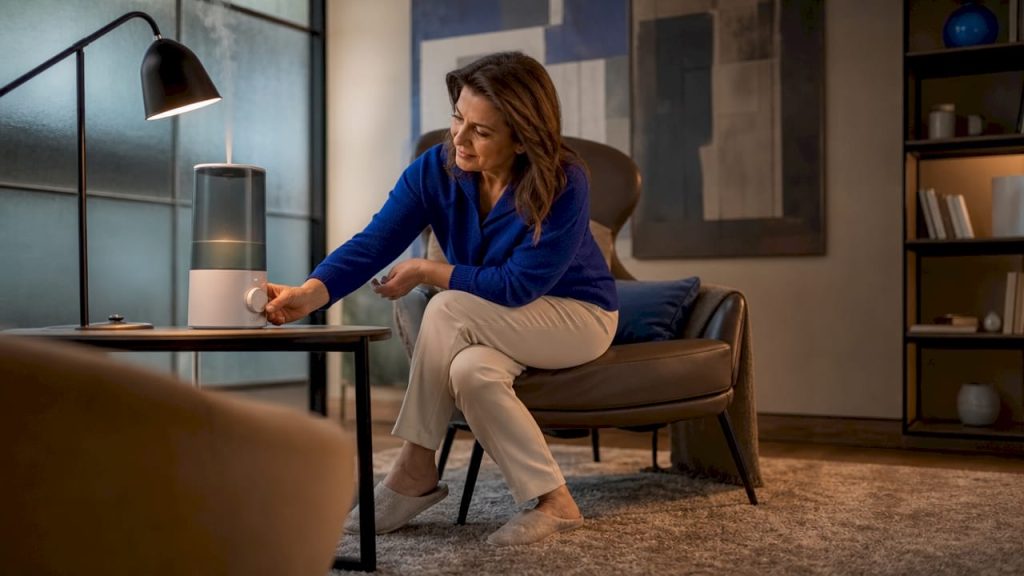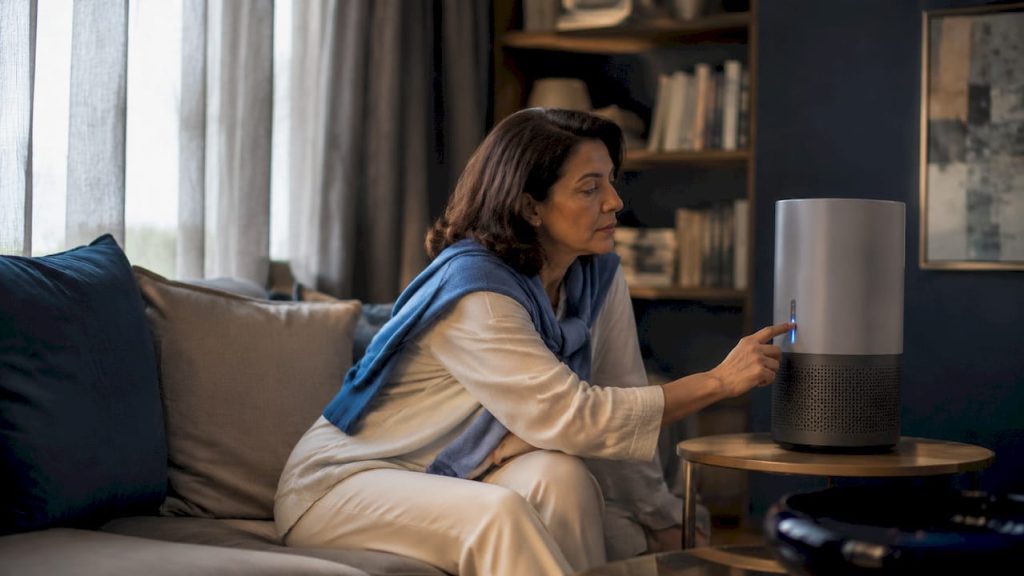
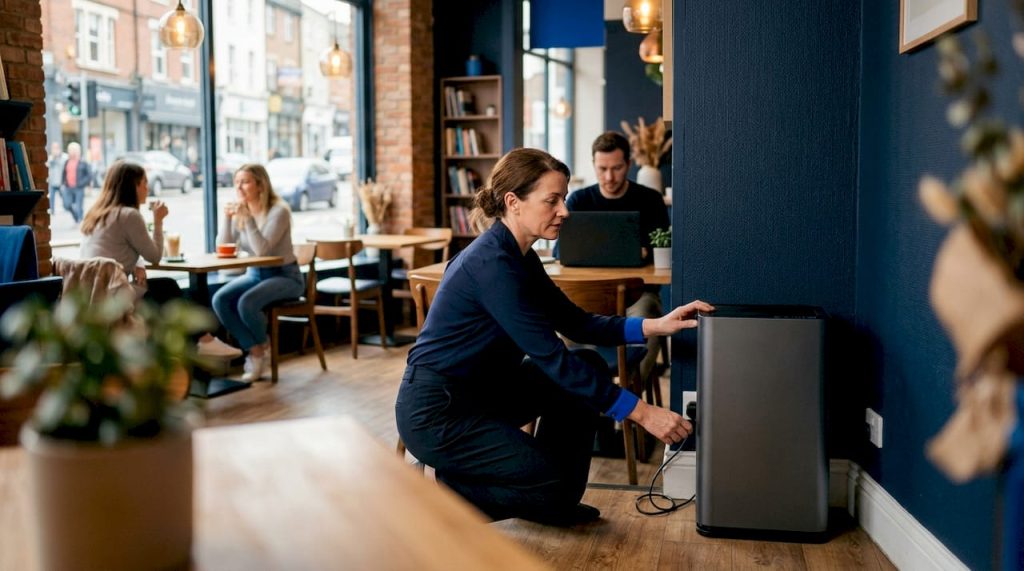
Air purifiers are defined as mechanical or electrostatic systems that remove airborne contaminants, including volatile organic compounds (VOCs), particulate matter, and biological pathogens, from enclosed spaces. Retail stores need air purifiers because high foot traffic, enclosed layouts, and continuous pollutant sources create indoor air conditions that harm both customers and staff. The industry term for managing these conditions is indoor air quality (IAQ), and it sits at the centre of modern retail health compliance. Research now links poor IAQ directly to reduced cognitive performance, respiratory discomfort, and lower customer satisfaction. Getting IAQ right is no longer optional for store managers who want a healthy, productive environment.
Why retail stores need air purifiers: the health and cognitive case
HEPA filtration is the most evidence-backed method for improving IAQ in commercial spaces. HEPA H13 filters capture particles as small as 0.3 microns, including PM2.5, dust, pollen, mould spores, and many airborne pathogens. That level of filtration matters in retail because customers and staff share enclosed air for hours at a time.
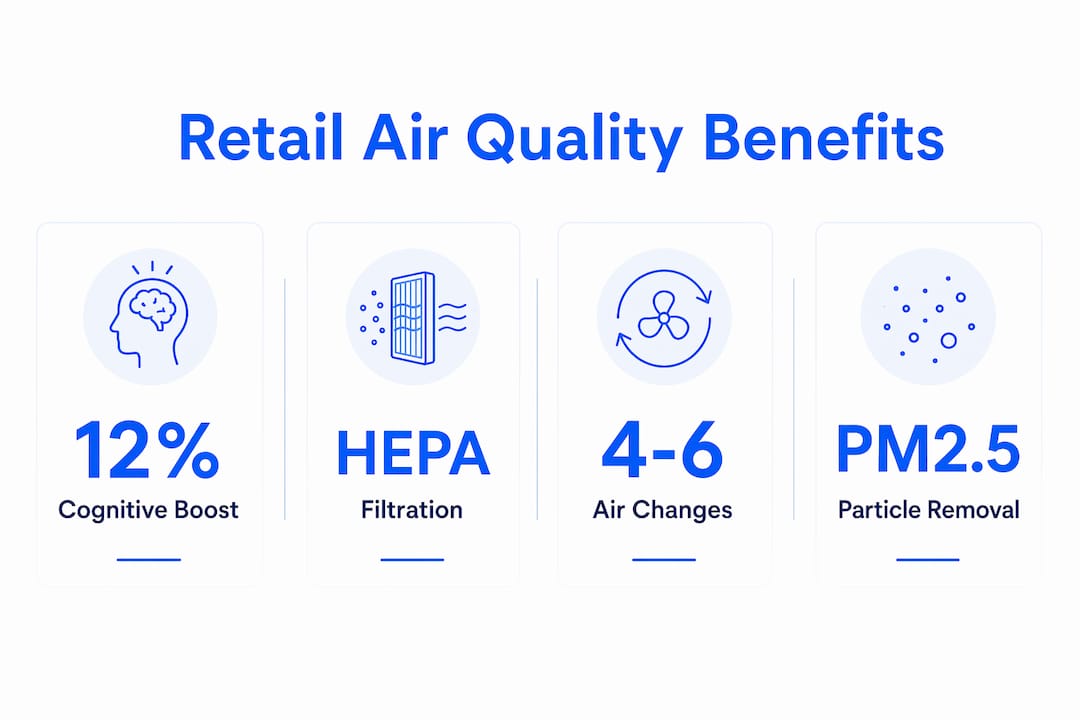
The cognitive benefits are striking. HEPA filtration improved cognitive task performance by 12% in adults aged 40 and older, with participants completing tasks in 54.0 seconds versus 61.4 seconds under sham filtration conditions. That difference translates directly to sharper staff decision-making and faster customer service during busy trading hours.
The neurological protection goes further than speed. HEPA air purification may protect brain white matter and reverse cognitive decline caused by particulate exposure. For retail managers, this means cleaner air is not just a comfort measure. It is a direct investment in the mental performance of every person inside the store.
VOC reduction adds another layer of benefit. Cleaning products, display materials, and electronic equipment all off-gas VOCs that cause fatigue, headaches, and eye irritation. Removing these compounds keeps customers comfortable and staff alert throughout a full shift. For more on how filtration supports employee health and alertness, the evidence is consistent across commercial settings.
What indoor air quality challenges are unique to retail environments?
Retail stores face a combination of IAQ pressures that most other commercial spaces do not. Understanding each source helps managers prioritise where air purification is most needed.
-
High foot traffic and door openings. Every customer who enters brings outdoor pollutants, including desert dust, vehicle exhaust particulates, and pollen. In Saudi cities like Riyadh and Jeddah, sandstorm events push PM10 and PM2.5 levels far above safe thresholds. Frequent door openings mean outdoor air continuously mixes with indoor air, raising CO₂ and particulate concentrations throughout the day.
-
VOC emissions from equipment and products. Electronic point-of-sale systems, display screens, and printers emit VOCs during operation. Cleaning products used before and after trading hours add further chemical load. Retail stores face unique IAQ challenges from these VOC sources, compounded by the fact that products on shelves, including plastics, adhesives, and synthetic fabrics, also off-gas continuously.
-
Extended operating hours and close contact. Retail staff spend eight to twelve hours in the same enclosed space. Customers interact closely with staff at service desks and fitting rooms. This combination raises the risk of airborne pathogen transmission, particularly during cold and flu season or periods of high community illness.
-
Enclosed layouts with limited natural ventilation. Most retail units in shopping centres rely entirely on mechanical HVAC systems. Without supplementary air purification, contaminants recirculate rather than being removed. Mould can also develop in poorly ventilated stockrooms, and mould significantly affects indoor air quality in ways that standard HVAC systems cannot address alone.
-
Polycyclic aromatic hydrocarbons (PAHs) from outdoor sources. Vehicle traffic near retail entrances introduces PAHs into the store. Commercial air filtration units reduced high-molecular-weight PAHs by 19–37% during operation, demonstrating that purifiers actively reduce this specific class of pollutant in commercial settings.
How does proper selection and placement of air purifiers maximise effectiveness?
Choosing the right purifier for a retail space requires more than matching a unit to floor area. Air turnover rate, pollutant load, and space geometry all determine whether a unit performs as expected.
Sizing by air turnover, not just floor area
Commercial units sized by air changes per hour (ACH) outperform those selected by floor area alone. A retail store with high foot traffic needs a minimum of 4–6 ACH to maintain acceptable IAQ. Sizing purifiers by air turnover and placing them strategically prevents short-cycling, where a unit cleans the same pocket of air repeatedly without addressing the full room volume. Residential-grade units cannot handle the pollutant load of a busy retail floor and should be avoided in commercial settings.
Strategic placement for maximum coverage
Placement determines real-world performance. Units positioned near entrances intercept outdoor pollutants before they spread through the store. Units near customer service desks protect the highest-contact zones. Strategic placement in high-traffic zones creates protective clean air barriers and maximises return on investment.
Pro Tip: Place one unit within two metres of the main entrance and a second near the customer service counter. These two positions intercept the majority of incoming pollutants and protect the highest-contact areas simultaneously.
Combining purification with ventilation and source control
Air purifiers work best as part of a layered approach. Pairing them with well-maintained HVAC systems and source control measures, such as switching to low-VOC cleaning products, produces better results than purifiers alone. Lab metrics like CADR may overestimate real-world effectiveness without proper sizing and placement, so always verify performance under actual store conditions rather than relying solely on manufacturer ratings. Ensuring clean air ducts is equally important, as blocked or dirty ducts undermine even the best purification system.
| Selection factor | Recommended approach |
|---|---|
| Unit sizing | Use ACH rating, not floor area alone |
| Filter type | HEPA H13 as minimum standard |
| Placement | Entrances and high-contact service zones |
| Unit grade | Commercial grade only for retail floors |
| Ventilation pairing | Integrate with HVAC and source control |
What operational practices sustain air quality improvement in retail stores?
Buying the right purifier is only the first step. Sustained IAQ improvement depends on consistent operational habits.
-
Run purifiers continuously during business hours. Switching units off during quiet periods allows contaminants to accumulate. Continuous purifier operation during business hours and routine maintenance are the two most critical factors for sustained IAQ performance. Peak traffic periods, such as weekend afternoons, require maximum fan speed settings.
-
Replace filters on schedule. A clogged HEPA filter does not just lose effectiveness. It can release trapped particles back into the air, creating secondary pollution. Most commercial HEPA filters require replacement every 6–12 months depending on usage and local air conditions. In Saudi Arabia, where desert dust loads are high, checking filters every three months is prudent.
-
Integrate purifiers with your HVAC system. Standalone units and HVAC systems should complement each other. Set HVAC to supply fresh air and use purifiers to handle particulate and VOC removal. This division of function prevents either system from being overloaded.
-
Train staff to monitor and respond to air quality. Low-cost PM2.5 monitors give staff real-time feedback on air conditions. When readings rise above 35 micrograms per cubic metre, increasing purifier fan speed or reducing occupancy density is the correct response.
Pro Tip: Log filter replacement dates and PM2.5 readings in a simple maintenance record. This creates an audit trail that demonstrates IAQ compliance to health inspectors and builds customer confidence if displayed publicly.
For a practical framework on improving air quality in commercial spaces, the principles that apply to offices translate directly to retail floors.
Key takeaways
Retail stores that invest in commercial-grade HEPA H13 air purification, sized by air turnover rate and placed strategically at entrances and service zones, deliver measurable health and cognitive benefits to both customers and staff.
| Point | Details |
|---|---|
| Health and cognitive gains | HEPA filtration improves cognitive task performance by 12% in adults over 40. |
| Retail-specific pollutant sources | Foot traffic, VOCs, and enclosed layouts create compounding IAQ challenges unique to stores. |
| Sizing by air turnover | Select commercial units by ACH rating, not floor area, to prevent short-cycling. |
| Strategic placement | Position units near entrances and service desks to intercept pollutants at source. |
| Sustained operational habits | Continuous operation, scheduled filter changes, and PM2.5 monitoring maintain IAQ compliance. |
Air quality as a retail asset, not a cost
I have worked with enough retail managers to know that IAQ investment almost always starts as a reluctant response to a complaint, a health inspection, or a staff sick day spike. That is the wrong starting point, and it costs more in the long run.
The stores that get this right treat clean air the same way they treat lighting or store layout: as a direct driver of customer experience. IAQ management builds customer trust and staff alertness, and those two outcomes compound over time. Customers who feel comfortable stay longer. Staff who are not fatigued by poor air make fewer errors and serve customers better.
The most common mistake I see is undersizing. A manager buys a unit rated for 50 square metres and places it in a 200-square-metre floor. The unit runs constantly, the filter clogs in six weeks, and the manager concludes that air purifiers do not work. They do work. The problem is always selection and placement, not the technology itself.
My honest advice: treat your first purifier installation as a pilot. Measure PM2.5 before and after. Track staff sick days over one quarter. The data will make the case for expanding the system far more convincingly than any product specification sheet.
— Pauline
Climasaudi’s air purification solutions for retail stores
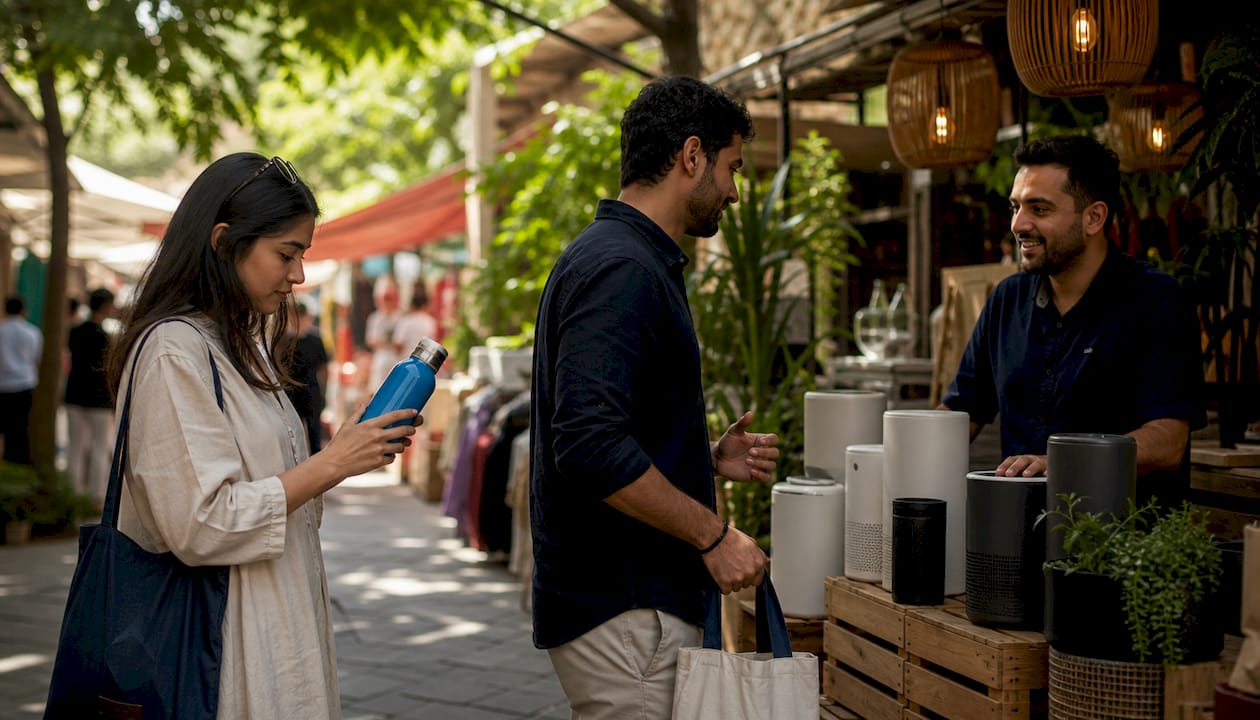
Retail managers across Saudi Arabia are choosing Climasaudi for commercial-grade air purification that matches the demands of busy store environments. Climasaudi stocks a curated range of HEPA H13 certified purifiers suited to retail floors of varying sizes, from compact boutiques to large-format stores.
Every unit available through Climasaudi’s air purifier range is selected for verified filtration performance, not just marketing claims. Next-day delivery to Riyadh, Jeddah, and Dammam means you can act on an IAQ assessment without delay. The team also provides guidance on unit sizing, placement, and filter replacement schedules tailored to your store’s specific layout and traffic patterns. For stores considering a multi-unit installation, bulk purchase options for facilities offer both cost efficiency and consistent IAQ coverage across the entire floor.
FAQ
What does an air purifier actually remove in a retail store?
A commercial HEPA H13 air purifier removes PM2.5, PM10, VOCs, mould spores, bacteria, and airborne viruses from store air. Units with activated carbon layers also capture chemical off-gassing from cleaning products and display materials.
Is air purification necessary for retail, or does HVAC cover it?
HVAC systems circulate and condition air but do not remove fine particulates or VOCs effectively. Air purifiers with HEPA H13 filtration are necessary to address these pollutants, particularly in high-traffic retail environments where contaminant loads exceed what standard HVAC handles.
How many air purifiers does a retail store need?
The number depends on floor area, ceiling height, and foot traffic. A store requiring 4–6 air changes per hour needs units whose combined CADR rating covers the full room volume at that rate. One commercial unit typically covers 50–80 square metres under normal retail conditions.
How often should retail stores replace HEPA filters?
Most commercial HEPA filters last 6–12 months under standard conditions. In Saudi Arabia, where desert dust loads are elevated, checking filters every three months and replacing them every six months is the recommended practice.
Can air purifiers improve customer dwell time in stores?
Clean air reduces fatigue, headaches, and discomfort caused by VOCs and particulates. Customers who feel physically comfortable in a store tend to spend more time browsing, which directly supports sales performance.