Air filtration is defined as the mechanical process of removing airborne particles, allergens, and pathogens from indoor air to protect the people breathing it. The role of air filtration in employee health is direct and measurable. Improved filtration and ventilation reduces absenteeism by over 33% and improves cognitive performance by up to 50%, according to GSA guidance. For HR managers and business owners, those numbers represent fewer sick days, sharper teams, and a stronger case for investing in indoor air quality. This guide explains how filtration works, which technologies deliver results, and how to implement them effectively.
How does air filtration improve indoor air quality for employees?
Clean indoor air starts with understanding what contaminates it. Office environments contain PM2.5 particles from printers, outdoor air infiltration, and human activity. PM2.5 refers to fine particulate matter smaller than 2.5 micrometres, small enough to enter the bloodstream and trigger cardiovascular and respiratory inflammation. HEPA filtration reduces indoor PM2.5 concentrations by 49% to 79%, a reduction significant enough to lower systolic blood pressure by 3 to 5 mmHg in susceptible individuals.
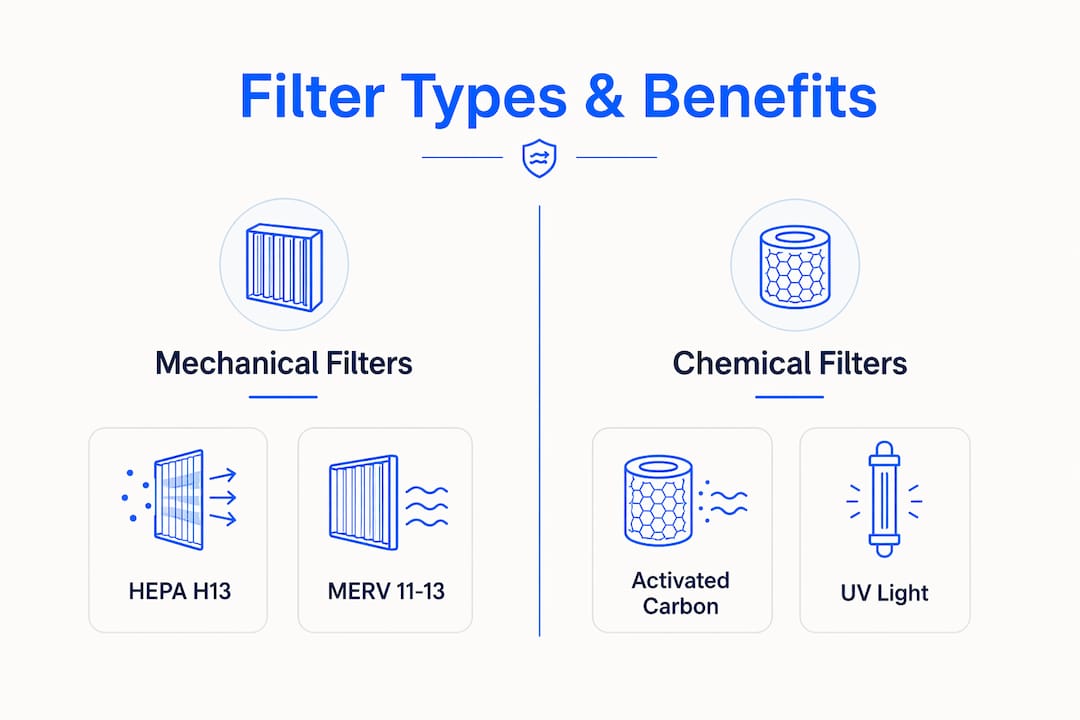
Standard filtration technologies fall into two main categories. HEPA filters capture particles physically, trapping them in a dense fibre mesh rated to remove 99.97% of particles at 0.3 micrometres. MERV-rated filters, used in HVAC systems, are graded on a scale where higher numbers indicate finer filtration. MERV 11 and above is now the minimum standard recommended for workplace environments under current regulatory guidance.
One critical limitation applies to both HEPA and MERV filters. Particulate filters do not remove volatile organic compounds (VOCs) or odours. Gaseous contaminants require a separate activated carbon filtration stage. Offices with new furniture, adhesives, or cleaning products benefit most from a combined system that addresses both particle and gas-phase pollutants.
The impact of air quality on health extends beyond respiratory symptoms. Cardiovascular strain, cognitive fatigue, and immune suppression all connect to sustained exposure to poor indoor air. Filtration is the most direct intervention available to employers.
Filter types and maintenance: what actually works?
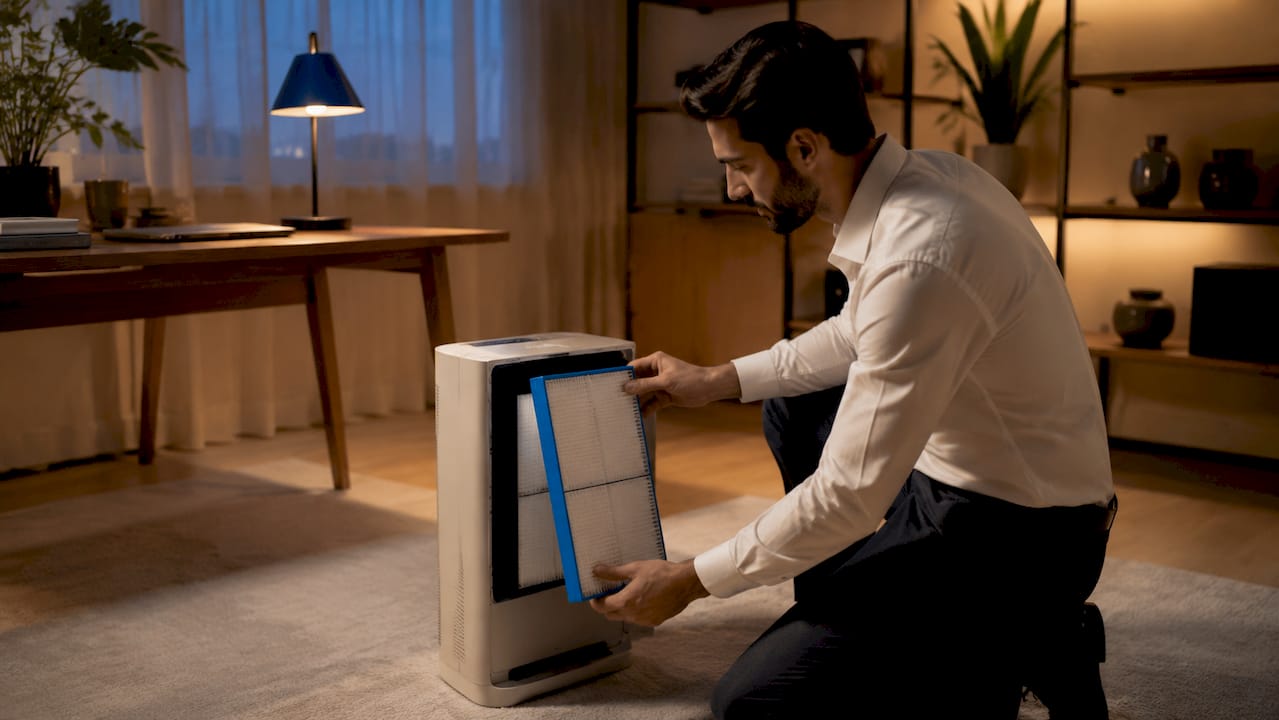
Choosing the right filter is only half the job. A dirty high-MERV filter causes more harm than a clean low-MERV one. Dirty high-MERV filters increase airflow resistance, reduce system efficiency, and allow pollutant re-entry into the workspace. This is the single most common mistake facility managers make.
The table below compares the most common filter ratings, their filtration capability, and maintenance requirements.
| Filter type | Particles captured | Typical replacement interval |
|---|---|---|
| MERV 8 | Dust, pollen, mould spores | Every 3 months |
| MERV 11 | PM2.5, fine dust, pet dander | Every 2–3 months |
| MERV 13+ | Bacteria, smoke, fine PM2.5 | Every 1–2 months |
| HEPA H13 | 99.97% of particles at 0.3 µm | Every 6–12 months |
| Activated carbon | VOCs, odours, gases | Every 3–6 months |
HVAC system upkeep matters as much as filter grade. Dirty coils and weak filter frames degrade filtration performance and increase energy consumption. A filter installed in a poorly sealed frame allows unfiltered air to bypass the media entirely, rendering the upgrade pointless.
Placement of standalone air purifiers is equally misunderstood. Positioning purifiers near emission sources rather than convenient corners substantially improves their effectiveness. In a typical office, that means placing units near printer stations, high-traffic areas, and external air inlets rather than against a back wall.
Pro Tip: Do not rely solely on laboratory filter ratings. Real-world office conditions, including furniture, occupant movement, and airflow patterns, reduce actual performance. Request testing data under ASHRAE 52.2 Appendix J standards, which reflect occupied-space conditions rather than idealised lab settings.
What is the impact of clean air on employee wellness and productivity?
Poor indoor air quality causes headaches, fatigue, and respiratory irritation, the cluster of symptoms collectively known as Sick Building Syndrome. These symptoms reduce concentration, increase error rates, and drive employees to take sick leave. The connection between air quality and productivity is not theoretical. It is documented across multiple workplace studies.
The business case for upgrading filtration systems includes the following measurable outcomes:
- Reduced absenteeism. Improved filtration cuts sick days by over 33%, directly lowering cover costs and disruption.
- Higher cognitive performance. Cleaner air improves test scores and decision-making speed by up to 50%, which matters in any knowledge-based role.
- Lower staff turnover. Poor perceived air quality increases turnover and reduces engagement, adding recruitment and training costs.
- Reduced inflammation. HEPA filtration lowers systolic blood pressure and reduces systemic inflammation markers in regular occupants.
- Regulatory compliance. Minimum filtration standards, including MERV 11A and Infection Risk Management Mode (IRMM) requirements, are now enforceable under occupational health frameworks.
“Air filtration is one component of a broader indoor air strategy including pollutant source control and adequate fresh air ventilation to support employee well-being and retention.” — C-ECI Environmental Consulting
Regulatory pressure is increasing. OSHA’s General Duty Clause and emerging IRMM standards compel employers to meet minimum filtration levels. Businesses that treat filtration as optional now face compliance risk as well as health risk. Filtration investment is no longer a wellness perk. It is a legal and operational baseline.
Filtration also works best as part of a wider indoor air quality strategy. Source control, meaning reducing pollutants at their origin, and adequate fresh air ventilation both amplify the benefits of filtration. A HEPA purifier in a poorly ventilated room with active VOC sources will underperform. The three elements work together, not in isolation.
How to implement air filtration systems in your workplace
Assessment comes first. Before purchasing any equipment, conduct an indoor air quality audit. Measure baseline PM2.5 levels, CO2 concentration, and humidity. Many HVAC contractors and environmental consultants offer this service. The audit identifies which pollutants are present, at what concentrations, and where they originate.
Follow these steps to implement or upgrade filtration effectively:
- Audit current air quality. Use calibrated sensors to measure PM2.5, CO2, temperature, and humidity across different zones and times of day.
- Assess your HVAC system. Check filter grade, seal integrity, coil condition, and airflow rates. Upgrade to MERV 11 or above if not already in place.
- Select certified filtration products. Look for HEPA H13 certification for standalone purifiers. Verify real-world performance data, not just laboratory ratings.
- Position units correctly. Place purifiers near dominant emission sources. Avoid corners and areas with obstructed airflow.
- Integrate with ventilation. Increase fresh air supply where possible. Filtration recirculates indoor air. Ventilation dilutes it. Both are necessary.
- Schedule regular maintenance. Replace filters on the manufacturer’s recommended schedule. Inspect HVAC coils and frames quarterly.
- Communicate with your team. Tell employees what you have installed and why. Perceived air quality affects satisfaction even when measured quality is identical.
Pro Tip: For office air quality guidance specific to smaller workspaces, check the room size specifications on any purifier before purchasing. A unit rated for 20 square metres will not adequately clean a 60-square-metre open-plan office.
Ongoing monitoring closes the loop. Install fixed PM2.5 sensors in key zones and review readings monthly. If levels rise between filter changes, shorten the replacement interval. Monitoring also gives you data to share with employees, which builds trust and reinforces the value of the investment.
Key takeaways
Air filtration is the single most direct intervention available to employers for protecting employee health, reducing absenteeism, and maintaining cognitive performance in the workplace.
| Point | Details |
|---|---|
| Filtration reduces absenteeism | Improved indoor air quality cuts sick days by over 33%, lowering operational disruption. |
| HEPA cuts PM2.5 significantly | HEPA filtration removes 49%–79% of fine particles, reducing cardiovascular and respiratory risk. |
| Maintenance determines effectiveness | A dirty high-MERV filter causes more harm than a clean low-MERV one. Replace on schedule. |
| Placement affects performance | Position purifiers near emission sources, not convenient corners, for maximum benefit. |
| Filtration is now a compliance issue | MERV 11A minimum standards and IRMM requirements make filtration a legal baseline, not a perk. |
Why air quality is the workplace investment most businesses still underestimate
I have spent years watching businesses invest heavily in ergonomic chairs, standing desks, and wellbeing apps, while the air their employees breathe goes completely unexamined. The irony is that air quality has a faster and more measurable impact on daily performance than almost any other workplace factor.
The research is not ambiguous. A 50% improvement in cognitive performance from cleaner air is not a marginal gain. It is the difference between a team that thinks clearly and one that grinds through the afternoon in a fog of fatigue and headaches. Yet most HR managers I speak with have never measured the PM2.5 levels in their offices.
The maintenance piece is where I see the most avoidable failures. Organisations install good filtration systems and then neglect them. A HEPA filter running six months past its replacement date is not protecting anyone. It is a false sense of security with a price tag attached.
My honest view is this: treat air filtration the way you treat fire safety. You would not install a smoke alarm and never test it. Apply the same discipline to your filters, your HVAC seals, and your air quality sensors. The regulatory environment is moving in this direction regardless. Getting ahead of it now is simply good management.
— Pauline
Workplace air quality solutions from Climasaudi
Climasaudi supplies a range of certified air purifiers, HEPA H13 filters, and humidifiers designed for the Saudi Arabian climate, where desert dust and high temperatures create some of the most demanding indoor air conditions in the region.
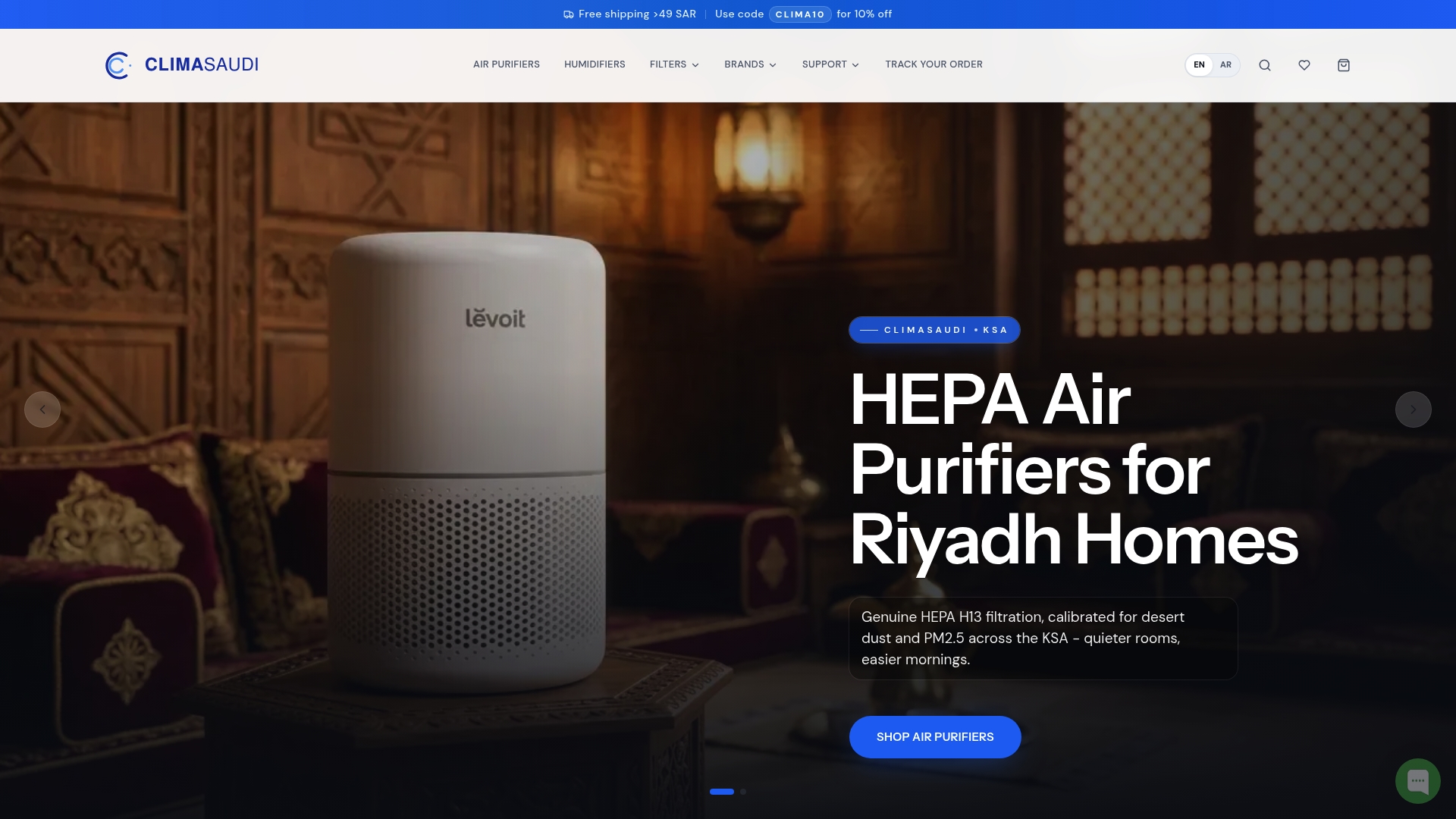
Whether you manage a small office in Riyadh or a larger commercial space in Jeddah, Climasaudi’s product range covers room sizes from compact meeting rooms to open-plan floors. The Blueair Blue Max 3450i suits larger commercial spaces, while the Blueair Blue 3610 is well matched to smaller offices. All products are available with next-day delivery, local SAR pricing, and Saudi-based customer support. Browse the full range at Climasaudi and use the Air Match tool to find the right unit for your workspace.
FAQ
What is the role of air filtration in employee health?
Air filtration removes PM2.5 particles, allergens, and pathogens from indoor air, directly reducing respiratory symptoms, Sick Building Syndrome, and absenteeism. GSA guidance confirms it can improve cognitive performance by up to 50%.
Which filter type is best for office environments?
HEPA H13 filters are the most effective for removing fine particles in office settings. HVAC systems should use MERV 11 or above to meet current minimum workplace filtration standards.
How often should workplace air filters be replaced?
Replacement intervals depend on filter type. MERV 13 filters typically need replacing every 1–2 months, HEPA H13 filters every 6–12 months, and activated carbon stages every 3–6 months.
Does air filtration remove VOCs and odours?
HEPA and MERV filters do not remove VOCs or odours. A separate activated carbon filtration stage is required to address gaseous contaminants from sources such as cleaning products and new furniture.
Can poor indoor air quality increase staff turnover?
Poor perceived and measured air quality increases turnover and reduces employee engagement, according to environmental consulting research. Filtration investment directly supports retention by improving daily comfort and health outcomes.