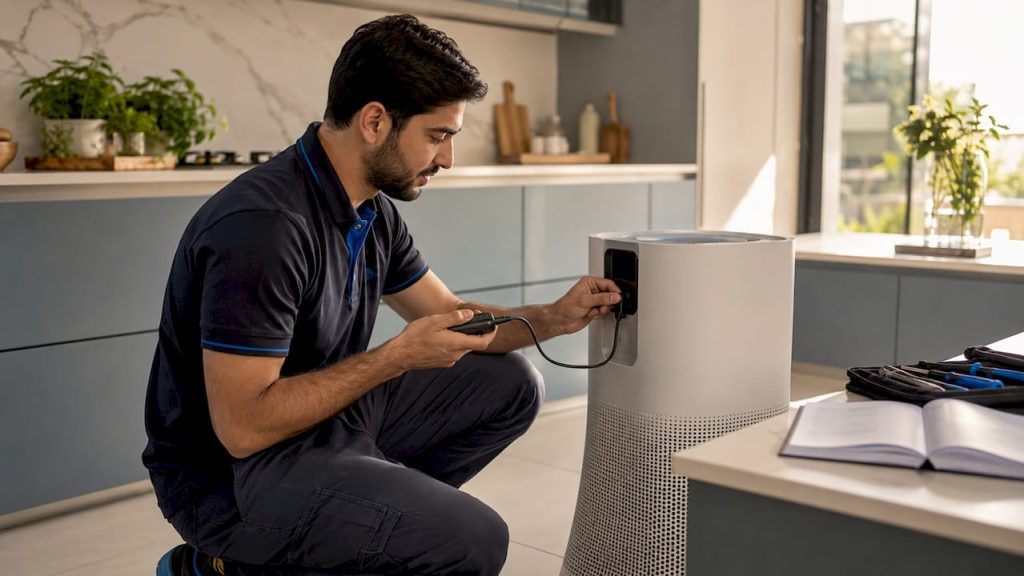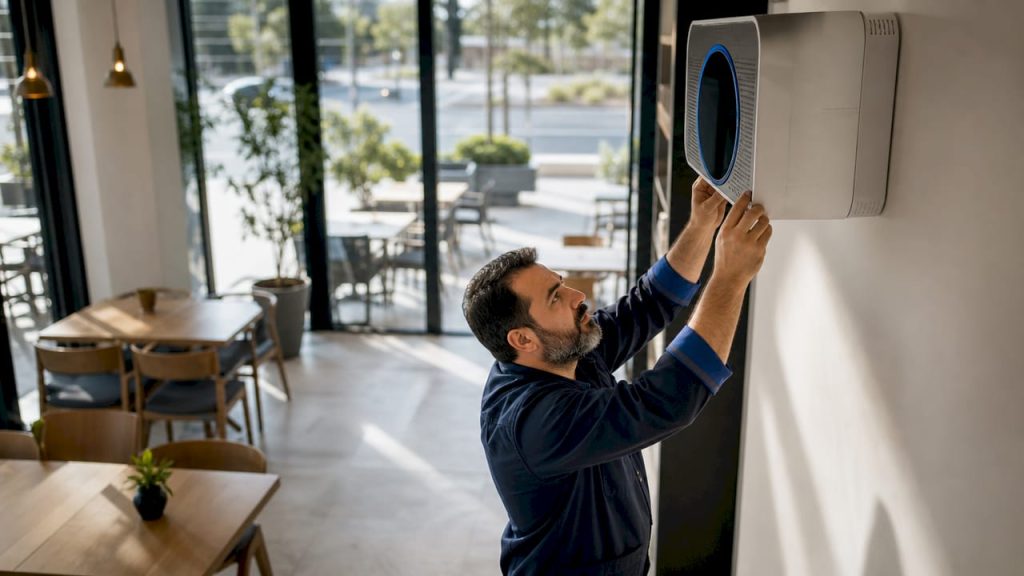
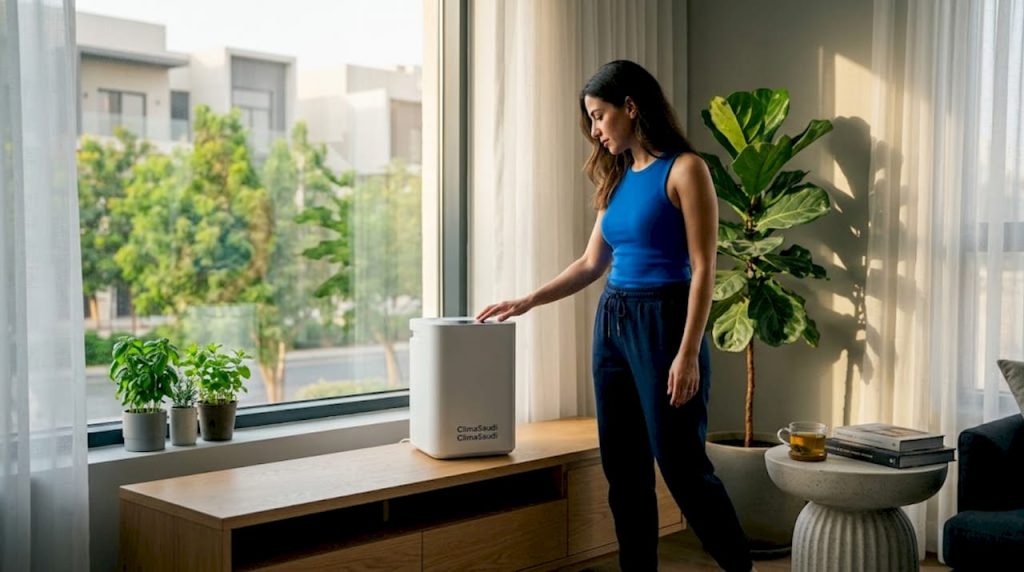
The air inside your apartment may be far more polluted than the street outside. Indoor air is 2 to 5 times more polluted than outdoor air in sealed, multi-unit buildings. Cooking smells from a neighbour two floors up, desert dust seeping through window frames in Riyadh, and trapped VOCs from new furniture all contribute to what you breathe every day. Understanding the role of air filtration in apartment living is not just a health consideration. It is one of the most practical steps any resident can take to feel better at home.
Table of Contents
- Key takeaways
- The role of air filtration in apartment living
- Where apartment pollutants actually come from
- How filtration systems work and which suit apartments best
- Maintenance and best usage practices
- Tackling shared building infrastructure
- Choosing and using filtration for health and comfort
- My perspective: apartment air quality is harder than it looks
- ClimaSaudi solutions for apartment air quality
- FAQ
Key takeaways
| Point | Details |
|---|---|
| Apartments trap more pollutants | Tight building seals and shared infrastructure concentrate pollutants indoors at 2 to 5 times outdoor levels. |
| True HEPA is the baseline | A True HEPA H13 filter captures 99.97% of particles at 0.3 microns, making it the most reliable choice for apartment use. |
| Shared infrastructure matters | Elevator shafts, trash chutes, and HVAC systems contribute to 30 to 70% of indoor air quality issues in multi-unit buildings. |
| Filtration works best in layers | Combining source control, targeted ventilation, and air purification gives far better results than filtration alone. |
| Maintenance is non-negotiable | Replacing filters every 6 to 12 months keeps performance high; neglected filters can become allergen reservoirs. |
The role of air filtration in apartment living
Most people assume their home is a clean refuge from outdoor pollution. In apartments, that assumption is often wrong. The very features that make modern apartment buildings feel secure, tight seals, shared ventilation, and centralised HVAC systems, also make them efficient at trapping and circulating pollutants.
Your unit is not an isolated space. It shares air pathways with dozens of other households. A neighbour who smokes, cooks with high heat, or keeps pets contributes directly to what circulates through your vents and under your doors. Understanding this is the first step toward doing something meaningful about it.
Air filtration systems address this by continuously pulling air through fine filter media, capturing particles and gases before you breathe them. For apartment residents in cities like Riyadh, Jeddah, and Dammam, where desert dust, high humidity, and dense urban air are added factors, the benefits of air filters are especially tangible.
Where apartment pollutants actually come from
Knowing your pollutant sources helps you choose the right filtration approach. In apartments, the main culprits fall into two categories: particulate matter and gaseous pollutants.
Particulate matter includes:
- PM2.5 fine particles from cooking, candles, and outdoor ingress
- Pet dander and skin flakes that stay airborne for hours
- Desert dust and sand particles common in Saudi Arabian cities
- Mould spores from humid bathrooms or poor ventilation
Gaseous pollutants include:
- Volatile organic compounds (VOCs) off-gassing from furniture, flooring, and cleaning products
- Nitrogen dioxide from gas hobs
- Cooking grease vapour and odour molecules
- Tobacco smoke and chemical sprays from neighbouring units
What makes apartments different from houses is the cross-unit contamination problem. Shared building pathways like elevator shafts, trash chutes, and shared HVAC ducts distribute these pollutants far beyond their point of origin. Bathroom ventilation ducts in older buildings can even transmit airborne pathogens vertically between floors. Tight building seals that improve energy efficiency also reduce natural dilution of these pollutants, concentrating them indoors.
Pro Tip: If you notice odours or irritation that worsen at predictable times each day, such as when a neighbour cooks or when the building HVAC cycles on, you are likely experiencing cross-unit contamination rather than a source inside your own flat.
How filtration systems work and which suit apartments best
Not all air filtration technology is equal, and not all of it suits the practical constraints of renting. Here is how the main options compare.
| Technology | What it captures | Best for apartments? |
|---|---|---|
| True HEPA H13 | PM2.5, dust, dander, mould spores | Yes. The standard for effective particle removal |
| Activated carbon | VOCs, odours, cooking gases | Yes, when paired with HEPA |
| Standard HVAC filter (MERV 8) | Large particles only | Limited. Cannot capture fine particles or gases |
| MERV 13+ central filter | Fine particles across the whole building | Requires landlord cooperation |
| Ioniser only | Some particles | Not recommended. Can produce ozone as a byproduct |
Portable True HEPA air purifiers are the most practical choice for renters. They plug in, require no installation, and can be moved between rooms. The key specification to check is the Clean Air Delivery Rate (CADR). This number tells you how quickly the purifier cleans air in a given space. A purifier with a CADR rating too low for your room size will run constantly without achieving clean air levels.
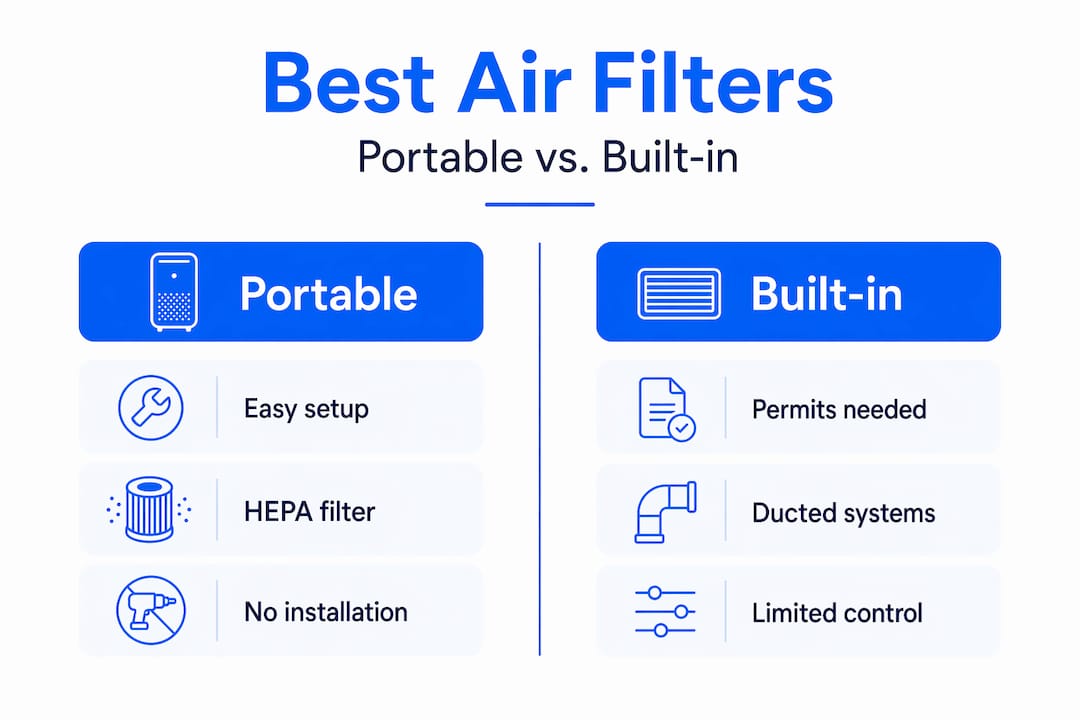
For apartments dealing with cooking smells, paint fumes, or high VOC exposure, activated carbon filtration is not optional. Heavy carbon beds with at least two pounds of granular material are necessary to trap gaseous pollutants effectively. Thin carbon pre-filters found in cheaper units do very little.
Placement matters as much as specification. Position your purifier near the main pollutant entry point, typically the front door, the kitchen, or below a window, rather than in the geometric centre of the room. You can read more about choosing between device types in this air purifier vs filter comparison.
Maintenance and best usage practices
Getting the right purifier is only half the work. How you run and maintain it determines whether it actually improves your air.
-
Replace filters on schedule. Experts recommend filter replacement every 6 to 12 months. If you have pets, live with a smoker, or have a respiratory condition, replace them closer to the 6-month mark.
-
Run at low speed continuously. Continuous low-speed operation outperforms intermittent high-speed bursts because it keeps a steady baseline of clean air. High speed is best used after cooking or when pollution spikes.
-
Check pre-filters monthly. Most purifiers have a washable pre-filter for large particles. Rinsing this monthly extends the life of your HEPA filter considerably.
-
Monitor your air quality. A multi-parameter air quality monitor showing PM2.5, CO2, and VOC levels tells you when your purifier is working hard and when a filter change is due. Trusting the filter light on the purifier alone is not always accurate.
-
Do not neglect the change. A neglected filter can turn a purifier into an allergen reservoir, gradually releasing captured particles back into the air. Worse performance, not neutral performance, is the result.
Pro Tip: Practice “house burping” when outdoor air quality is good. Open two windows on opposite sides of your flat for 10 to 15 minutes in the early morning to flush stale air that your purifier cannot reach. Short ventilation bursts complement filtration in a way no purifier alone can replicate.
Tackling shared building infrastructure
Individual filtration can only go so far when your building is working against you. Interconnected building systems contribute to 30 to 70% of indoor air quality problems in multi-unit buildings. This is a significant share that no single purifier can offset on its own.
The good news is that several renter-implemented measures make a real difference:
- Install door sweeps on your front door. Sealing door gaps reduces hallway air infiltration by 70 to 90%, addressing up to 40 to 60% of odour and pollutant problems directly.
- Seal wall penetrations around pipes, cables, and utility entry points with fire-safe foam or silicone.
- Use exhaust fans while cooking and for at least 10 minutes afterwards to remove grease vapour and moisture before they recirculate.
- Request HVAC filter upgrades from your building management. Upgrading from MERV 8 to MERV 13 filters across a shared system is a landlord-level intervention that benefits every resident, and many building managers are receptive when tenants make a documented request.
Air filtration is vital, but it is the final line of defence. Purifiers cannot address all pollution without controlling sources and ventilating adequately. Think of sealing and source control as reducing the volume of pollutants entering your space, and filtration as cleaning what remains. Both are needed.
If you find building management unresponsive, document your air quality readings with a monitor and submit them formally in writing. In many cases, recorded data is what converts a verbal complaint into a maintenance action.
Choosing and using filtration for health and comfort
Once you understand the sources and the technology, the decision becomes practical. Here is what to focus on when selecting and integrating filtration into your daily routine:
- Match CADR to room size. For a 25 square metre bedroom, look for a CADR of at least 150 cubic metres per hour. Oversizing slightly is always preferable to undersizing.
- Consider noise levels. In compact apartments, a purifier running all night at a noisy high setting will not stay on. Check decibel ratings at low speed. Most quality models run at 25 to 35 dB on their quietest setting.
- Check lease restrictions. Most portable purifiers require no modification to the flat and are fully lease-compliant. Avoid whole-unit systems that require ductwork.
- Use auto mode. Purifiers with built-in PM2.5 sensors and auto mode adjust fan speed in real time, saving energy while responding to actual pollution events like cooking.
- Expect less cleaning. An air purifier that traps airborne dust reduces the frequency of surface cleaning noticeably. Residents who run HEPA purifiers report less dust buildup on shelves and furniture within weeks of regular use.
For residents with allergies or asthma, the impact of filtration systems is particularly pronounced. Consistent removal of PM2.5, dander, and mould spores from circulating air can reduce symptom frequency even without any change in outdoor pollution levels. The importance of indoor air quality becomes personal very quickly when you start monitoring and see the numbers.
My perspective: apartment air quality is harder than it looks
I’ve spent considerable time reviewing air quality data from apartment residents, and what strikes me most is how consistently people underestimate building complexity. Single-family homeowners deal with their own sources. Apartment residents deal with their own sources plus inputs from dozens of other households, all routed through shared infrastructure they cannot see or control.
Most conventional air quality advice was written with houses in mind. “Open a window” or “cook with ventilation” are fine tips for a detached home. In a high-rise, opening a window on a day when your building’s air handling system is recirculating contaminated air from a lower floor can make things worse, not better.
In my experience, the residents who achieve the best results do three things. They seal their unit properly. They run a correctly sized HEPA purifier with activated carbon on auto mode continuously. And they track their air quality with a monitor, which gives them real data to act on rather than guesswork. The monitoring piece is what most people skip, and it is what makes the difference between hoping you have clean air and knowing you do.
Air purifiers are not a cure-all. Realistic expectations matter. A good purifier with genuine HEPA H13 filtration, maintained properly, will significantly reduce your exposure to particles and odours. What it will not do is compensate for a building with no HVAC maintenance, a fully open gap under your front door, and a faulty exhaust fan. Layer your approach, and the results are genuinely meaningful.
— Pauline
ClimaSaudi solutions for apartment air quality
If you have been putting off addressing your flat’s air quality, the practical barrier is lower than you might expect. ClimaSaudi offers a range of HEPA H13 certified air purifiers sized for apartments from single-bedroom flats to larger open-plan spaces, with no installation required and next-day delivery across Riyadh, Jeddah, and Dammam.
For compact apartments dealing with cooking odours and PM2.5, the Blueair Blue 3610 combines True HEPA and activated carbon filtration in a quiet, energy-efficient unit at SAR 1,193. For larger living spaces or those needing 3-in-1 performance, the Blueair ComfortPure T20i offers broader coverage with auto mode and a real-time air quality display. All products at ClimaSaudi come with genuine replacement filters and transparent local pricing. Browse the full range at the ClimaSaudi catalogue to find the right match for your room size and air quality concerns.
FAQ
How polluted is air inside an apartment?
Indoor air in sealed apartments is typically 2 to 5 times more polluted than outdoor air due to trapped VOCs, pet dander, cooking particles, and cross-unit contamination through shared building systems.
What type of air purifier works best in a rental flat?
A portable True HEPA air purifier with an activated carbon filter and a CADR rating matched to your room size is the most practical option, as it requires no installation and suits virtually any apartment air quality need.
How often should I replace my air purifier filter?
Replace filters every 6 to 12 months under normal conditions. If you have pets, live with a smoker, or notice reduced performance, replace them every 6 months to prevent the filter from becoming an allergen reservoir.
Can an air purifier remove cooking odours?
Yes, but only models with substantial activated carbon beds. Thin carbon pre-filters are not sufficient. Look for purifiers specifically listing activated carbon as a dedicated filter layer, not just a coating on the HEPA media.
Will an air purifier alone solve my apartment’s air quality problems?
Not entirely. Filtration alone is insufficient without controlling pollutant sources and ensuring adequate ventilation. Sealing door gaps, using exhaust fans, and requesting HVAC upgrades from building management are all part of an effective strategy.
Recommended
- Apartment air purifier benefits for cleaner air in Saudi homes — Blog | ClimaSaudi
- Air purifier vs air filter: what works for Saudi homes? — Blog | ClimaSaudi
- How HEPA filters trap allergens for cleaner air at home — Blog | ClimaSaudi
- City-specific air purifier features for Saudi homes — Blog | ClimaSaudi