Air purifier coverage area is the effective floor space a unit can clean to an acceptable standard, determined by its Clean Air Delivery Rate (CADR) and the resulting Air Changes Per Hour (ACH), not simply the square metres printed on the box. Most manufacturers base their stated room size on an 8-foot ceiling and just 2 ACH as standard, which means real performance in your home may differ considerably. Understanding what is air purifier coverage area requires looking at three variables together: CADR, ACH, and the actual volume of your room. Get these right and your purifier works as intended. Ignore them and you may be running an undersized unit in a space it cannot adequately clean.
How does coverage area relate to CADR and ACH?
CADR (Clean Air Delivery Rate) measures the volume of filtered air a purifier delivers per minute, expressed in cubic feet per minute (CFM) or cubic metres per hour. ACH (Air Changes Per Hour) tells you how many times the total air volume in a room is cycled through the purifier within one hour. Together, these two figures define the effective coverage area for any given space.
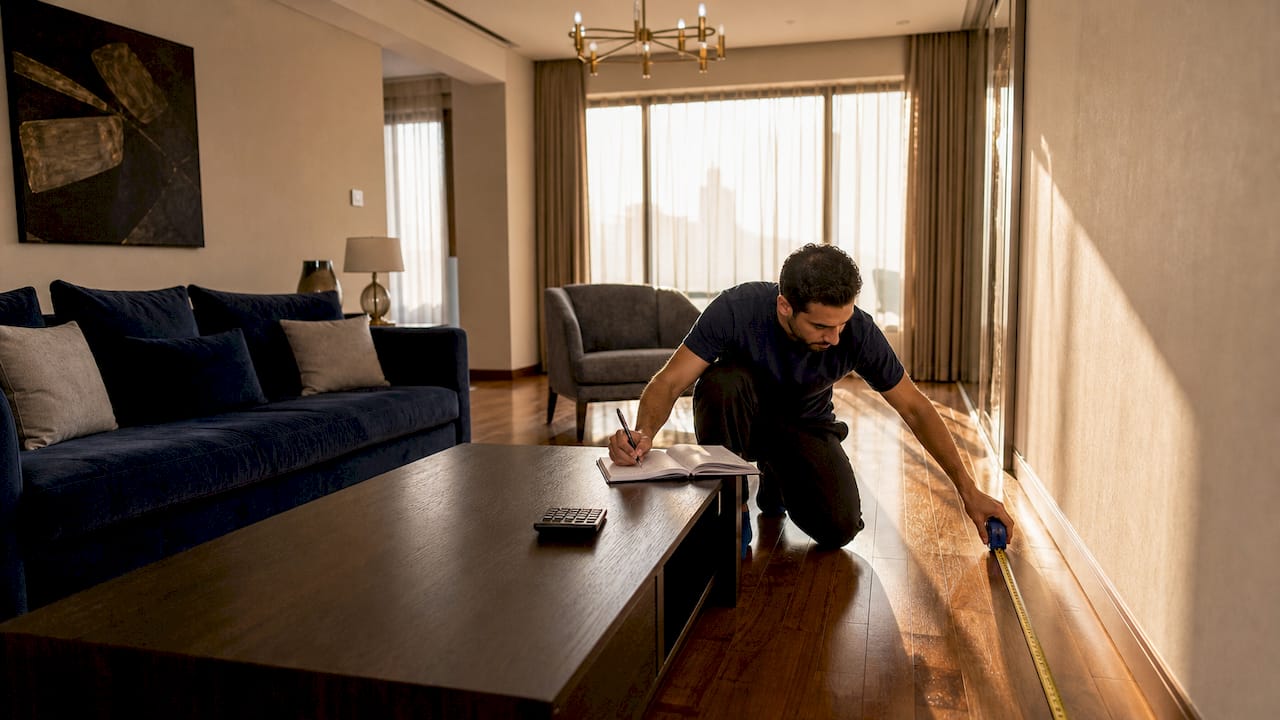
The core formula is straightforward. Required CADR (CFM) = room volume × target ACH ÷ 60. So for a room measuring 5 metres × 4 metres × 2.5 metres (approximately 530 cubic feet), targeting 4 ACH, you need a CADR of roughly 530 × 4 ÷ 60 = 35 CFM. Scale that up to a 25 square metre room with a 3-metre ceiling and the CADR requirement rises substantially.
The table below shows how CADR requirements change across common room sizes at two different ACH targets.
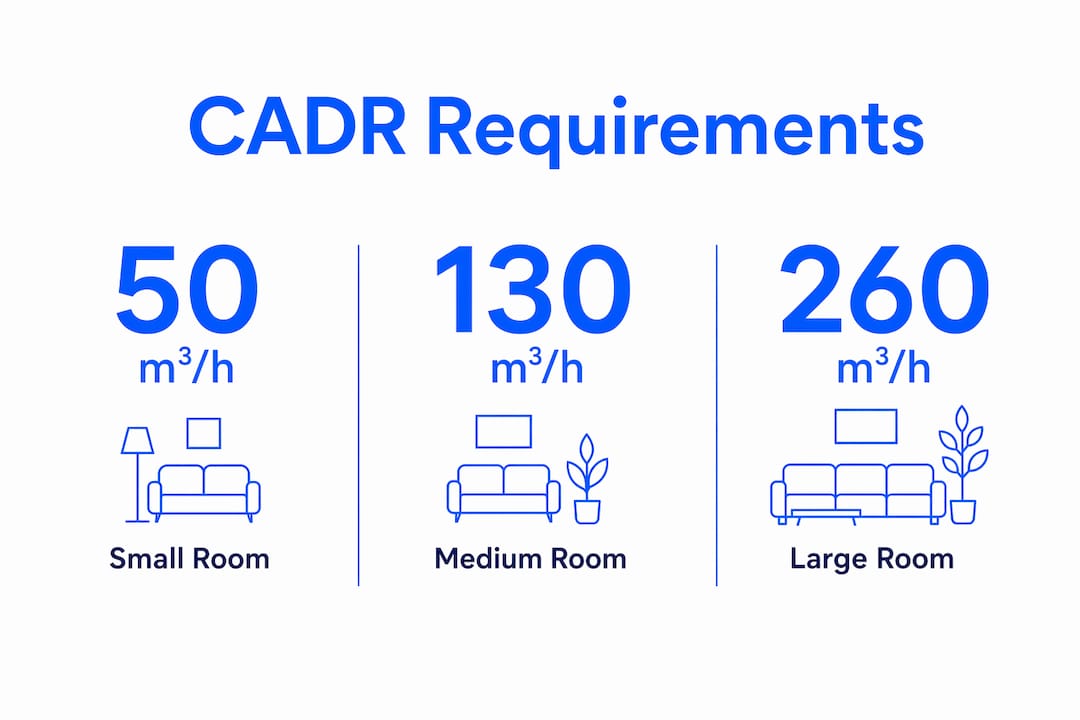
| Room size (sq m) | Ceiling height (m) | Volume (cu m) | CADR needed at 2 ACH (m³/h) | CADR needed at 4 ACH (m³/h) |
|---|---|---|---|---|
| 15 | 2.5 | 37.5 | 75 | 150 |
| 20 | 2.5 | 50 | 100 | 200 |
| 30 | 2.5 | 75 | 150 | 300 |
| 40 | 3.0 | 120 | 240 | 480 |
| 50 | 3.0 | 150 | 300 | 600 |
The 2 ACH figure is the minimum standard used in most manufacturer claims. Allergy sufferers and households with pets or smokers should target 4 to 5 ACH for meaningful relief. That means the purifier you need is often twice as powerful as the box suggests.
Pro Tip: Always calculate room volume (length × width × height) before comparing purifiers. A room with 3-metre ceilings has 20% more air volume than the same floor area with 2.5-metre ceilings, and that gap directly affects how hard your purifier must work.
Why manufacturer room size ratings can mislead you
Manufacturers’ stated room size ratings are marketing approximations built on ideal conditions: standard ceiling heights, unobstructed airflow, and a modest 2 ACH target. In practice, most homes deviate from these assumptions in ways that reduce effective coverage.
High ceilings are the most common culprit. A villa in Riyadh with 3.5-metre ceilings has 40% more air volume per square metre than the standard assumption. A purifier rated for 40 square metres under standard conditions may only achieve adequate ACH in a 28 square metre room at that ceiling height. Open floor plans compound the problem further. The EPA advises choosing purifiers with greater coverage for open layouts and high ceilings, because air mixing across large, connected spaces reduces the concentration of clean air in any single zone.
Common misconceptions homeowners and renters should avoid:
- Trusting the box rating as a hard limit. The stated square footage is a best-case figure, not a guaranteed performance ceiling.
- Ignoring ceiling height. Two rooms with identical floor areas but different ceiling heights require different CADR levels.
- Assuming one unit covers an open-plan space. Air purifiers clean the air near them first. An open kitchen and living area often needs two units or one with a significantly higher CADR.
- Forgetting furniture and obstructions. Sofas, shelving units, and curtains disrupt airflow and reduce the effective coverage radius.
- Neglecting filter condition. A purifier rated for 37 square metres can drop to 23 square metres of effective coverage when filters are clogged. That is a 38% reduction from neglect alone.
Pro Tip: When comparing purifiers, look for the CADR figure rather than the stated room size. CADR is a standardised, testable number. Room size ratings are not.
How to choose and position an air purifier for optimal coverage
Selecting the right purifier and placing it correctly are equally important. A high-CADR unit placed poorly will underperform a mid-range unit placed well. Follow these steps to get both right.
- Calculate your room volume. Multiply length × width × ceiling height in metres. This is your starting point for every sizing decision.
- Set your ACH target. For general use, 2 to 3 ACH is acceptable. For allergy relief, asthma, or PM2.5 concerns common in cities like Dammam and Jeddah, target 4 to 5 ACH.
- Choose a purifier rated for at least double your floor area. Buying a purifier rated for twice your room’s floor area delivers approximately 4 to 5 ACH under real conditions, which is the health-focused minimum.
- Place the unit centrally or near the primary pollutant source. Near a window, door, or cooking area is ideal. Placement near pollutant sources and away from obstructions directly improves ACH and perceived air quality. Corners reduce airflow and cut effective coverage.
- Run at high speed initially, then reduce. Running on high speed first, then switching to medium or auto achieves the target ACH quickly without sustained noise. Running on low speed alone rarely achieves rated coverage.
- Replace filters on schedule. Check manufacturer guidance. Most HEPA H13 filters need replacement every 6 to 12 months depending on usage and local air quality. Desert dust in Saudi Arabia accelerates filter loading considerably.
- Consider multiple units for multi-room coverage. One large purifier in a hallway does not clean bedrooms. Two appropriately sized units, one per occupied room, outperform a single oversized unit placed centrally.
For large rooms specifically, the guide to air purifiers for large rooms from Climasaudi covers how room shape and air circulation affect purifier selection in detail.
Pro Tip: For apartments in Riyadh or Jeddah where desert dust is a persistent issue, run your purifier on high for the first 30 minutes after opening windows or returning home. This rapid cleaning cycle restores air quality faster than leaving the unit on auto throughout.
Renters vs homeowners: coverage challenges and solutions
Your living situation shapes which purifier strategy works best. Renters and homeowners face different constraints when it comes to room size, installation options, and flexibility.
| Factor | Renters | Homeowners |
|---|---|---|
| Typical room size | Smaller flats, 15 to 30 sq m rooms | Larger villas, 30 to 60 sq m rooms |
| Installation options | Portable units only, no fixed installation | Portable or whole-home systems |
| Flexibility | Must move unit between rooms | Can dedicate units per room |
| Budget approach | One mid-range portable unit per key room | Multiple units or one high-CADR unit |
| Key challenge | Shared spaces and limited socket placement | High ceilings and open floor plans |
| Best strategy | CADR-matched portable purifier, central placement | Double-rated purifier per room, or zoned coverage |
Renters in apartment buildings face a specific constraint: shared ventilation systems can introduce pollutants from neighbouring units, meaning a purifier sized only for the room’s floor area may be working against a continuous external source. The practical guide to air filtration for apartment living addresses this directly with CADR-based sizing advice for typical residential layouts.
Homeowners with villas have more options but face the volume problem described earlier. A 50 square metre majlis with 3.5-metre ceilings in Riyadh requires a CADR of at least 350 m³/h to achieve 4 ACH. That rules out most compact or mid-range units. Homeowners should also consider that effective coverage depends on both technical specifications and practical factors like placement and airflow pathways, which means a well-placed mid-CADR unit in a smaller room often outperforms a high-CADR unit placed in a corner of a large open space.
For both groups, pairing good purifier coverage with consistent home cleaning practices reduces the particulate load the purifier must handle, extending filter life and maintaining effective coverage for longer.
Key takeaways
Effective air purifier coverage area is determined by CADR and ACH together, not by floor area alone, and real performance requires matching purifier output to room volume, ceiling height, and placement conditions.
| Point | Details |
|---|---|
| Coverage area is volume-based | Calculate room volume (length × width × height) before choosing any purifier. |
| Target 4 to 5 ACH for health | General use needs 2 ACH minimum; allergy and PM2.5 concerns require 4 to 5 ACH. |
| Double the rated room size | Buy a purifier rated for at least twice your floor area to achieve real-world performance. |
| Placement is as important as CADR | Central placement near pollutant sources improves ACH; corners and obstructions reduce it. |
| Filter maintenance sustains coverage | A clogged HEPA filter can reduce effective coverage by up to 38% of the rated area. |
Why I think most people are buying the wrong size purifier
I have reviewed dozens of air purifier purchases from homeowners across Saudi Arabia, and the single most common mistake is the same every time: buying by the box rating. Someone with a 25 square metre bedroom sees a purifier labelled “covers up to 30 sq m” and considers the job done. It is not.
That 30 square metre claim assumes a 2.4-metre ceiling and 2 ACH. If the bedroom has 3-metre ceilings and the occupant has dust allergies, the unit is already undersized before it leaves the box. Add a clogged filter after six months of Riyadh’s sandy air and the effective coverage drops further still.
What I advocate for is a simple shift in thinking. Stop asking “does this cover my room size?” and start asking “does this deliver enough CADR for my room volume at 4 ACH?” That one change in question leads to better purchases, better air quality, and fewer wasted riyals on units that look right but perform poorly.
Placement is the other half of the equation that most guides underplay. I have seen a 400 CADR unit placed in a corner behind a sofa perform worse than a 200 CADR unit placed centrally near an air inlet. The physics of air mixing matter. A purifier cannot clean air it cannot reach.
Finally, do not neglect the filter. The CADR rating on the box assumes a clean filter. Running a purifier on a filter that is six months overdue is not air purification. It is recirculating dust through a blocked screen. Set a calendar reminder. Replace on schedule. Your coverage area depends on it.
— Pauline
Find the right coverage for your home with Climasaudi
Climasaudi stocks a full range of air purifiers and HEPA H13 filters sized for every room type, from compact bedroom units to high-CADR models suited to large villas and open-plan living spaces. Whether you are a renter in a Jeddah flat or a homeowner with a spacious majlis in Riyadh, the Climasaudi catalogue is organised by room size and air quality concern, making it straightforward to match CADR to your actual space. The Blueair ComfortPure 3-in-1 T20i is a strong option for mid-sized rooms requiring certified HEPA filtration. All products come with transparent SAR pricing, local inventory, and next-day delivery across Saudi Arabia.
FAQ
What is air purifier coverage area?
Air purifier coverage area is the maximum floor space a unit can clean to a defined air quality standard, based on its CADR and a target ACH. Most manufacturer ratings assume an 8-foot ceiling and 2 ACH.
How do I calculate the right purifier size for my room?
Multiply your room’s length × width × ceiling height to get volume, then use the formula: Required CADR = room volume × target ACH ÷ 60. For allergy relief, target 4 to 5 ACH.
Why does ceiling height affect air purifier performance?
Higher ceilings increase room volume, which means the purifier must move more air to achieve the same ACH. A room with 3-metre ceilings has 20% more air volume than the same floor area at 2.5 metres.
How often should I replace my HEPA filter to maintain coverage?
Most HEPA H13 filters need replacing every 6 to 12 months. In areas with high dust or PM2.5 levels, such as Riyadh or Dammam, replacement may be needed sooner, as a clogged filter can reduce effective coverage by up to 38%.
Can one air purifier cover multiple rooms?
One unit cannot effectively cover multiple separate rooms. Air purifiers clean the air in their immediate zone. For multi-room coverage, use one appropriately sized unit per occupied room rather than a single large unit in a shared space.