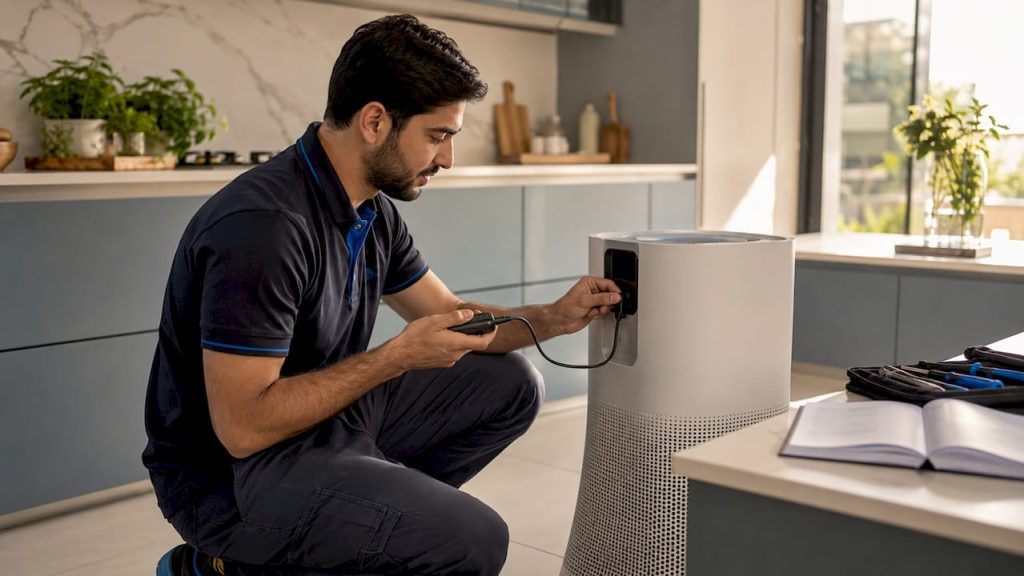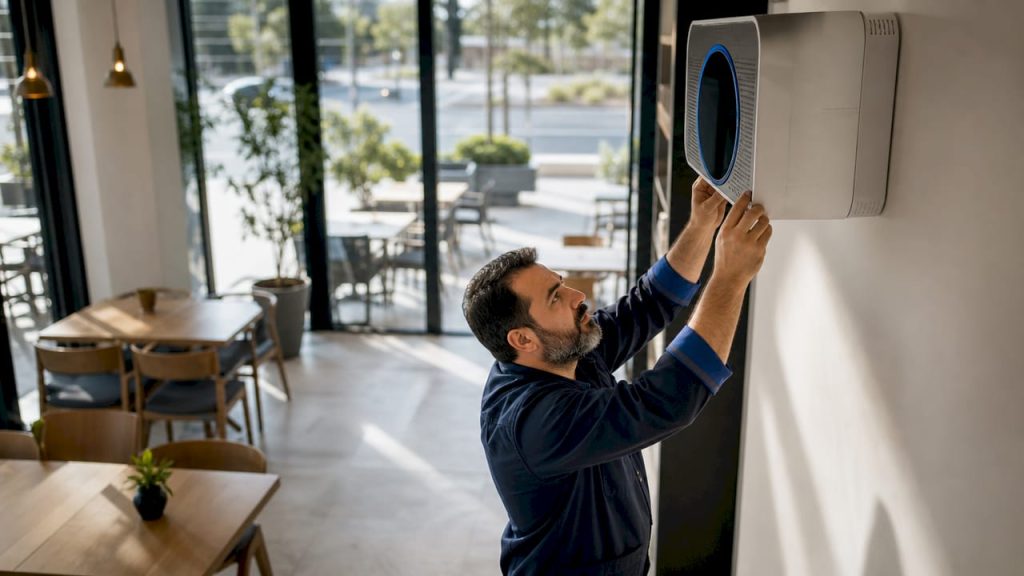
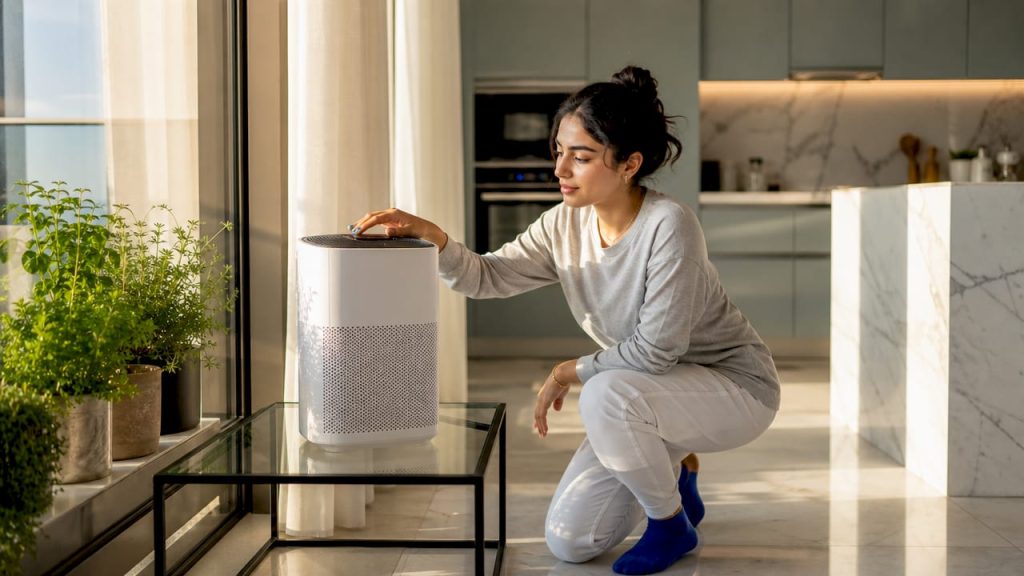
Indoor air purification is the process of removing harmful airborne particles, allergens, and gaseous pollutants from your home to create a healthier living environment. In Saudi Arabia, where desert dust, sandstorms, and high temperatures push families indoors for much of the year, the benefits of indoor air purification are particularly significant. HEPA filters, the gold standard in residential filtration, capture 99.97% of airborne particles at 0.3 microns, including dust, pollen, and PM2.5. Studies published in 2026 confirm improvements in allergy symptoms, cardiovascular health, and cognitive function linked to cleaner indoor air.
1. What are the main health benefits of indoor air purification?
The health benefits of indoor air purification are clinically verified and span multiple body systems. For families in Riyadh, Jeddah, and Dammam, where outdoor dust regularly infiltrates homes, these advantages are not theoretical. They are measurable and daily.
Allergy and asthma relief is the most widely documented benefit. HEPA purifiers improve allergy and asthma symptoms by 25 to 60%, reducing medication reliance and improving respiratory function in children. For households with pets, this means fewer reactions to dander. For those near construction zones or open desert, it means fewer episodes triggered by fine dust.
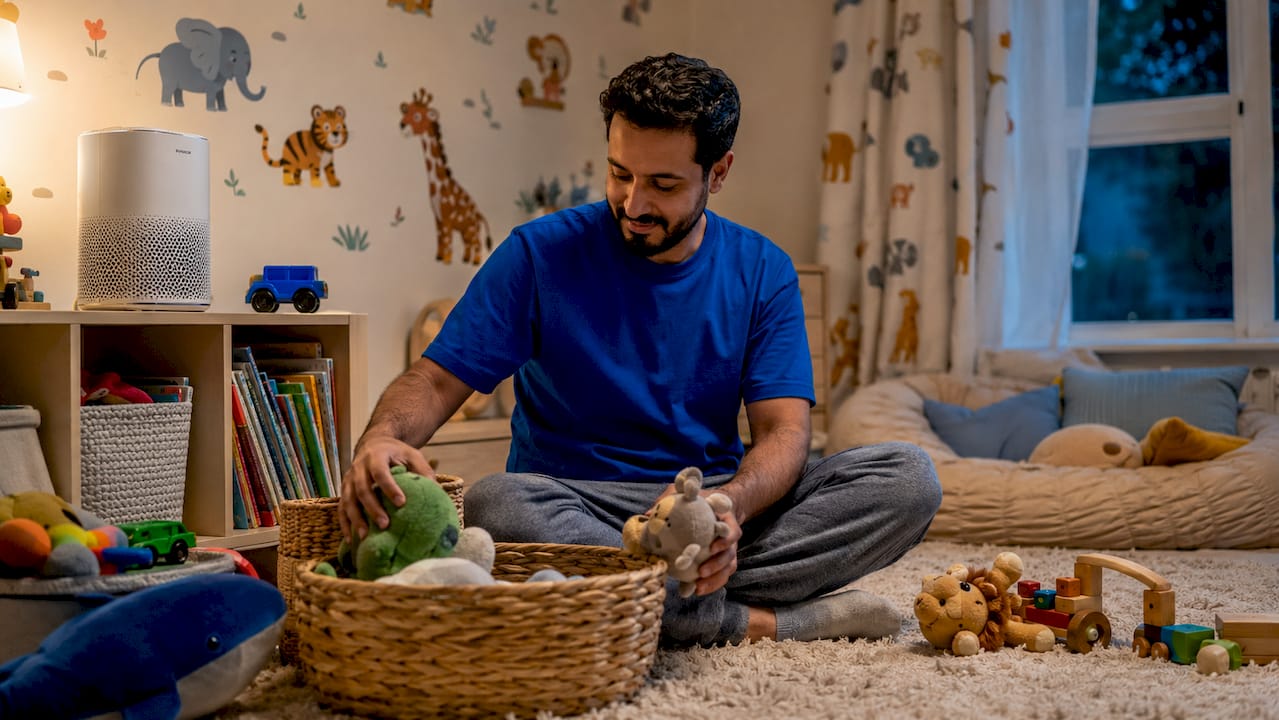
Cardiovascular protection is a less obvious but equally important gain. Adults aged 40 and above using HEPA filtration showed a 3 to 5 mmHg reduction in systolic blood pressure in controlled studies. That range is clinically meaningful. It sits within the territory of lifestyle interventions that cardiologists actively recommend.
Cognitive performance also improves with cleaner air. The same study found 12% faster cognitive test completion among adults using HEPA filtration at home. Particulate matter affects brain function through inflammation pathways, so reducing PM2.5 indoors has a direct effect on focus and mental clarity.
Reduced respiratory infections round out the core benefits. HEPA filters trap viral particles and bacteria suspended in the air, lowering the concentration of pathogens in shared living spaces. For families with young children or elderly members, this is a meaningful layer of protection during cold and flu season.
“Air purifiers with true HEPA filtration address the full spectrum of indoor airborne threats, from allergens and fine dust to viral particles, making them one of the most versatile health investments for a home.” — ClimaSaudi editorial team
2. How do different air purifier technologies work?
Understanding how air purifiers work helps you choose the right one and avoid wasting money on devices that do not deliver. Not all purification technologies are equal, and some are actively harmful.
True HEPA filtration works mechanically. Air is drawn through a dense mat of fibres that physically trap particles. There are no chemicals involved and no by-products produced. This is why True HEPA is the recommended standard for residential use. The HEPA and PM2.5 relationship is well documented: consistent use reduces indoor PM2.5 concentrations by 25 to 50%.
Activated carbon filters work differently. They adsorb gases, volatile organic compounds (VOCs), and odours through a chemical bonding process. Carbon filters do not capture particles. They complement HEPA by handling what HEPA cannot. Combining HEPA with carbon filtration is the recommended approach for comprehensive indoor air quality improvement, particularly in homes with new furniture, fresh paint, or cleaning products that off-gas VOCs.
Ionisers and ozone generators are a different matter entirely. These devices can be harmful and are not recommended for residential use. Ozone irritates the respiratory tract, and ionisers can deposit charged particles onto surfaces rather than removing them from the air. Avoid any purifier that markets itself primarily on ion output or ozone production.
Clean Air Delivery Rate (CADR) is the metric that tells you whether a purifier is correctly sized for your room. A unit with a low CADR placed in a large villa living room will cycle air too slowly to make a meaningful difference. Real-world purifier performance varies significantly with device placement, room size, and occupant activity.
Pro Tip: Match the purifier’s CADR rating to at least two-thirds of your room’s square footage. For a 30 square metre bedroom in Riyadh, look for a CADR of at least 200 cubic metres per hour.
3. Which indoor air quality improvements work best alongside purification?
Air purification works best as part of a layered approach. The IAQ Stack hierarchy, as defined by environmental health researchers, places source control and ventilation above filtration. Filtration is the third layer, not the first. Families who treat a purifier as a complete solution often see disappointing results.
- Reduce indoor pollution sources. Stop smoking indoors. Switch to fragrance-free cleaning products. Allow new furniture and mattresses to off-gas in a ventilated space before bringing them inside. VOC levels in Saudi homes are often elevated by new construction materials and synthetic furnishings.
- Manage ventilation carefully. In Saudi Arabia, opening windows during a shamal (sandstorm) introduces far more particulate matter than it removes. Ventilate during cooler, calmer periods, such as early morning or late evening, and keep windows closed during dust events.
- Control humidity. Mould thrives between 60% and 80% relative humidity. Coastal cities like Jeddah and Dammam regularly see indoor humidity spike. A dehumidifier paired with a purifier addresses both particulate and biological pollutants. Maintaining good indoor air quality in arid climates also requires humidity management alongside filtration.
- Complement purification with regular cleaning. HEPA purifiers capture airborne particles, but settled dust on floors and surfaces is not addressed by filtration alone. Vacuuming with a HEPA-equipped vacuum cleaner and damp-dusting surfaces removes the reservoir of particles that would otherwise become airborne again.
- Place your purifier correctly. Position it in the room where you spend the most time, typically the bedroom. Keep it away from walls and corners so air can circulate freely around the intake and outlet.
Pro Tip: In dry inland cities like Riyadh, pairing a purifier with an ultrasonic humidifier keeps relative humidity between 40% and 50%, which reduces airborne dust particle suspension and makes filtration more effective.
4. What maintenance practices keep your air purifier performing well?
A neglected air purifier is often worse than no purifier at all. A clogged HEPA filter restricts airflow, strains the motor, and can release trapped particles back into the room. Timely filter replacement is not optional. It is the single most important maintenance task.
Key maintenance practices for Saudi households include:
- Replace HEPA filters every 6 to 12 months. In dusty environments like Riyadh during spring, filters may saturate faster. Check the filter visually every three months. A grey or brown filter surface is a clear sign replacement is overdue. The ClimaSaudi guide on HEPA filter maintenance covers the full replacement process step by step.
- Replace activated carbon filters more frequently during high VOC periods. Activated carbon saturates faster when there is heavy off-gassing from new furniture or fresh paint. In these scenarios, replace the carbon layer every three to four months rather than waiting for the standard interval.
- Monitor the filter indicator. Most modern purifiers include a filter life indicator. Do not ignore it. Some households disable the alert to avoid the cost of replacement, which defeats the purpose of running the device.
- Clean the pre-filter monthly. Many purifiers include a washable pre-filter that captures large particles before they reach the HEPA layer. Washing this monthly extends the life of the more expensive HEPA filter beneath it.
- Check local filter availability before purchasing. Replacement filters for obscure or grey-market brands are often unavailable in Saudi Arabia, leaving you with a non-functional unit. Choosing a brand with local filter availability and Saudi-based support removes this risk entirely.
Consistent overnight use produces better allergy symptom improvements than daytime-only use. Running your purifier while you sleep, when you are stationary and breathing the same air for seven to eight hours, delivers the highest cumulative benefit.
5. Air purification for allergies: what the evidence shows
Air purification for allergies is one of the most researched applications of HEPA technology. The allergy benefits of HEPA filters in residential settings are supported by multiple peer-reviewed studies, with symptom score improvements ranging from 25% to 60%. For Saudi families managing allergic rhinitis triggered by desert pollen, dust mites, or pet dander, this is a meaningful clinical outcome.
Dust mite allergens are particularly relevant in Saudi homes. Dust mites thrive in bedding, carpets, and upholstered furniture. Their faecal particles are small enough to remain airborne for extended periods, making them a persistent trigger for allergy and asthma sufferers. A HEPA purifier running continuously in the bedroom captures these particles before they are inhaled during sleep.
Pollen is a seasonal concern, particularly in spring when Riyadh and the Eastern Province see elevated counts. Keeping windows closed and running a purifier on a medium to high setting during peak pollen periods reduces indoor pollen concentrations significantly. This approach is more practical than attempting to eliminate pollen sources and more effective than antihistamines alone for long-term symptom management.
Key takeaways
Indoor air purification delivers the greatest health benefit when True HEPA filtration is combined with source control, correct sizing, and consistent maintenance.
| Point | Details |
|---|---|
| HEPA filtration is the standard | True HEPA captures 99.97% of particles at 0.3 microns, including allergens, dust, and PM2.5. |
| Health benefits are clinically verified | Studies show 25 to 60% allergy symptom improvement and measurable cardiovascular and cognitive gains. |
| Technology choice matters | Avoid ionisers and ozone generators; combine HEPA with activated carbon for full-spectrum filtration. |
| Purifiers work within a system | Source control and ventilation must precede filtration for optimal indoor air quality results. |
| Maintenance determines performance | Replace HEPA filters every 6 to 12 months and carbon filters more frequently during high VOC periods. |
Why I think most families underestimate what clean air actually does
After years of working with indoor air quality data and speaking with families across Saudi Arabia, the pattern I see most often is this: people buy a purifier for one reason, usually allergies, and then discover benefits they never expected. Better sleep. Fewer morning headaches. Children who wake up without congestion. These are not placebo effects. They are the predictable result of reducing the particulate load that the body is silently processing every night.
What I find genuinely underappreciated is the cognitive dimension. The link between PM2.5 exposure and reduced mental clarity is not widely discussed in consumer contexts, but the research is solid. A 12% improvement in cognitive test completion is not a marginal gain. For a student studying for exams or a professional working from home, that is a real and measurable advantage.
My honest advice is to resist the temptation to buy the cheapest unit available. In Saudi Arabia specifically, the combination of desert dust, high temperatures, and sealed, air-conditioned homes creates an indoor environment that demands a properly rated device. A purifier that is too small for the room, or one that uses ionisation rather than true HEPA filtration, will not deliver the benefits described in the research. It will simply run quietly and give you false confidence.
The layered approach matters too. I have seen households run expensive purifiers in rooms full of synthetic air fresheners and chemical cleaners, then wonder why their air quality readings remain poor. Source control is not glamorous advice, but it is the foundation everything else sits on.
— Pauline
Find the right air purifier for your Saudi home with Climasaudi
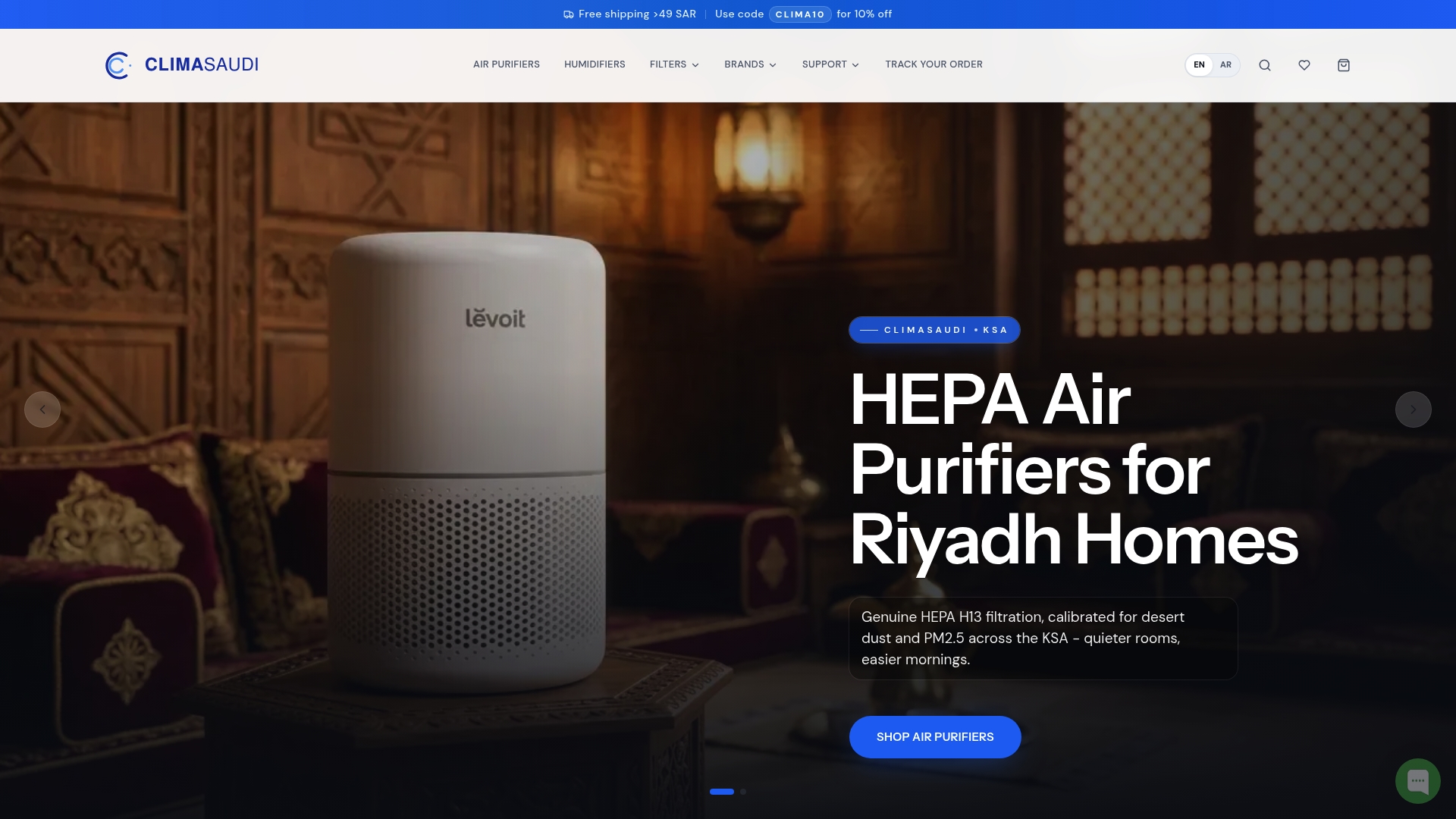
Climasaudi stocks a curated range of HEPA H13 certified air purifiers suited to Saudi homes, from compact bedroom units to high-capacity models for large villa living rooms. The Blueair Blue 3610 is a popular choice for medium-sized rooms, while the Blueair ComfortPure 3-in-1 T20i combines HEPA and carbon filtration in a single unit. All products are available with next-day delivery, transparent SAR pricing, and local customer support. Replacement filters are stocked locally, so you are never left without a functioning unit. Browse the full range at Climasaudi and use the Air Match tool to find the right model for your room size and air quality concerns.
FAQ
Do air purifiers actually improve health?
Yes. Clinical studies show HEPA air purifiers reduce allergy and asthma symptoms by 25 to 60% and produce measurable cardiovascular and cognitive improvements in adults. Benefits are strongest with consistent overnight use.
What type of air purifier is best for Saudi homes?
A True HEPA purifier combined with an activated carbon filter is the most effective choice. It captures fine dust, allergens, and PM2.5 while also removing VOCs and odours common in sealed, air-conditioned homes.
How often should I replace the filter in Saudi Arabia?
Replace HEPA filters every 6 to 12 months, but inspect them every three months. In dusty environments or during sandstorm season, filters may saturate faster and require earlier replacement.
Can an air purifier help with dust from sandstorms?
Yes, but keep windows and doors closed during dust events. A correctly sized HEPA purifier running on a high setting will capture fine particles that infiltrate through gaps, significantly reducing indoor PM2.5 concentrations.
Are ionisers or ozone generators safe to use at home?
No. Ionisers and ozone generators are not recommended for residential use. Ozone irritates the respiratory tract, and ionisers can deposit particles onto surfaces rather than removing them. Stick to True HEPA filtration.
Recommended
- Apartment air purifier benefits for cleaner air in Saudi homes — Blog | ClimaSaudi
- How air purifiers cut cleaning time in Saudi homes — Blog | ClimaSaudi
- City-specific air purifier features for Saudi homes — Blog | ClimaSaudi
- Air purifier vs air filter: what works for Saudi homes? — Blog | ClimaSaudi