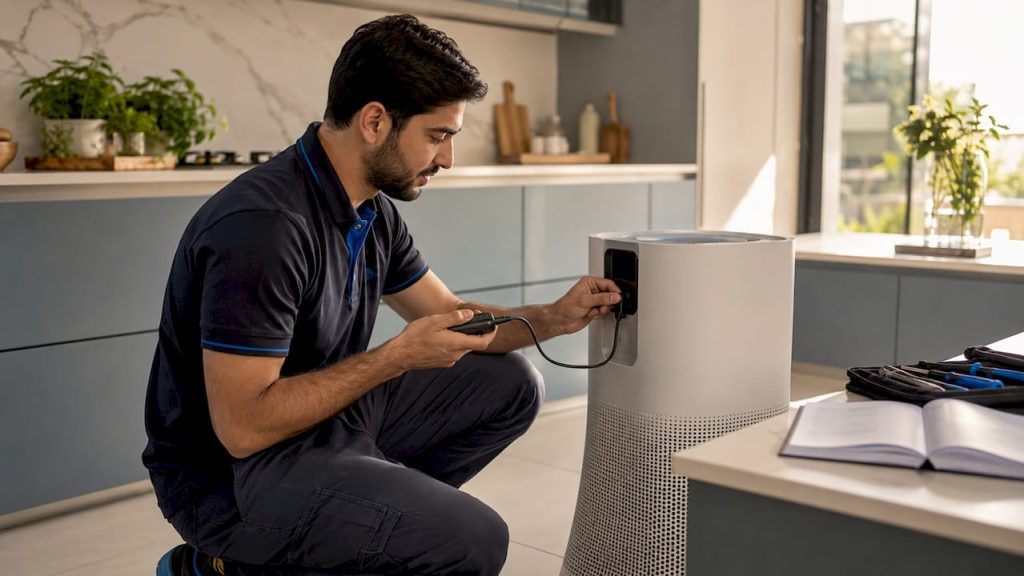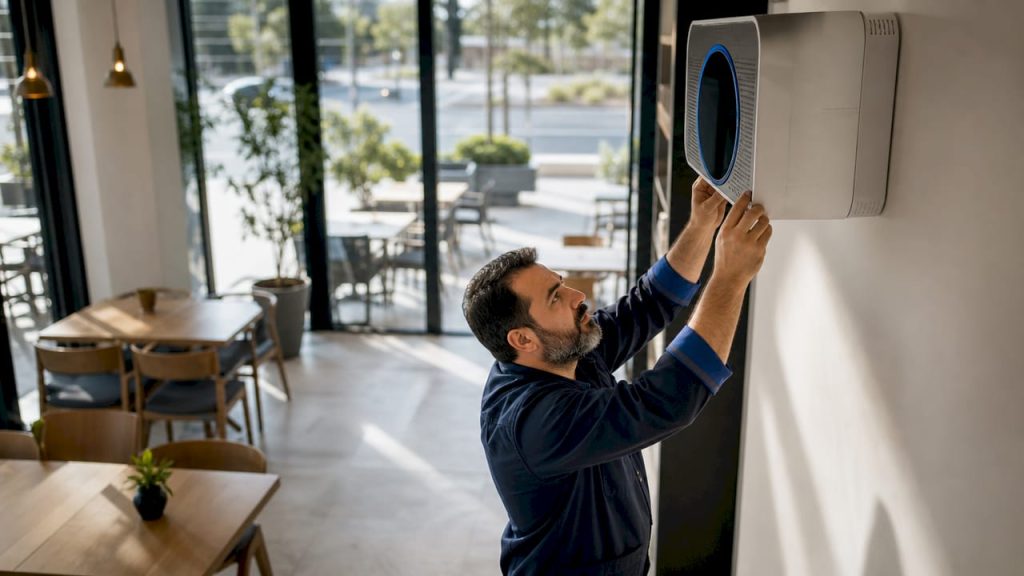
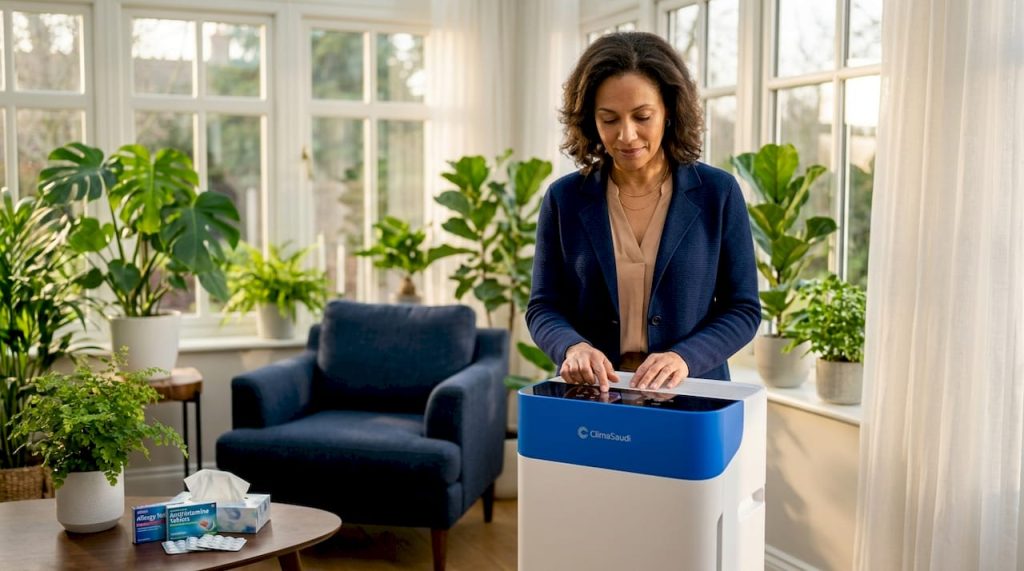
HEPA filtration is defined as a mechanical air purification standard that captures 99.97% of airborne particles at 0.3 microns in size, including dust, pollen, pet dander, and mould spores. For allergy sufferers in Saudi Arabia, where desert dust, sandstorms, and high ambient particulate matter are daily realities in cities like Riyadh, Jeddah, and Dammam, understanding the full range of HEPA filter allergy benefits is not optional. It is the foundation of any serious indoor air quality strategy. True HEPA H13 certified filters, as recommended by organisations including the American Academy of Allergy, Asthma and Immunology, represent the gold standard for residential allergen control.
1. Dramatic reduction of airborne allergens
HEPA filters remove the most common airborne allergy triggers, including dust mite particles, pet dander, mould spores, and pollen, from the air you breathe indoors. This is the primary and most direct of all HEPA filter allergy benefits. Studies show that HEPA purifiers reduce home particulate matter by 29 to 55%, which represents a substantial drop in the allergen load your respiratory system faces each day. For households in Saudi Arabia dealing with fine desert dust and PM2.5 pollution, this reduction is particularly meaningful.
2. Measurable improvement in allergy symptoms
Multiple randomised trials show that proper HEPA use can improve allergic rhinitis symptoms by around 25%. Symptoms including sneezing, nasal congestion, itchy eyes, and throat irritation all respond to lower airborne allergen concentrations. The effect is not instant, but consistent use over days and weeks produces noticeable relief. This makes HEPA filtration one of the few non-pharmaceutical tools with documented clinical backing for allergy management.
3. Reduced reliance on allergy medication
One of the less-discussed benefits of HEPA for allergies is the potential to reduce how much medication you need. When airborne allergen levels fall, your immune system faces fewer triggers, which can lower the frequency and severity of reactions. Research indicates the effect is often described as modest rather than transformative, but for people managing antihistamines or nasal sprays daily, even a modest reduction in symptom load has real quality-of-life value. Fewer medication doses also means fewer side effects.
4. Significant improvement in indoor PM2.5 levels
PM2.5 refers to fine particulate matter smaller than 2.5 microns, a category that includes many of the most irritating allergens and pollutants. HEPA purifiers consistently deliver strong reductions in indoor PM2.5 concentrations. The Johns Hopkins AIRWEIGHS trial recorded a 64% PM2.5 reduction in homes using portable HEPA air cleaners. Cleaner air at this particle size directly reduces respiratory irritation, even when broader clinical symptom scores show mixed results.
5. Targeted relief for pet owners
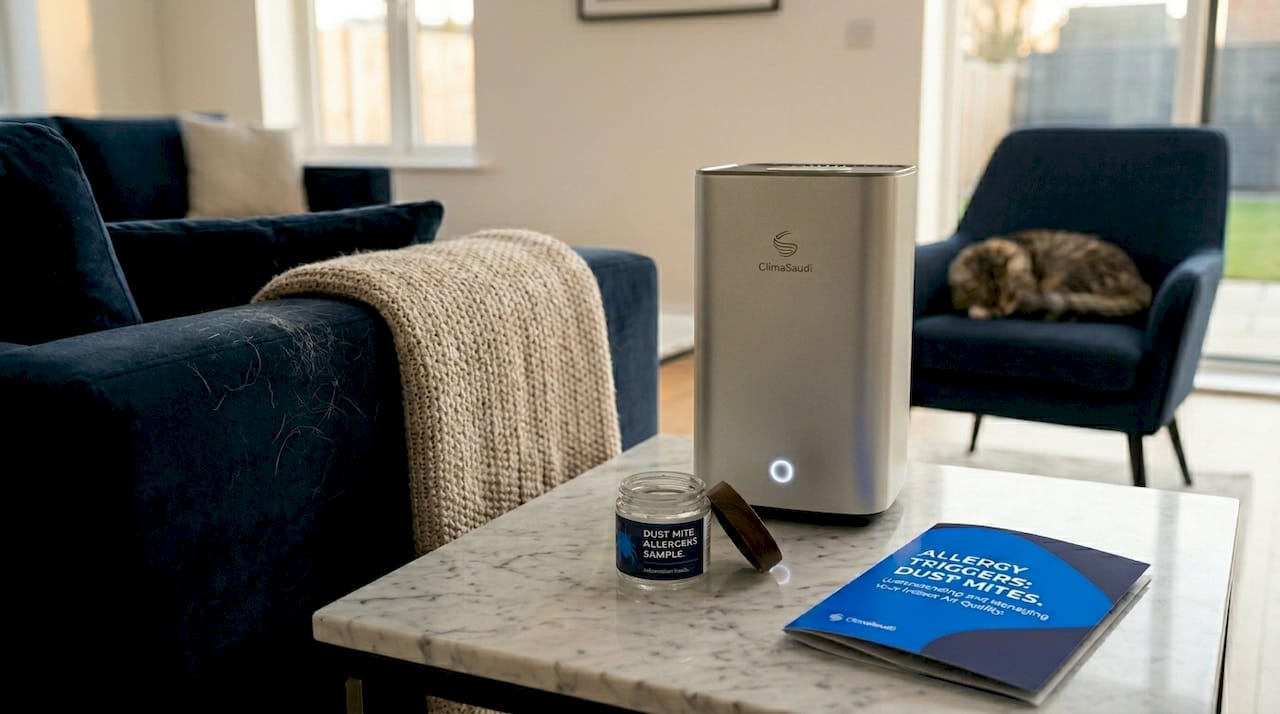
Pet dander is one of the most persistent indoor allergens because it is microscopic, lightweight, and stays airborne for extended periods. HEPA filters capture dander particles effectively, making them a practical tool for households with cats, dogs, or other animals. Running a HEPA unit continuously in the room where pets spend the most time produces the greatest reduction. For allergy sufferers who are unwilling to remove pets from the home, a certified HEPA purifier is one of the most direct forms of allergy relief available.
Pro Tip: Place your HEPA purifier in the room where your pet sleeps, not just the living area. Dander concentrations are highest where animals rest for long periods.
6. Pollen control during high-season periods
Saudi Arabia’s spring months bring elevated outdoor pollen counts, and pollen enters homes through open windows, doors, and clothing. HEPA filters trap pollen particles efficiently, as most pollen grains range from 10 to 100 microns, well above the 0.3-micron test threshold. Keeping windows closed and running a HEPA unit during peak pollen hours, typically morning and early afternoon, reduces indoor pollen load significantly. This is one of the most straightforward allergy management with HEPA strategies for seasonal sufferers.
7. Safer than ionisers and ozone generators
Not all air purification technologies carry the same safety profile. Ionisers and ozone generators can produce ozone as a byproduct, which is a known respiratory irritant and can worsen asthma and allergy symptoms rather than relieve them. True HEPA filters work purely mechanically, trapping particles in a dense fibre matrix without generating any chemical byproducts. For allergy sufferers, this makes certified HEPA H13 filtration the safer and more reliable choice. You can review air purifier technology comparisons to understand which format suits your home best.
8. Support during wildfire smoke and urban pollution events
Wildfire smoke and urban pollution events introduce fine particles and irritants that aggravate allergic airways. HEPA filters capture the particulate fraction of smoke effectively, reducing the indoor concentration of these irritants. When combined with an activated carbon layer, which addresses gaseous pollutants and odours, a HEPA unit provides broad protection during poor outdoor air quality periods. This dual-layer approach is particularly relevant for residents of Riyadh and Dammam, where industrial activity and traffic contribute to elevated ambient pollution.
9. Reduced mould spore exposure
Mould spores are a significant allergen trigger, particularly in humid coastal areas like Jeddah. HEPA filters capture airborne mould spores before they can be inhaled or settle on new surfaces. Understanding how HEPA filtration handles mould is especially relevant during remediation, when disturbing mould colonies releases large numbers of spores into the air. Running a HEPA unit during and after cleaning reduces recontamination risk. This benefit extends beyond allergy relief into broader respiratory health protection.
10. Better sleep quality in allergy sufferers
Allergen exposure during sleep is particularly disruptive because you spend six to eight hours in close proximity to your bedding, which accumulates dust mite particles and pet dander. Running a HEPA purifier in the bedroom overnight reduces the airborne allergen concentration in the space where you breathe most consistently. Lower allergen exposure during sleep translates to fewer morning symptoms, less nasal congestion on waking, and more restful nights. This is one of the most practical and immediately felt HEPA filter allergy benefits for daily life.
How HEPA filters compare with other air purification technologies
Understanding how HEPA filtration stacks up against alternatives helps you make a better purchasing decision. The table below summarises the key differences.
| Technology | Filtration efficiency | Allergy relief potential | Health risks |
|---|---|---|---|
| True HEPA H13 | 99.97% at 0.3 microns | High, well-documented | None from the filter itself |
| HEPA-like or HEPA-type | 85–95% at 0.3 microns | Moderate, lower reliability | None, but reduced efficacy |
| Ioniser | Varies, no mechanical capture | Low to moderate | Possible ozone production |
| Ozone generator | Not a filter | Not recommended for allergy use | Ozone is a respiratory irritant |
| Standard HVAC filter (MERV 8–11) | Captures larger particles only | Low for fine allergens | None, but limited benefit |
| HEPA + activated carbon | 99.97% particles plus gas/odour removal | High, broadest coverage | None |
True HEPA H13 filters consistently outperform alternatives for allergy relief because they combine verified mechanical efficiency with no harmful byproducts. Expert allergist Dr Pedro Ojeda notes that HEPA filters work best as part of a wider allergen control strategy rather than as a standalone solution.
Pro Tip: When comparing products, look specifically for “true HEPA” or “HEPA H13” certification. Labels like “HEPA-type” or “HEPA-style” indicate lower filtration standards and reduced allergy relief effectiveness.
What factors affect the allergy benefits you get from a HEPA filter
The HEPA filter effectiveness you experience at home depends on several practical variables, not just the filter specification itself.
- Room size matching: A purifier sized too small for the room cannot cycle enough air to reduce allergen concentrations meaningfully. Always match the Clean Air Delivery Rate (CADR) to your room’s square metreage.
- Continuous operation: Running a HEPA unit intermittently allows allergen levels to rebuild between cycles. Continuous operation, particularly in bedrooms and living areas, maintains consistently lower airborne allergen concentrations.
- Placement: Position the unit away from walls and obstructions to allow free air intake and output. Central placement in the room produces the most even air distribution.
- Filter replacement schedule: A clogged filter loses efficiency rapidly. Following the manufacturer’s replacement schedule, typically every six to twelve months, keeps the unit performing at its rated specification. Read more about timely filter replacement to avoid this common oversight.
- Allergen type: Dust mite allergens and pet dander settle quickly onto surfaces, meaning HEPA filtration addresses only the airborne fraction. Pollen, which stays airborne longer, responds more directly to HEPA filtration alone.
HEPA filtration addresses only airborne allergens, not debris settled on floors, furniture, or bedding. Source control through regular cleaning remains necessary for full allergen reduction.
Practical steps to get the most from your HEPA purifier
Getting the full allergy relief with HEPA requires more than purchasing the right unit. How you use it matters as much as what you buy.
- Choose certified true HEPA. Select only filters rated at 99.97% efficiency at 0.3 microns. Certification from recognised bodies confirms the filter meets this standard consistently.
- Match CADR to your room. Use the CADR rating for dust, pollen, and smoke to confirm the purifier can clean your room’s air volume at least twice per hour. Consult HEPA filter ratings guidance to match specifications to your space.
- Run it continuously in the bedroom. Sleep is when you benefit most from clean air. Keep the unit running on a low, quiet setting overnight for consistent allergen reduction.
- Replace filters on schedule. A saturated filter not only loses efficiency but can release trapped particles back into the air. Set a calendar reminder for filter checks every six months.
- Combine with regular cleaning. Vacuum with a HEPA-equipped vacuum cleaner, wash bedding at 60°C weekly, and wipe hard surfaces regularly. This removes the settled allergen reservoirs that HEPA cannot address on its own.
- Avoid placing units in sealed, unventilated rooms. Some fresh air exchange supports overall air quality. HEPA filtration works best in rooms with normal occupancy and modest airflow.
Pro Tip: If you have multiple allergy triggers, prioritise a model with both HEPA H13 filtration and an activated carbon layer. This combination handles both particulate allergens and chemical irritants from cleaning products or cooking fumes.
Key takeaways
HEPA H13 certified filters deliver measurable allergy relief by capturing 99.97% of airborne allergens, but their full benefit depends on correct sizing, continuous use, and complementary cleaning practices.
| Point | Details |
|---|---|
| Verified filtration standard | True HEPA H13 captures 99.97% of particles at 0.3 microns, the benchmark for allergy relief. |
| Documented symptom reduction | Studies show up to 25% improvement in allergic rhinitis symptoms with consistent HEPA use. |
| Correct sizing is non-negotiable | Match the purifier’s CADR to your room size; an undersized unit provides limited benefit. |
| Cleaning remains necessary | HEPA removes airborne allergens only; settled dust mite and dander reservoirs require regular vacuuming and washing. |
| Continuous use outperforms intermittent use | Running the unit overnight in the bedroom produces the most consistent and noticeable allergy relief. |
Why I think most people underestimate what HEPA actually requires
People often buy a HEPA purifier, place it in the corner of a large room, and run it for a few hours a day. Then they report that it made no difference. The problem is rarely the filter. It is almost always the usage pattern.
What I have seen consistently is that the best outcomes from HEPA purifiers come from matching the device precisely to the allergen type and the room environment. A unit rated for 20 square metres will not clean a 40-square-metre open-plan living area. A filter that has not been replaced in 18 months is not filtering at its rated efficiency. These are not minor details. They are the difference between real relief and disappointment.
The other thing worth saying plainly is that HEPA filtration is not a cure for allergies. It reduces your airborne allergen exposure, and that reduction can meaningfully lower symptom frequency and severity. But if your bedding is full of dust mite allergens and your sofa is covered in pet dander, the purifier is working against a constant reservoir it cannot reach. The clinical evidence from Johns Hopkins makes this point clearly: strong PM2.5 reductions do not always translate to proportional symptom improvement, because allergen exposure is multi-source.
My honest advice is to treat a HEPA purifier as one component of a broader strategy. Combine it with HEPA-equipped vacuuming, hot-wash bedding routines, and proper filter maintenance habits. When all three work together, the results are genuinely noticeable. When only one is in place, the results are modest at best.
— Pauline
Find the right HEPA purifier for your home with Climasaudi
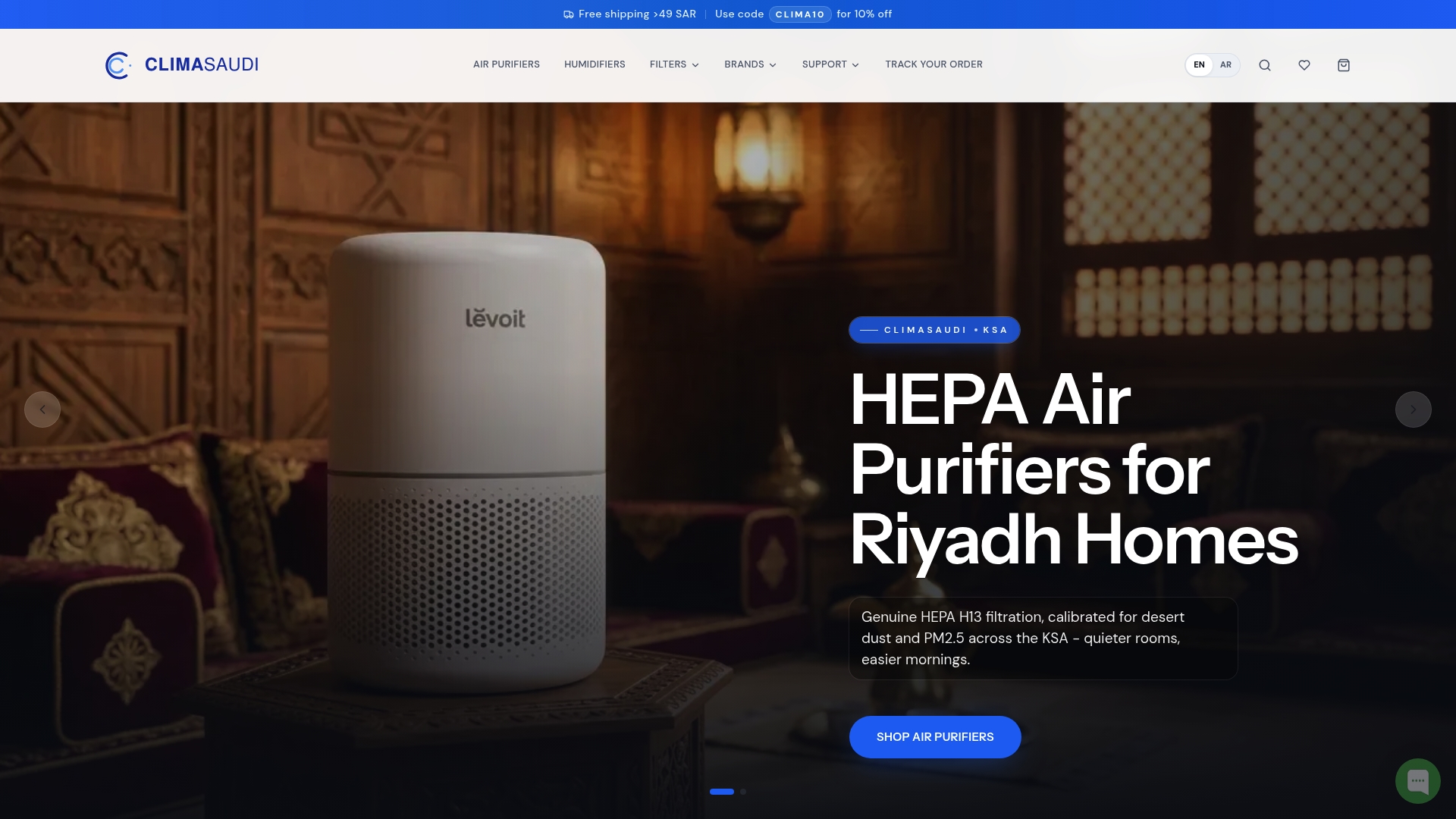
Climasaudi stocks a curated range of certified HEPA H13 air purifiers selected specifically for Saudi homes, from compact bedroom units to high-CADR models suited to large villas and open-plan offices. The Blueair Blue 3610 is a strong choice for smaller rooms, while the Blueair ComfortPure T20i delivers three-in-one filtration for larger spaces. Every product on the platform comes with transparent SAR pricing, next-day delivery across Riyadh, Jeddah, and Dammam, and local customer support. Browse the full range of air purifiers and HEPA filters to find the model that matches your room size, allergen triggers, and budget.
FAQ
What does a HEPA filter actually remove from the air?
A true HEPA filter captures 99.97% of airborne particles at 0.3 microns, including dust mite particles, pet dander, pollen, mould spores, and fine PM2.5 pollution. It does not remove gases, odours, or allergens already settled on surfaces.
How quickly does a HEPA purifier reduce allergy symptoms?
Most users notice a reduction in airborne allergen levels within hours of continuous operation, but measurable symptom improvement typically develops over several days to weeks of consistent use.
Does room size affect how well a HEPA filter works for allergies?
Yes. A purifier sized too small for the room cannot cycle enough air to reduce allergen concentrations effectively. Always match the unit’s CADR rating to your room’s square metreage for reliable allergy relief.
Do HEPA filters help with dust mite allergies specifically?
HEPA filters capture airborne dust mite particles and their waste fragments, but dust mites primarily live in bedding, carpets, and upholstery. Combining HEPA filtration with hot-wash bedding routines and HEPA-equipped vacuuming produces the best results.
How often should I replace my HEPA filter to maintain allergy benefits?
Most manufacturers recommend replacing HEPA filters every six to twelve months, depending on usage and local air quality. In dusty environments like Riyadh or coastal areas like Jeddah, more frequent replacement may be needed to maintain peak filtration efficiency.