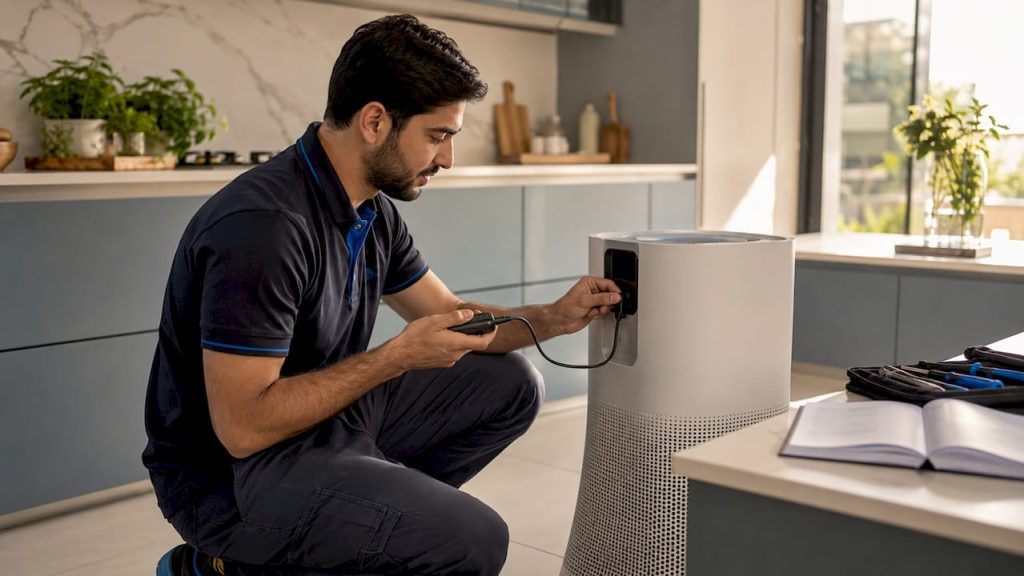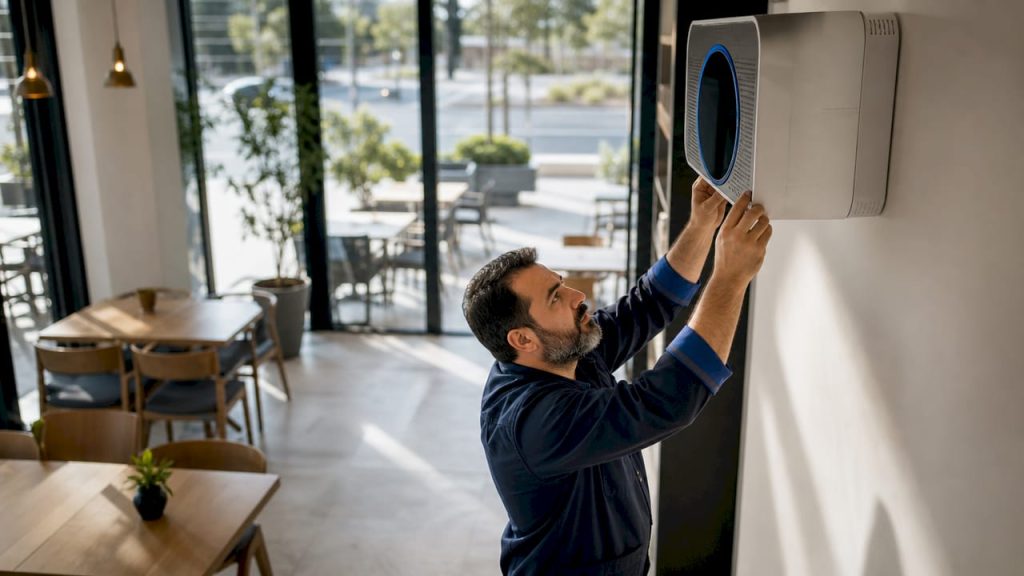
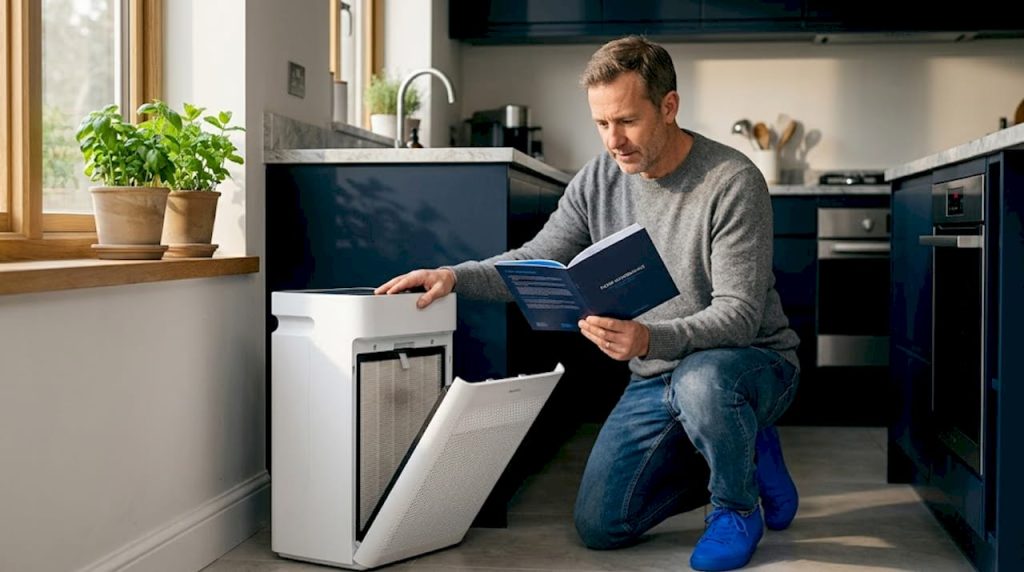
Your air purifier can only do its job when the filter inside it is clean and functional. If you neglect to properly maintain HEPA filter performance at home, the unit works harder, air quality drops, and you may end up releasing trapped allergens back into the room. In Saudi homes, where desert dust, PM2.5 particles, and high-temperature airflow put constant pressure on filtration systems, this matters more than most. This guide gives you a clear, practical routine to keep your filters performing at their best, for longer.
Table of Contents
- Key takeaways
- Maintain HEPA filter at home: know your system first
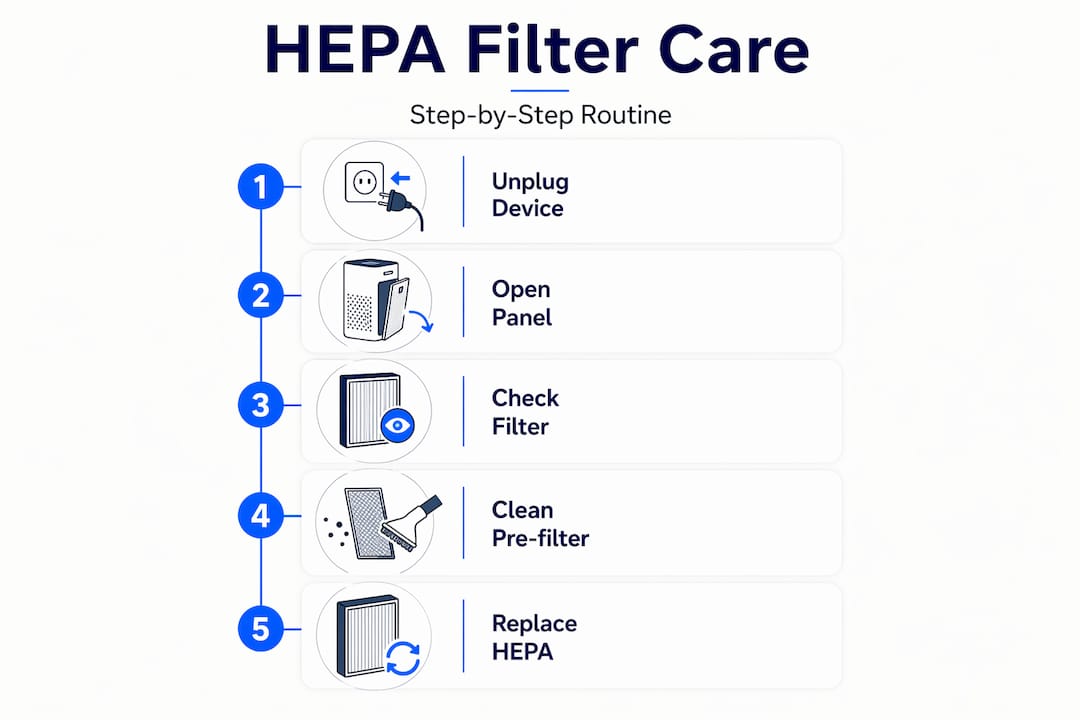
- Step-by-step HEPA filter maintenance routine
- Common HEPA filter maintenance mistakes to avoid
- Optimising purifier use for longer filter life
- My honest take on HEPA filter upkeep
- How Climasaudi can help with your filter maintenance
- FAQ
Key takeaways
| Point | Details |
|---|---|
| Pre-filter care is critical | Cleaning pre-filters every 2 to 4 weeks protects the HEPA stage and significantly extends its lifespan. |
| Never wash a true HEPA filter | Most HEPA filters cannot be rinsed; doing so destroys the delicate fibres and ruins filtration performance. |
| Replace on schedule | True HEPA filters should be replaced every 6 to 12 months, sooner in homes with pets or heavy dust. |
| Right unit size matters | An undersized purifier overloads its filter quickly; match your unit’s coverage to your room size. |
| Maintenance habits compound | Pairing filter upkeep with good ventilation and humidity control reduces the overall particulate load on your filter. |
Maintain HEPA filter at home: know your system first
Before you touch any filter, you need to understand what you are actually working with. Most home air purifiers use a layered filtration system, and each layer has different maintenance requirements.
Filter types and what they do
The typical home air purifier contains two to three filter stages:
- Washable pre-filter: This outer mesh layer traps large particles like hair, dust, and pet dander. It is designed to be rinsed or vacuumed regularly.
- True HEPA filter: This is the core filtration stage. It captures particles as small as 0.3 microns, including pollen, mould spores, and fine dust. It is not washable. Pre-filters trap larger particles before the HEPA stage and extend its life by reducing the load placed on the finer media.
- Activated carbon filter: Found in many units, this layer absorbs odours and volatile organic compounds. It requires periodic replacement, not cleaning.
Tools you will need
Gather these before you start any maintenance session:
- A soft-bristle brush or a low-suction vacuum with a brush attachment
- Lukewarm water and mild soap (for washable pre-filters only)
- A clean, dry cloth
- Your device’s user manual
Pro Tip: Always unplug your air purifier before opening it for any maintenance. Never perform filter checks with the unit running.
Consult the manufacturer’s filter guidance for your specific model before proceeding. Filter construction varies between brands, and what works for one unit may damage another.
| Filter type | Washable? | Cleaning method | Replacement interval |
|---|---|---|---|
| Pre-filter | Yes (most models) | Rinse or vacuum | Every 3 to 6 months |
| True HEPA filter | No | Gentle surface vacuum only | Every 6 to 12 months |
| Activated carbon filter | No | None | Every 3 to 6 months |
Step-by-step HEPA filter maintenance routine
A consistent maintenance schedule is what separates a purifier that lasts years from one that underperforms within months. Here is a practical workflow you can follow.
Weekly and monthly pre-filter care
- Weekly visual check. Look at your pre-filter through the unit’s housing or grille. If visible dust has built up, a quick clean is due.
- Monthly pre-filter clean. Remove the pre-filter carefully. If it is a washable type, rinse it under lukewarm water until the water runs clear. For non-washable pre-filters, use a low-suction vacuum with a soft brush attachment.
- Dry fully before reinserting. A damp pre-filter placed back into a running unit can encourage mould growth inside the housing. Allow at least 24 hours of air drying at room temperature.
- Never vacuum the HEPA filter directly. Vacuuming HEPA fibres directly can break the delicate structure and compromise its ability to trap fine particles.
Inspecting your HEPA filter every three months
You do not need to replace the HEPA filter every time you clean the pre-filter, but you do need to inspect it. Look for:
- Grey or brown discolouration across more than half the surface
- Visible damage, including tears, dents, or compressed sections
- Reduced airflow from the unit’s output vents
- Unusual noise from the motor working harder than normal
Clogged HEPA filters reduce airflow and can cause noise or motor overheating over time. If you notice any of those signs before the scheduled replacement window, change the filter immediately.
When to replace home air filter components
HEPA filters should be replaced every 6 to 12 months. That window tightens based on several factors:
- Homes with one or more pets: replace closer to 6 months
- Homes in high-dust environments like Riyadh or coastal areas in Jeddah: inspect at 4 months
- Households with smokers or heavy cooking activity: check at 3 to 4 months
Pro Tip: Keep the old filter in a sealed bag when removing it to avoid releasing trapped particles back into the room. Take it straight to an outdoor bin.
Common HEPA filter maintenance mistakes to avoid
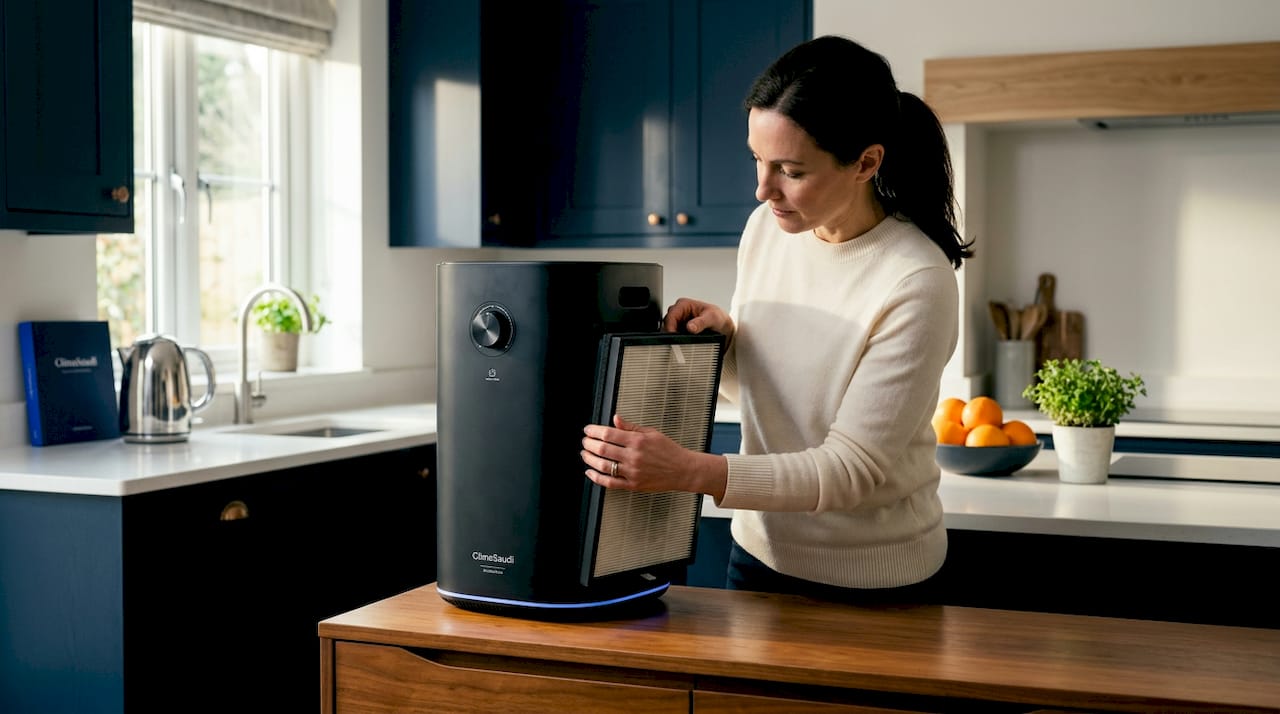
Even well-meaning homeowners make errors that quietly degrade filter performance. These are the most frequent ones.
Washing a non-washable HEPA filter
This is the single most damaging mistake. Water breaks down the randomly oriented glass fibres that give HEPA media its particle-capturing ability. Avoid washing true HEPA filters at all costs; once those fibres are compromised, the filter cannot be restored. A wet HEPA filter may look functional after drying, but it will allow particles to pass through freely.
Using compressed air
Compressed air seems like a practical shortcut. It is not. The force is too strong for HEPA media and drives fine particles deeper into the fibres, where they cannot be dislodged, reducing effective filtration capacity. Compressed air and water damage non-washable filters. Use only a soft brush or the pre-filter vacuum method described above.
Skipping pre-filter cleaning
This is the most overlooked error in HEPA filter maintenance tips. The pre-filter acts as a shield. When it becomes saturated with large particles, every fine particle that would have been caught there passes directly to the HEPA stage. That accelerates HEPA loading dramatically.
Skipping pre-filter maintenance is the fastest way to shorten your HEPA filter’s lifespan. A clean pre-filter can effectively double the interval between HEPA replacements.
Ignoring signs of filter fatigue
Dirty filters reduce suction and release allergens back into the room. If your purifier seems less effective, smells stale, or runs louder than usual, those are signals the filter system needs attention, not just a reset or mode change.
Optimising purifier use for longer filter life
How you use your air purifier is just as important as how you maintain the filters inside it.
Run mode and timing
Running your purifier on auto mode continuously is generally better than short high-speed bursts. Auto mode adjusts fan speed to detected particle levels, which reduces unnecessary filter loading during clean-air periods. You can learn more about the right approach in this guide to daily purifier use.
Match unit size to your room
An undersized purifier running at maximum speed to cover a large room loads its filter far faster than a correctly sized unit. Undersized air purifiers fail to maintain air quality even with clean filters. Aim for a unit capable of 6 to 8 air changes per hour (ACH) for allergy and asthma management.
Supporting habits that reduce filter load
| Strategy | Benefit to filter life |
|---|---|
| Use a vented range hood while cooking | Reduces grease particles and combustion byproducts reaching the filter |
| Keep windows closed during dust storms | Prevents sudden particle surges that load filters in minutes |
| Maintain indoor humidity between 40 and 60% | Lowers airborne mould spore counts that add to HEPA load |
| Vacuum and mop floors weekly | Reduces re-suspended dust before it reaches the purifier |
The EPA’s IAQ recommendations specifically highlight kitchen venting and exhaust fans as simple, high-impact strategies for reducing indoor pollutants. Combined with a maintained HEPA filter, these habits make a measurable difference.
Set maintenance reminders
Use your phone calendar or a smart home app to set recurring reminders. Schedule pre-filter cleaning every three to four weeks and a HEPA inspection every 90 days. When you learn how HEPA filters trap allergens, it becomes easier to understand why consistent upkeep, rather than reactive fixes, gives the best results.
My honest take on HEPA filter upkeep
I have seen a lot of homeowners invest in quality air purifiers and then wonder why their allergy symptoms barely improve six months later. Nine times out of ten, the answer is the pre-filter. People focus entirely on the HEPA stage because it sounds more technical and more important. But the best practices for HEPA filters always start one layer earlier.
In my experience, the pre-filter is where maintenance habits either succeed or fail. Neglect it for two months and the HEPA is doing work it should never have to do. Clean it every three to four weeks and your HEPA will last closer to 12 months rather than six. That is not a minor difference. It is the difference between replacing filters twice a year and replacing them four times.
I also think the instruction to “never wash a HEPA filter” needs more emphasis. It is mentioned in manuals, but most people skim those. When a filter looks dirty, the instinct is to wash it. Resisting that instinct is genuinely one of the most useful habits you can build. If your filter looks too dirty to keep using, it almost certainly is. Replace it rather than attempting to clean it.
Finally, match your purifier to the room it is actually in. A unit that is working at full capacity constantly to cover a large room will wear its filter and motor faster than one that is appropriately sized and running comfortably. Understanding the right HEPA filter rating for your space is a practical first step before anything else.
— Pauline
How Climasaudi can help with your filter maintenance
If you are ready to build a proper maintenance routine, having access to genuine replacement parts makes all the difference. Climasaudi stocks a full range of HEPA air purifiers and replacement filters suited to Saudi homes, from compact units for bedrooms to larger models for open-plan villas. All products feature certified HEPA H13 filtration, with compatible pre-filters and carbon filters available alongside each model.
Orders are delivered next day to Riyadh, Jeddah, Dammam, and across the Kingdom, with transparent SAR pricing and local customer support to help you identify the right filter for your specific model. Whether you are replacing an overdue HEPA filter or upgrading to a unit like the Blueair Blue 3610 for better room coverage, Climasaudi makes it straightforward to get exactly what you need, without guesswork.
FAQ
How often should I replace a HEPA filter at home?
True HEPA filters should be replaced every 6 to 12 months. Homes with pets, heavy dust, or smokers should inspect and replace them closer to the 6-month mark.
Can I wash my home HEPA filter to extend its life?
No. True HEPA filters must not be washed. Water destroys the glass fibre structure and eliminates their ability to trap fine particles. Only washable pre-filters should be rinsed.
What happens if I skip pre-filter cleaning?
Neglecting the pre-filter forces the HEPA stage to capture large particles it was never designed for, which accelerates clogging and shortens the HEPA filter lifespan considerably.
How do I know my HEPA filter needs replacing?
Look for visible discolouration across most of the filter surface, reduced airflow from the unit, unusual motor noise, or a stale smell from the output. Any of these signs indicate the filter is overdue for replacement.
Does running my purifier on high speed clean the air faster?
High speed increases air throughput but also accelerates filter loading. Auto mode is better for filter longevity, as it adjusts fan speed to detected air quality and reduces unnecessary wear during low-pollution periods.
Recommended
- How HEPA filters trap allergens for cleaner air at home — Blog | ClimaSaudi
- HEPA filter ratings: choosing clean air for your Saudi home — Blog | ClimaSaudi
- What is true HEPA certification? A guide for Saudi homeowners — Blog | ClimaSaudi
- Air Purifiers, Humidifiers & HEPA Filters in Saudi Arabia | ClimaSaudi