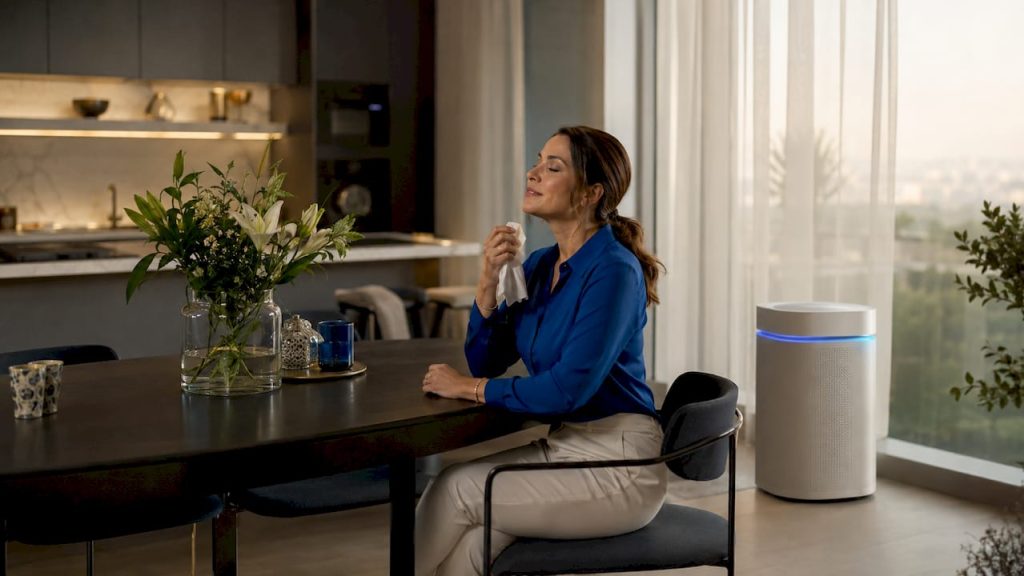
Allergic rhinitis is defined as an immune-mediated inflammation of the nasal passages triggered by airborne allergens such as pollen, dust mites, pet dander, and mould spores. True HEPA air purifiers are the most effective tool for reducing these triggers indoors, and the rhinitis air purifier benefits are backed by clinical evidence. HEPA filters capture 99.97% of particles as small as 0.3 microns, including the allergens that cause sneezing, congestion, and itchy eyes. For anyone managing rhinitis in Saudi Arabia, where desert dust and high temperatures push people indoors for long periods, cleaner indoor air is not a luxury. It is a health necessity.
1. How air purifiers reduce rhinitis symptoms
True HEPA filtration is the most clinically supported technology for rhinitis relief. Symptoms can improve by 25–60% with regular use, and indoor PM2.5 concentrations drop by 29–56% in residential settings. That level of particle reduction directly lowers the allergen load your immune system has to process each day.
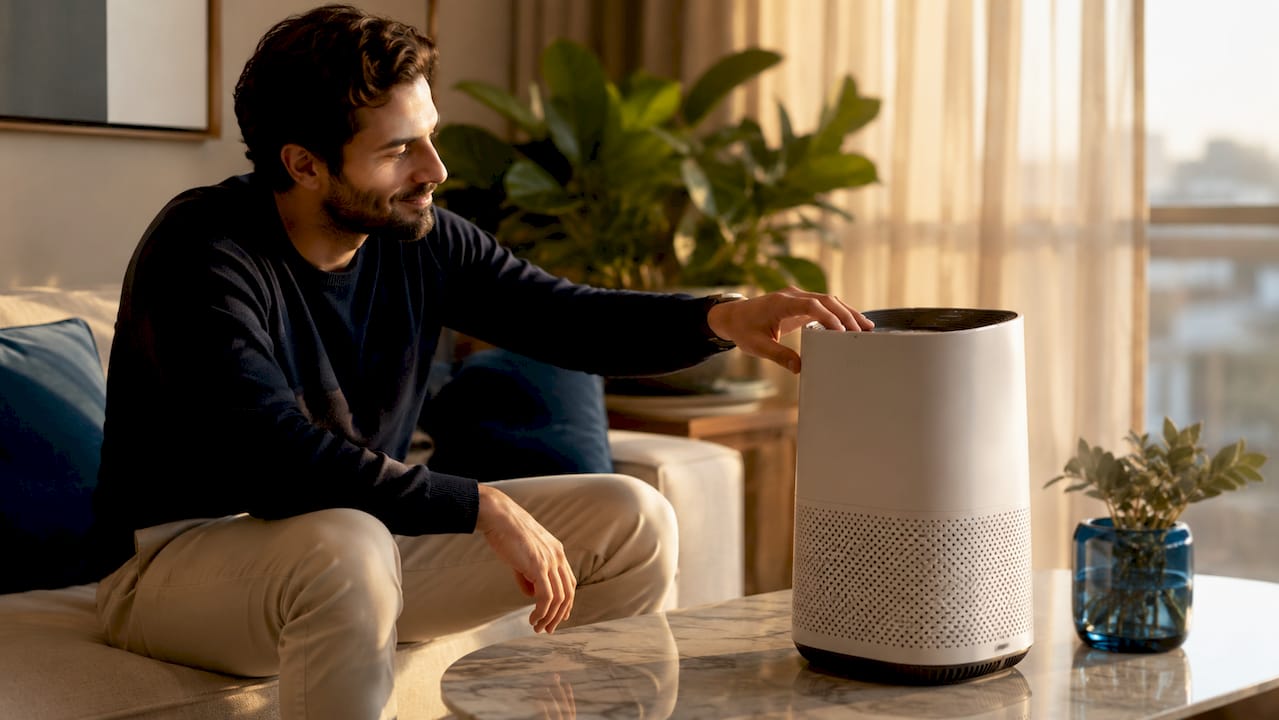
The mechanism is straightforward. Air is drawn through a dense fibre mat, and particles including pollen, pet dander, dust mite debris, and mould spores are physically trapped. Unlike ionisers or UV units, True HEPA filters do not rely on chemical reactions or electrical charges. They remove particles mechanically, which is why the results are consistent and measurable.
In 17 of 28 studies reviewed, HEPA filtration significantly improved allergy symptoms. The strongest effects appeared when devices ran continuously in bedrooms. Reduced rescue medication use and better sleep quality were among the most commonly reported outcomes.
- Pollen particles (10–100 microns) are captured with ease
- Dust mite faecal matter (1–10 microns) is reliably trapped
- Pet dander (2.5–10 microns) is removed from circulating air
- Mould spores (2–20 microns) are filtered before inhalation
Pro Tip: Run your air purifier on its highest setting for 30 minutes before entering a room, then drop to a medium setting. This clears the initial allergen load quickly without unnecessary noise during sleep.
2. Key features to look for in an air purifier for rhinitis
Not every air purifier delivers the same results. The difference between a True HEPA unit and a “HEPA-like” device is significant. True HEPA filters to the H13 standard capture 99.97% of 0.3-micron particles. HEPA-like filters carry no such guarantee and often allow fine allergens to pass through.
Clean Air Delivery Rate (CADR) and room sizing
CADR is the single most useful number when choosing a unit. It measures how quickly a purifier cleans a specific volume of air. A device with a CADR of 200 m³/h suits a room of roughly 20–25 m². Buying an undersized unit is the most common mistake rhinitis sufferers make. The device runs constantly but never turns the air over fast enough to make a measurable difference.
Activated carbon filters
An activated carbon layer removes volatile organic compounds (VOCs), cooking odours, and chemical fumes. These are not allergens in the traditional sense, but they irritate already-inflamed nasal passages. A purifier combining True HEPA and activated carbon addresses both particulate allergens and gaseous irritants in one unit.
Third-party certification
Look for AHAM (Association of Home Appliance Manufacturers) or ECARF (European Centre for Allergy Research Foundation) certification. Third-party certification confirms that a unit performs as claimed under standardised test conditions. Marketing language alone is not a reliable guide. You can also read the allergy relief buying guide for a detailed comparison of certified models.
Filter replacement costs
Annual maintenance for most True HEPA units costs between £32 and £80 (equivalent to SAR 150–380) depending on the model and usage intensity. Budget for this before purchasing. A purifier with cheap replacement filters is often a better long-term investment than a premium unit with expensive consumables.
Pro Tip: Check the True HEPA vs HEPA-like comparison before you buy. The difference in filtration performance is not marginal. It is the difference between genuine symptom relief and wasted money.
3. Where and how to use your air purifier for maximum benefit
Placement determines results. Bedroom use delivers the strongest symptom relief because you spend 7–9 hours there each night in close proximity to allergens in bedding, pillows, and carpets. Living room use is helpful but less impactful due to lower exposure time and greater air volume to clean.
Think of it as a “clean air dosage.” The longer you breathe filtered air, the lower your cumulative allergen exposure. Sustained overnight use in the bedroom produces the most measurable reduction in rhinitis symptoms. This is why allergists formally recommend HEPA purifiers as part of a multi-pronged rhinitis management plan, not as a standalone fix.
Position the unit at least 30 cm from walls and furniture to allow unrestricted airflow. Keep doors and windows closed during operation to prevent fresh allergens from entering. In cities like Riyadh and Jeddah, where outdoor dust levels are high, this is particularly relevant.
4. Health benefits beyond rhinitis symptom relief
Air purifiers deliver measurable benefits that extend well beyond nasal symptoms. Emerging research shows that adults aged 40 and over completed cognitive tests 12% faster after one month of continuous HEPA use. Cleaner air appears to reduce the low-grade neurological burden that particulate exposure creates over time.
Cardiovascular health also responds to cleaner indoor air. The same research links sustained HEPA use to a 3–5 mmHg reduction in systolic blood pressure, attributed to lower systemic inflammation. For rhinitis sufferers who already carry an elevated inflammatory load, this is a meaningful secondary gain. You can read more about these indoor air quality benefits in detail.
Sleep quality improves significantly when allergen levels drop overnight. Reduced nasal congestion means fewer breathing interruptions and deeper sleep cycles. The connection between HEPA filtration and PM2.5 reduction is particularly relevant here, as fine particles are a primary driver of nighttime respiratory irritation.
- Reduced systemic inflammation from lower particulate exposure
- Improved sleep continuity due to less nasal congestion
- Potential cognitive performance gains from cleaner breathing air
- Lower cardiovascular risk markers with sustained use
5. Common mistakes that reduce air purifier effectiveness
The most frequent error is buying a unit that is too small for the room. A purifier rated for 15 m² placed in a 40 m² living room will run continuously without achieving adequate air changes per hour. Matching CADR to room size is not optional. It is the foundation of effective rhinitis management with a purifier.
Neglecting filter replacement is equally damaging. A clogged HEPA filter loses suction and filtration efficiency. At that point, the unit moves air but does not clean it. Most filters need replacing every 6–12 months depending on usage and local air quality. In dusty environments like Riyadh or Dammam, replacement may be needed more frequently. Practical guidance on maintaining HEPA filters at home is worth reviewing before your first replacement cycle.
Relying on ionisers or ozone generators instead of True HEPA is a third common mistake. Ionisers and ozone units do not trap particles. They may reduce some airborne bacteria, but they do not remove the allergens that drive rhinitis. Ozone generators can actively irritate inflamed airways, making symptoms worse rather than better.
- Do not place the unit in a corner with restricted airflow
- Do not run the device on the lowest setting in high-allergen periods
- Do not skip filter checks because the unit appears to be running normally
- Do not rely on a purifier alone. Air purifiers supplement but do not replace regular vacuuming, washing bedding at 60°C, and reducing soft furnishings
Pro Tip: Set a recurring calendar reminder every six months to check your filter. Pair this with a bedding wash on the same day. The combined effect on allergen levels is substantially greater than either action alone.
Key takeaways
True HEPA air purifiers with H13 certification are the most effective single tool for reducing rhinitis symptoms, and their benefits are greatest when used continuously in the bedroom.
| Point | Details |
|---|---|
| True HEPA is the standard | Only H13-certified filters capture 99.97% of 0.3-micron allergens reliably. |
| Bedroom placement matters most | Overnight use delivers the highest clean air dosage and the strongest symptom relief. |
| CADR must match room size | An undersized unit will not turn air over fast enough to reduce allergen load. |
| Maintenance is non-negotiable | Replace filters every 6–12 months to maintain filtration performance. |
| Purifiers work best in combination | Pair with regular cleaning and bedding hygiene for full allergen control. |
What I have learned from years of watching people manage rhinitis
People tend to buy an air purifier and expect it to solve everything. That expectation sets them up for disappointment. The device is genuinely powerful, but only when it is the right size, placed correctly, and maintained properly. I have seen people run a small bedroom unit in a large open-plan living area and conclude that air purifiers do not work. They do work. The unit was simply wrong for the space.
The other misconception I encounter regularly is that any air purifier will do. The gap between a certified True HEPA H13 unit and a budget “HEPA-type” device is not a minor technical detail. It is the difference between capturing the allergens that matter and letting them circulate freely. Rhinitis sufferers deserve to know that distinction before they spend money.
My honest view is that an air purifier should be the last purchase you make in a rhinitis management plan, not the first. Sort out your bedding, reduce soft furnishings, and speak to an allergist. Then add a properly sized, certified HEPA unit in your bedroom. At that point, you will notice a real difference. The HEPA filter allergy benefits are well documented, but they require the right conditions to show up in your daily life.
— Pauline
Find the right air purifier for rhinitis relief at Climasaudi
Climasaudi stocks a curated range of certified HEPA air purifiers designed for Saudi homes, from compact bedroom units to high-capacity models for larger living spaces. Every unit on the platform meets the H13 filtration standard, with transparent SAR pricing and next-day delivery across Riyadh, Jeddah, and Dammam.
Whether you are managing rhinitis in a studio apartment or a family villa, Climasaudi’s product range covers every room size and air quality need. The Blueair Blue Max 3450i suits larger rooms, while the Blueair Blue 3610 is a reliable choice for bedrooms. Browse the full air purifier catalogue to find the right match for your space and symptoms.
FAQ
Do air purifiers actually help with rhinitis?
Yes. HEPA air purifiers reduce rhinitis symptoms by 25–60% by removing pollen, dust mites, pet dander, and mould spores from indoor air. The effect is strongest with continuous bedroom use.
What type of air purifier is best for allergies?
A True HEPA unit certified to the H13 standard is the best choice for allergy relief. Ionisers and ozone generators do not trap allergen particles and can irritate inflamed airways.
How long does it take for an air purifier to reduce rhinitis symptoms?
Most people notice improvement within one to two weeks of continuous use. The strongest results come after sustained overnight use in the bedroom, where allergen exposure is highest.
Does room size affect how well an air purifier works for rhinitis?
Yes. A unit with a CADR too low for the room will not achieve enough air changes per hour to reduce allergen levels meaningfully. Always match CADR to your room’s floor area before purchasing.
Can an air purifier replace other rhinitis treatments?
No. Allergists recommend HEPA purifiers as one component of a broader plan that includes environmental control, regular cleaning, and medical treatment where needed.