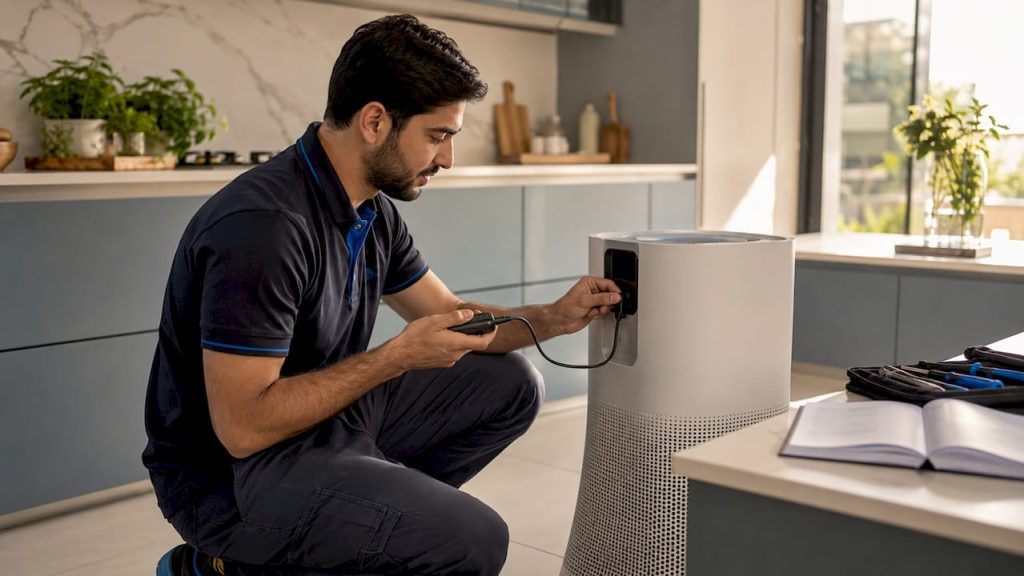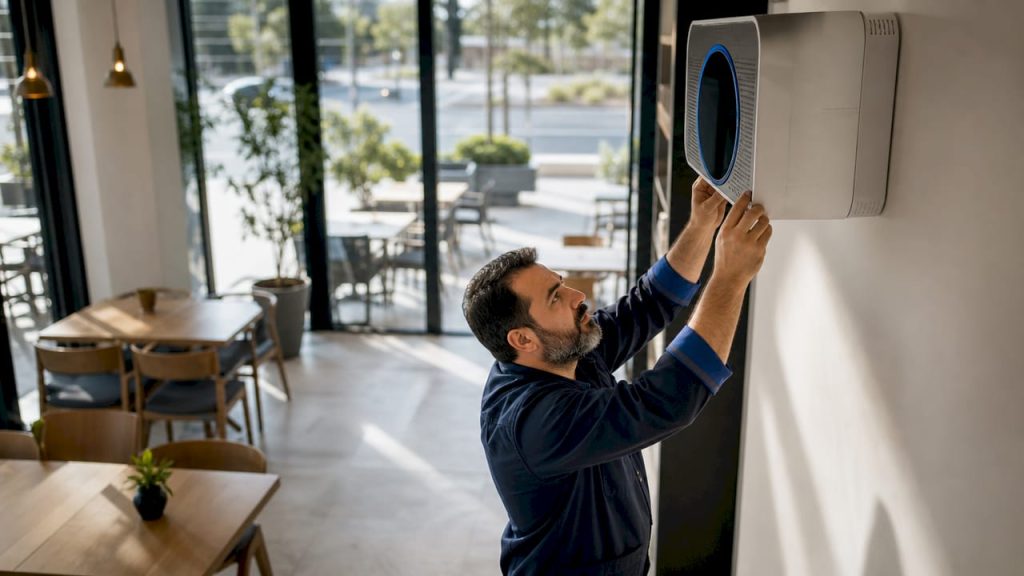
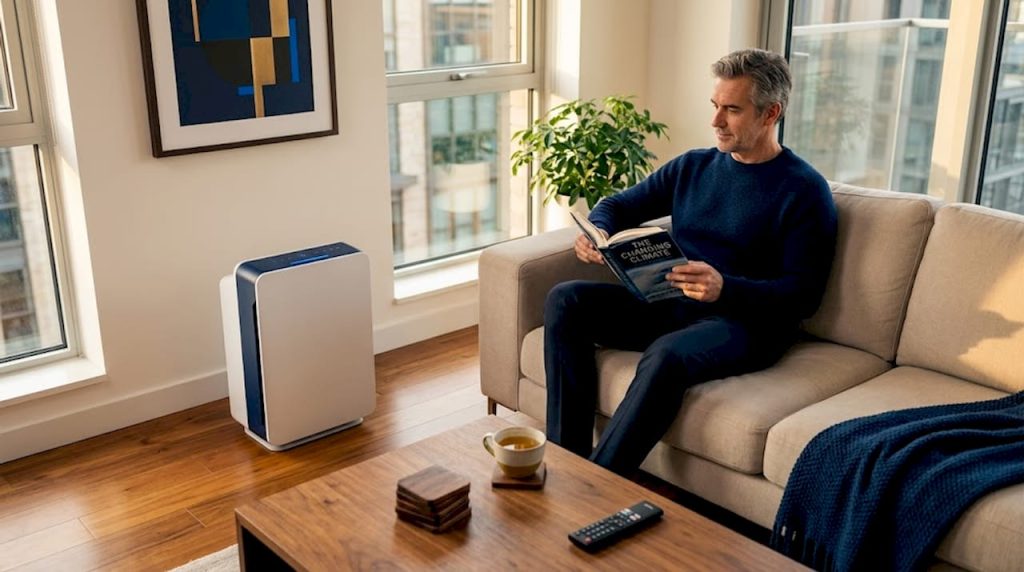
Most homeowners in Riyadh, Jeddah, and Dammam know outdoor air can be a problem. Desert dust, seasonal sandstorms, and urban pollution push their way indoors constantly. What surprises many people is how much pollution builds up inside even with windows closed. The question of whether to run air purifier all day is one we hear regularly at Climasaudi, and the short answer is yes, in most cases. This guide explains exactly why continuous use works, what you need to do it properly, and how to keep your electricity bill and noise levels under control.
Table of Contents
- Key takeaways
- Why running an air purifier all day improves indoor air
- Prerequisites before running your purifier all day
- How to run your purifier all day efficiently
- Common misconceptions about continuous use
- Measuring whether your purifier is working all day
- My honest take on all-day air purifier use
- Find the right purifier for all-day use at Climasaudi
- FAQ
Key takeaways
| Point | Details |
|---|---|
| Continuous use is safe | Most modern purifiers are built and tested for 24/7 operation without risk of damage or voiding warranty. |
| Minimum 12 hours daily | At least 12 hours of daily operation is recommended, with round-the-clock use advised for allergy or asthma sufferers. |
| Filter quality matters most | True HEPA filtration is non-negotiable; low-quality filters running all day still fail to remove fine particles. |
| Smart features cut costs | Auto-mode and scheduling reduce energy use and noise while maintaining consistent air quality. |
| Maintenance frequency increases | Running continuously means replacing HEPA filters every 2 to 3 months rather than every 6. |
Why running an air purifier all day improves indoor air
Indoor air is not static. Every time someone opens a door, cooks a meal, vacuums the floor, or simply moves around the room, new particles enter the air. Dust mites, pet dander, pollen, cooking fumes, PM2.5, and volatile organic compounds (VOCs) from furniture and cleaning products are all releasing continuously. Turning your purifier off for hours at a time allows these contaminants to accumulate unchecked.
The benefits of running an air purifier constantly become clear when you understand how often air needs to be cycled. Air filtered five to ten times per day, depending on unit efficiency and room size, maintains the kind of consistent cleanliness that intermittent use simply cannot achieve.
For households with allergy or asthma sufferers, the case is even stronger. Continuous filtration removes the particles that trigger symptoms before they have a chance to settle on surfaces or be inhaled. The practical benefits include:
- Reduced allergy symptoms from pollen, dust mites, and pet dander throughout the day and night
- Better sleep quality in bedrooms where allergens and PM2.5 are kept consistently low
- Lower VOC levels from household products, especially relevant in newly furnished rooms or after painting
- Continuous protection during sandstorm season, when fine particles infiltrate even well-sealed Saudi homes
For most residents, the bedroom and the living area are the two rooms worth prioritising. These are where you spend the most hours, and where cumulative exposure has the greatest impact on your health.
Prerequisites before running your purifier all day
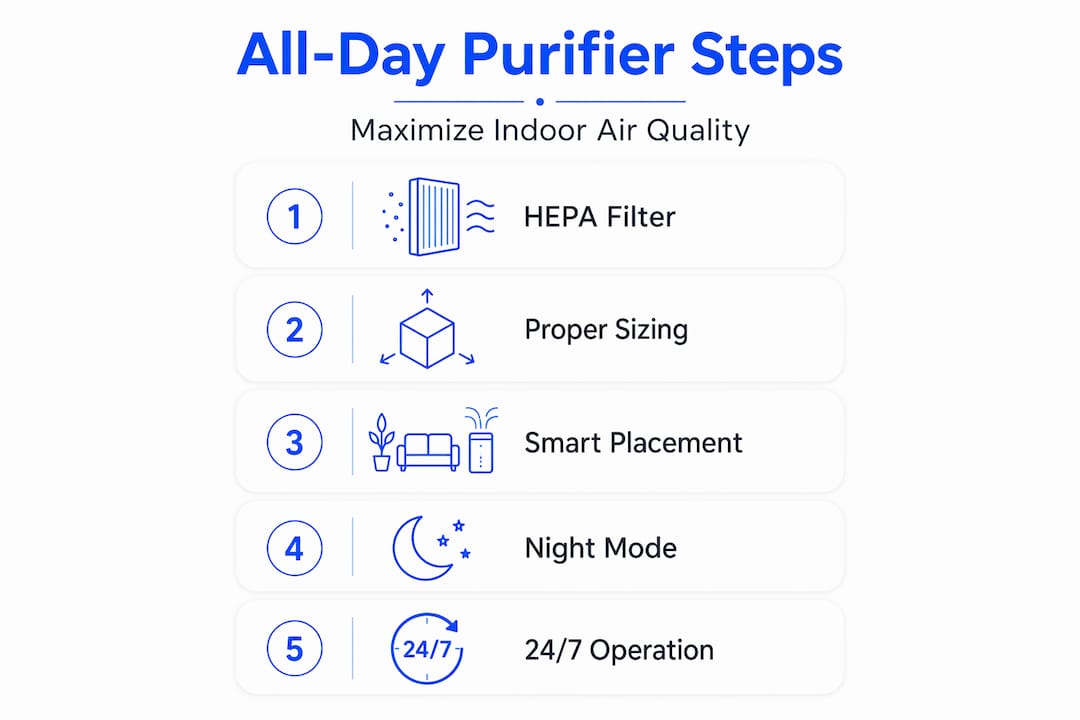
Running an air purifier continuously only delivers real results if the right unit is selected and set up correctly from the start. There are a few things to get right before you switch to all-day operation.
Choosing the right unit
True HEPA filtration is essential to capture fine particles effectively during continuous use. A unit without certified HEPA filtration, regardless of how many hours it runs, will not remove PM1, PM2.5, or the finest allergens. Look for HEPA H13 certification combined with an activated carbon layer for VOC and odour control. You can read more about selecting the right filter specification in this guide on HEPA filter ratings.
The second critical factor is matching the unit’s Clean Air Delivery Rate (CADR) to your room size. A purifier sized for 20 square metres running in a 40-square-metre living room is always operating at a disadvantage, even on full power 24 hours a day.
Placement and airflow
Placing the purifier away from obstacles and corners improves airflow and filtration efficiency significantly. Elevating the unit slightly and positioning it near the centre of the room, or near the primary pollution source such as a kitchen opening, allows it to capture warm rising air and circulate clean air more effectively.
| Placement factor | Recommended practice |
|---|---|
| Distance from walls | At least 30 cm on all sides |
| Room position | Central or near primary pollution source |
| Height | Raised if possible, especially in large rooms |
| Obstructions | Away from furniture, curtains, and shelving |
| Bedroom placement | Near the breathing zone, not directly facing the bed |
Pro Tip: Avoid placing your purifier in a corner. Corner placement restricts airflow from two sides and forces the unit to work harder for the same result, which accelerates filter wear.
Noise and night-mode features
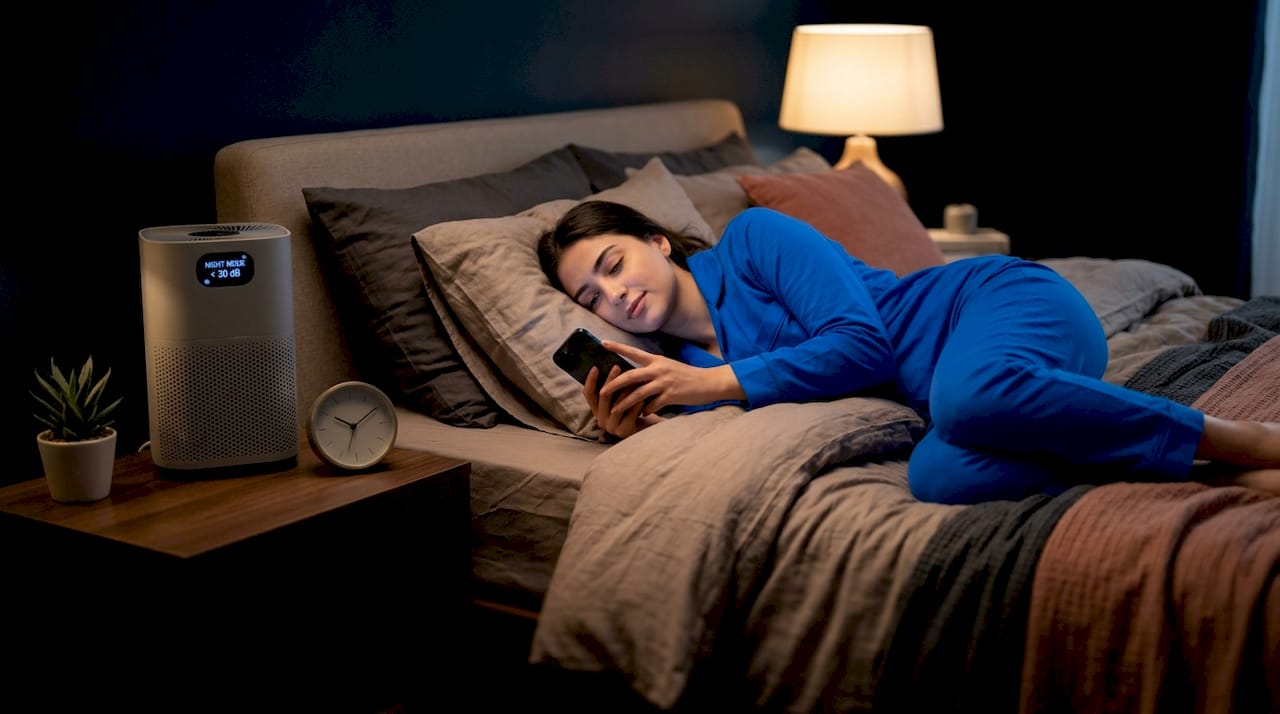
New models produce under 30 decibels on night mode, quiet enough not to disturb sleep. If you plan to run your purifier in the bedroom overnight, this is not optional. Choose a model with a dedicated sleep or night mode that reduces fan speed and dims indicator lights.
How to run your purifier all day efficiently
Running continuously does not mean running on full power constantly. The goal is consistent air quality, not maximum fan speed at all hours. Here is a practical approach to all-day operation:
- Set auto-mode as your default. Smart purifiers with sensors respond to pollution spikes automatically, increasing fan speed when needed and quieting down when the air is clean. This is the single most effective way to balance air quality, noise, and electricity use simultaneously.
- Use a lower fan speed during the day. For general background filtration during working hours at home, a medium or low setting is sufficient in most rooms. Reserve high speed for cooking, cleaning, or after guests arrive.
- Switch to night mode during sleep hours. This keeps filtration running at a quiet, consistent level without disrupting sleep. Bedroom air quality tends to be critical for recovery and immune function.
- Schedule around peak pollution times. During sandstorm warnings or high-traffic outdoor periods, bump the fan speed up manually or set a schedule that increases output in the early morning and evening when outdoor pollution tends to peak.
- Clean pre-filters weekly. Running continuously means the pre-filter collects dust faster. A quick wipe or rinse each week reduces strain on the HEPA layer and extends its life.
- Track filter replacement timing. HEPA filters need replacement every 2 to 3 months with continuous use, rather than the 6-month interval often quoted for occasional operation. Ignoring this significantly reduces filtration effectiveness.
On electricity cost, the numbers are more manageable than most people expect. Running 24/7 costs roughly £5 to £10 monthly for most household units, depending on wattage. At auto or low speed, the real-world figure is often at the lower end of that range.
Pro Tip: If you are concerned about running costs, check your purifier’s wattage rating and multiply by 24 hours, then by 30 days. Most HEPA purifiers draw between 20 and 50 watts on medium speed, which works out to a very modest monthly addition to your electricity bill.
Common misconceptions about continuous use
A few persistent myths put people off running their purifiers all day. It is worth addressing them directly.
- “It will burn out the motor.” Most modern air purifiers are designed for safe 24/7 continuous use, and running them this way does not void the warranty or shorten motor life under normal conditions.
- “It makes the room too dry.” Air purifiers do not remove moisture. They filter particles. If your room feels dry, that is a separate humidity issue worth addressing with a humidifier alongside your purifier.
- “Running it when no one is home is wasteful.” This is partly true. If the home is empty and no pollution source is active, a lower speed or auto-mode is sensible. However, keeping the purifier running on low during the day prevents particle build-up that would otherwise require the unit to work hard when you return.
- “Any purifier running all day is effective.” This is the most damaging myth. High-quality filtration paired with continuous use is what reduces indoor pollutants effectively. A cheap filter running all day still fails on PM2.5 and fine allergens.
Running an air purifier all day only delivers full health benefits when the filter quality matches the demand. Continuous operation amplifies both the strengths and the weaknesses of whatever filtration technology is inside the unit.
Noise is the other common barrier. If your current purifier is too loud to run overnight, that is a product problem, not an inherent limitation of all-day use. See this comparison of air purifier noise levels to find a model that works quietly enough for bedroom use.
Measuring whether your purifier is working all day
Running continuously is only useful if it is actually improving your air. Here is how to know whether your all-day operation is achieving results:
| Indicator | What to look for |
|---|---|
| Built-in air quality display | Should show “good” or green during normal hours at home |
| Dust on surfaces | Noticeably less accumulation within 1 to 2 weeks of continuous use |
| Sleep quality | Fewer morning allergy symptoms, better rest |
| Filter colour change | Pre-filter darkening confirms the unit is capturing real particles |
| Smell reduction | VOCs and cooking odours dissipate faster with activated carbon running |
If your purifier’s air quality indicator stays on “poor” or “red” for extended periods despite continuous operation, two things may be happening. The unit may be undersized for the room, or the filter may need replacement. A minimum of 12 hours of daily operation is the baseline recommendation, with 24/7 advised for households managing asthma, allergies, or pets.
If results are still underwhelming after filter replacement and correct placement, consider whether a second unit in a heavily used room, or an upgrade to a higher-CADR model, is the right step.
My honest take on all-day air purifier use
I have spoken with enough homeowners across Saudi Arabia to know that the biggest mistake people make is not running their purifier too much. It is running a poor-quality unit incorrectly and then concluding that air purifiers do not work.
In my experience, continuous operation is almost always worth it, provided two conditions are met. The filter must be genuine and properly rated, and the unit must be sized for the room. When both are true, the difference in how a home feels within a week is genuinely noticeable. Less dust on the television stand. Fewer sneezes in the morning. A bedroom that feels easier to breathe in from the moment you wake up.
What I find underappreciated is the value of auto-mode sensors and scheduling in making continuous use practical. People who resist all-day operation often cite noise or electricity. Both concerns largely disappear with a smart unit on auto-mode. It turns itself up when your cooking fills the kitchen with fumes and dials back down by midnight. You stop thinking about it, which is exactly how a good purifier should work.
My advice: do not compromise on filter quality to save money upfront. The running costs of a quality HEPA unit are modest. The health cost of breathing poorly filtered air for years is not.
— Pauline
Find the right purifier for all-day use at Climasaudi
If you are ready to make continuous air purification part of daily life at home, Climasaudi has a range of models built precisely for that purpose.
Climasaudi stocks HEPA H13-certified purifiers with activated carbon filtration, built-in air quality sensors, auto-mode, and quiet night operation. These are units designed to run around the clock in Saudi homes, whether you are dealing with Riyadh’s desert dust, Jeddah’s coastal humidity, or Dammam’s mixed urban environment. The Blueair ComfortPure T20i is a strong choice for medium to large rooms, combining smart sensors with whisper-quiet night mode. For larger spaces requiring all-day continuous operation, explore the full Climasaudi air purifier range with next-day delivery across KSA, transparent SAR pricing, and local customer support ready to help you find the right match for your home.
FAQ
Is it safe to run an air purifier 24/7?
Yes. Most modern air purifiers are designed for continuous 24/7 use and will not be damaged or have their warranty voided by running all day and night.
How many hours a day should I run my air purifier?
A minimum of 12 hours is recommended for general wellness, with round-the-clock operation advised for households with asthma, allergies, or pets. Prioritise nighttime hours when possible.
Can you overuse an air purifier?
No. Continuous use does not harm a well-built unit. The main consequence of constant operation is faster filter wear, which means more frequent replacement rather than any safety concern.
Does running an air purifier all day increase my electricity bill significantly?
Running a typical HEPA purifier continuously adds roughly the equivalent of £5 to £10 per month to your electricity bill. On auto or low speed, real-world costs are often lower.
Should I leave my air purifier on when I leave the house?
On auto-mode or low speed, yes. Keeping the purifier running prevents particle accumulation so your home’s air is already clean when you return, rather than requiring the unit to work hard to recover.