Air purifiers reduce sneezing by capturing and removing the airborne particles that trigger your body’s allergic response. The technical term for this process is particulate filtration, and the gold standard for achieving it is a True HEPA filter. These filters capture 99.97% of particles as small as 0.3 microns, including pollen, pet dander, dust mite debris, and mould spores. When those particles are no longer circulating in your air, your nasal passages have far less to react to. Fewer triggers mean fewer sneezing episodes, and that is the core reason why air purifier reduces sneezing for allergy sufferers.
Why air purifiers reduce sneezing: the mechanism explained
The sneezing reflex is your body’s attempt to expel irritants from your nasal passages. When you breathe in airborne allergens, your immune system releases histamine, which causes inflammation, itching, and sneezing. An air purifier interrupts this cycle at the source by pulling air through a dense filter medium and trapping the particles before you inhale them.
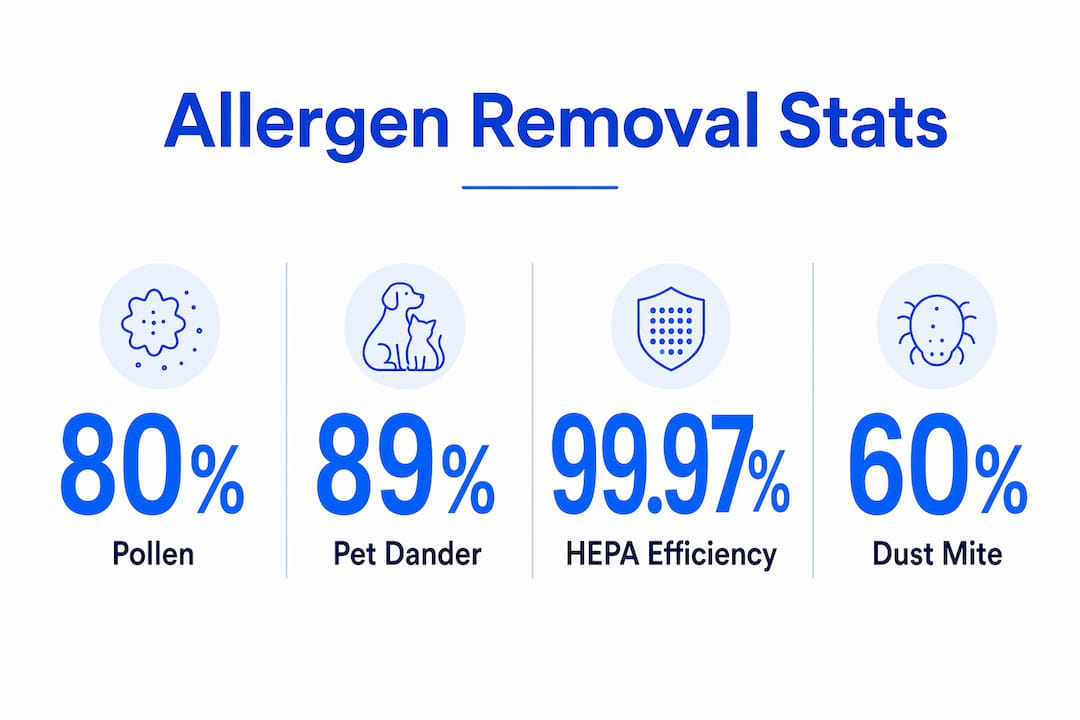
True HEPA filtration, as defined by the United States Department of Energy standard, removes at least 99.97% of airborne particles at 0.3 microns. That size is significant because 0.3 microns is the most penetrating particle size, meaning it is the hardest for filters to catch. If a filter meets the HEPA standard at that size, it captures larger particles, such as pollen and pet dander, even more efficiently.
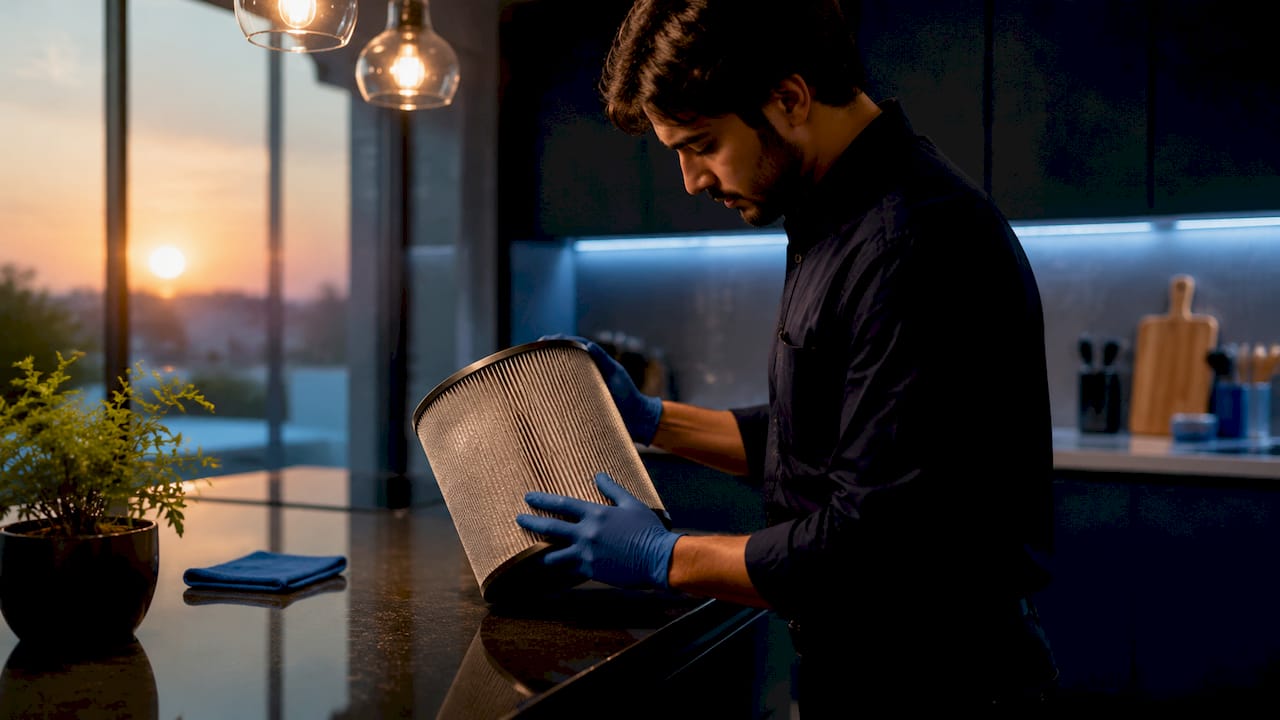
The result is a measurable drop in indoor allergen concentration. Lower allergen concentration means your immune system is exposed to fewer triggers per breath. Over time, and particularly with continuous use, this reduction translates directly into fewer allergy symptoms including sneezing, a runny nose, and itchy eyes.
What allergens do air purifiers actually remove?
Not every airborne particle is the same, and understanding which ones trigger your sneezing helps you choose the right filtration approach. True HEPA filters are effective against the following common allergens:
- Pollen: Grass, tree, and weed pollen particles range from 10 to 100 microns. They are well within the capture range of True HEPA filters, and studies show HEPA purifiers reduce indoor pollen by 55–80% in bedroom environments.
- Pet allergens: Cat allergen (Fel d 1) and dog allergen (Can f 1) are proteins shed from skin cells and saliva. HEPA purifiers reduce Fel d 1 by 76.6% and Can f 1 by 89.3% in real-world bedroom settings.
- Dust mite debris: Dust mites themselves are too heavy to remain airborne for long, but their faecal particles and body fragments become airborne when disturbed and are captured by True HEPA filters.
- Mould spores: Spores range from 2 to 100 microns and are a significant trigger for sneezing and respiratory irritation. HEPA filtration captures them effectively, and HEPA filtration in mould cleanup is now considered best practice by remediation professionals.
- PM2.5: Fine particulate matter at 2.5 microns or smaller is a secondary irritant that worsens nasal inflammation. True HEPA purifiers reduce indoor PM2.5 by 25–56%, which directly supports sneezing relief.
One important limit: air purifiers do not remove allergens that have already settled on surfaces such as bedding, carpets, or furniture. They also do not neutralise gases or volatile organic compounds (VOCs) on their own. For chemical vapours from cleaning products or smoke, activated carbon filters adsorb these secondary irritants, which is why multi-stage filtration units that combine True HEPA with activated carbon offer the most complete protection.
What does the evidence say about sneezing relief with air purifiers?
The clinical evidence for air purifier allergy benefits is consistent and well-documented. Randomised controlled trials and meta-analyses confirm that HEPA purifier users require less allergy medication and experience fewer symptom days, including reduced sneezing frequency.
“High-quality air purifiers with True HEPA filters are the gold standard for allergy sufferers, providing measurable relief from sneezing.” — Verywell Health
The American College of Allergy, Asthma and Immunology (ACAAI) endorses True HEPA air purifiers as a practical tool for managing indoor allergen exposure. Their guidance specifically highlights bedroom use as the highest-priority placement, given that adults spend roughly a third of their lives asleep and breathing recirculated bedroom air.
| Allergen | Reduction with True HEPA | Symptom improvement |
|---|---|---|
| Pollen | 55–80% | Sneezing and nasal congestion reduced |
| Cat allergen (Fel d 1) | 76.6% | Fewer allergy episodes in cat-owner homes |
| Dog allergen (Can f 1) | 89.3% | Significant reduction in pet-related symptoms |
| PM2.5 | 25–56% | Reduced nasal inflammation and irritation |
| Overall allergy symptoms | 25–60% improvement | Fewer symptom days, less medication needed |
The data above reflects real-world bedroom studies and clinical trials. The 25–60% improvement range in overall allergy symptoms is not a best-case figure. It represents the consistent band of outcomes seen across multiple peer-reviewed studies. That is a meaningful reduction for anyone who currently sneezes through the night or wakes with a blocked nose every morning.
Continuous overnight use is the single most effective usage pattern. Experts consistently recommend running a True HEPA purifier through the night in your bedroom to reduce re-suspended allergens during sleep, when your exposure is longest and your body has no active defences.
True HEPA vs. other filter types: which actually stops sneezing?
Not all air purifiers deliver the same results, and choosing the wrong type can mean spending money without getting sneezing relief. Here is how the main filter types compare:
| Filter type | Particle capture | Allergy relief | Risks |
|---|---|---|---|
| True HEPA | 99.97% at 0.3 microns | Clinically proven, significant | None from filter itself |
| HEPA-type / HEPA-like | 85–95% at 0.3 microns | Partial, inconsistent | Lower capture of fine particles |
| Ioniser | Charges particles, does not remove | Minimal, unreliable | Can produce ozone as a byproduct |
| Ozone generator | Does not filter particles | None; worsens symptoms | Ozone is a respiratory irritant |
| Activated carbon only | Gases and odours only | None for allergens | Not suitable as standalone |
Ozone-based devices are respiratory irritants and can actively worsen sneezing and airway inflammation. The Environmental Protection Agency (EPA) advises against using ozone generators in occupied spaces. Ionisers that produce ozone as a byproduct carry the same risk.
HEPA-type or HEPA-like filters are a common source of confusion. These labels are not regulated to the same standard as True HEPA. A filter labelled “HEPA-like” may capture only 85–95% of particles at 0.3 microns, leaving a meaningful proportion of allergens in circulation. For allergy sufferers, that gap matters.
True HEPA is the only filter type with a defined, independently verified performance standard. The HEPA filter allergy benefits are well-documented precisely because the standard is consistent and testable.
Pro Tip: When buying an air purifier for allergy relief, look for the words “True HEPA” or “HEPA H13” on the specification sheet. If the label says “HEPA-type,” “HEPA-style,” or “HEPA-like,” the filter does not meet the full standard.
How to get the most sneezing relief from your air purifier
Owning a True HEPA purifier is the first step. Using it correctly is what delivers consistent results. Follow these steps to maximise allergen capture and reduce sneezing effectively:
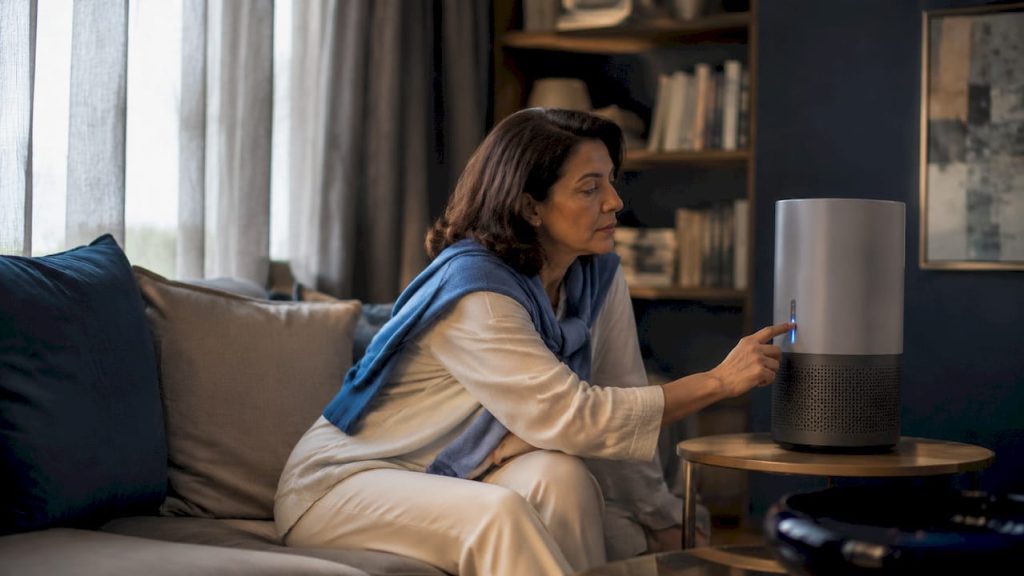
- Place the unit in your bedroom. This is where you spend the most continuous time. Overnight allergen reduction has the greatest impact on morning symptoms, including sneezing upon waking.
- Keep it away from walls and furniture. Units placed near walls or behind furniture show markedly reduced allergen removal because restricted airflow limits how much air passes through the filter. Position the unit at least 30 centimetres from any obstruction.
- Run it continuously, not just when you feel symptoms. Allergen concentrations build up gradually. Switching the purifier on only when you are already sneezing means you are reacting to particles that have been accumulating for hours.
- Replace filters on schedule. A clogged filter loses capture efficiency rapidly. Check the manufacturer’s recommended replacement interval and follow it. Guidance on maintaining HEPA filters properly covers how to assess when a filter needs changing.
- Combine with surface allergen control. Air purifiers do not remove settled allergens from bedding, carpets, or upholstery. Use allergen-proof mattress and pillow covers, vacuum with a HEPA-sealed machine, and wash bedding weekly at 60°C to address surface sources.
- Control humidity. Dust mites thrive at humidity levels above 50%. Keeping indoor humidity between 40% and 50% reduces dust mite populations and complements the work your air purifier does on airborne debris.
Pro Tip: In Saudi homes, desert dust and sand particles are a significant additional allergen load. Position your air purifier near the room’s main entry point to intercept particles carried in from outside, particularly during shamal wind events in Riyadh and the Eastern Province.
Key takeaways
Air purifiers reduce sneezing by removing the airborne allergens that trigger your immune response, with True HEPA filtration delivering the most consistent and clinically proven results.
| Point | Details |
|---|---|
| True HEPA is the standard | Only True HEPA or HEPA H13 filters capture 99.97% of particles at 0.3 microns for reliable sneezing relief. |
| Bedroom use matters most | Running a purifier overnight in your bedroom delivers the greatest reduction in allergen exposure and morning symptoms. |
| Placement affects performance | Keep units at least 30 centimetres from walls and furniture to maintain full airflow and allergen capture. |
| Surface allergens need separate action | Air purifiers do not clean settled dust or dander; allergen-proof bedding and HEPA vacuuming are also required. |
| Avoid ozone-based devices | Ionisers and ozone generators can worsen sneezing and respiratory symptoms rather than relieve them. |
What I have learned from years of watching people buy the wrong purifier
I have spent a long time looking at how people approach air quality problems, and the pattern is almost always the same. Someone starts sneezing constantly, buys an air purifier, runs it for a week, and then decides it does not work. In most cases, the problem is not the technology. It is the expectations and the habits around it.
Air purifiers are not instant cures. They reduce the concentration of airborne allergens over time. If you run one for three days and still sneeze, that does not mean it has failed. It may mean your bedroom carpet is releasing allergens faster than the purifier can capture them, or that you are opening windows during high-pollen hours and undoing the progress.
The other mistake I see constantly is buying a HEPA-like device because it costs less, then wondering why results are underwhelming. The price difference between a True HEPA unit and a HEPA-type unit is often modest. The performance difference is not. For anyone with genuine allergy-driven sneezing, that gap is worth paying for.
My honest view is that an air purifier works best when you treat it as one part of a considered approach. Pair it with allergen-proof bedding, regular vacuuming, and sensible humidity control, and you will notice a real difference within two to three weeks. Rely on it alone and expect overnight results, and you will be disappointed. The technology is sound. The discipline around using it is what most people underestimate.
— Pauline
Find the right air purifier for your home with Climasaudi
If sneezing and allergens are disrupting your daily life, the right purifier makes a measurable difference. Climasaudi stocks a full range of certified True HEPA air purifiers suited to Saudi homes, from compact bedroom units to models covering large living spaces in Riyadh villas and Jeddah apartments.
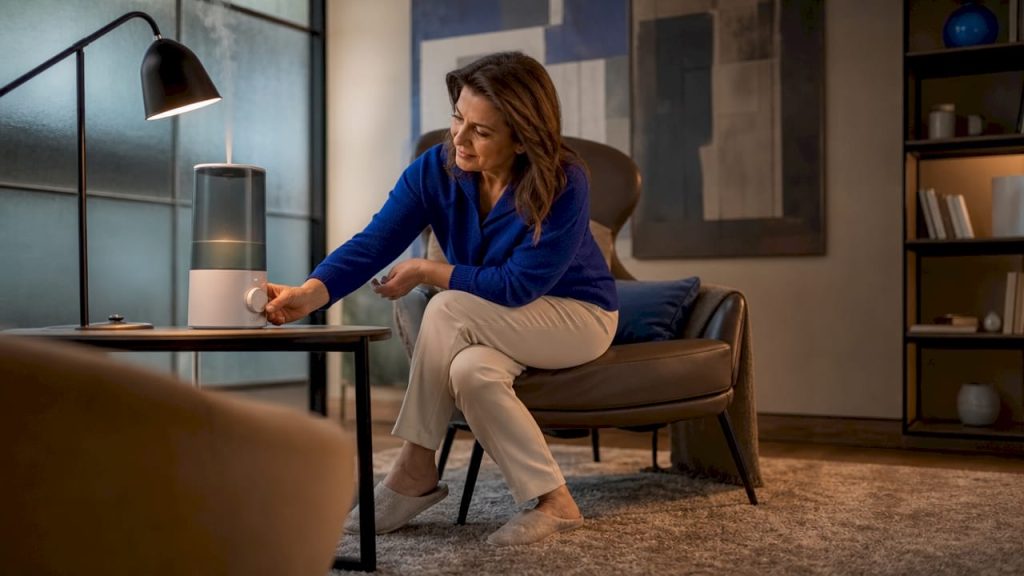
The Blueair ComfortPure 3-in-1 T20i combines True HEPA filtration with activated carbon and a built-in humidifier, addressing both particulate allergens and dry air in a single unit. For those who want to explore the full range, Climasaudi’s air purifier catalogue covers every room size and budget, with transparent SAR pricing and next-day delivery across Saudi Arabia. Genuine replacement filters and accessories are also available, so your purifier keeps performing at full efficiency long after purchase.
FAQ
Do air purifiers actually reduce sneezing?
Yes. True HEPA air purifiers reduce airborne allergens such as pollen, pet dander, and dust mite debris by up to 89%, which directly lowers the frequency of sneezing episodes in allergy sufferers.
How long does it take for an air purifier to reduce sneezing?
Most users notice a reduction in symptoms within a few days to two weeks of continuous use. Overnight bedroom operation produces the fastest results because it reduces allergen exposure during your longest period of breathing recirculated air.
Can air purifiers prevent sneezing from dust?
Air purifiers capture airborne dust particles effectively, but settled dust on surfaces is not removed by filtration alone. Combine your purifier with regular vacuuming using a HEPA-sealed machine for full dust control.
Is a True HEPA filter better than a HEPA-type filter for allergies?
True HEPA filters capture 99.97% of particles at 0.3 microns and are independently verified to that standard. HEPA-type filters are not regulated to the same level and may capture significantly fewer fine particles, making True HEPA the clear choice for allergy-driven sneezing.
Where should I place my air purifier to reduce sneezing?
Place your air purifier in the bedroom, at least 30 centimetres from walls and furniture, to maximise airflow and allergen capture. Near your bed or near a pet’s resting area are the two most effective positions for reducing allergen exposure during sleep.